
What to Look for in the Best AI Store Builder for Small Shops

A small shop does not have a big team or endless hours. So the tool you choose to build your store has to pull real weight. The right AI builder can set up a professional storefront in an afternoon. The wrong one leaves you with a pretty shell that cannot actually sell. Knowing what separates the two saves you time, money, and a lot of frustration.
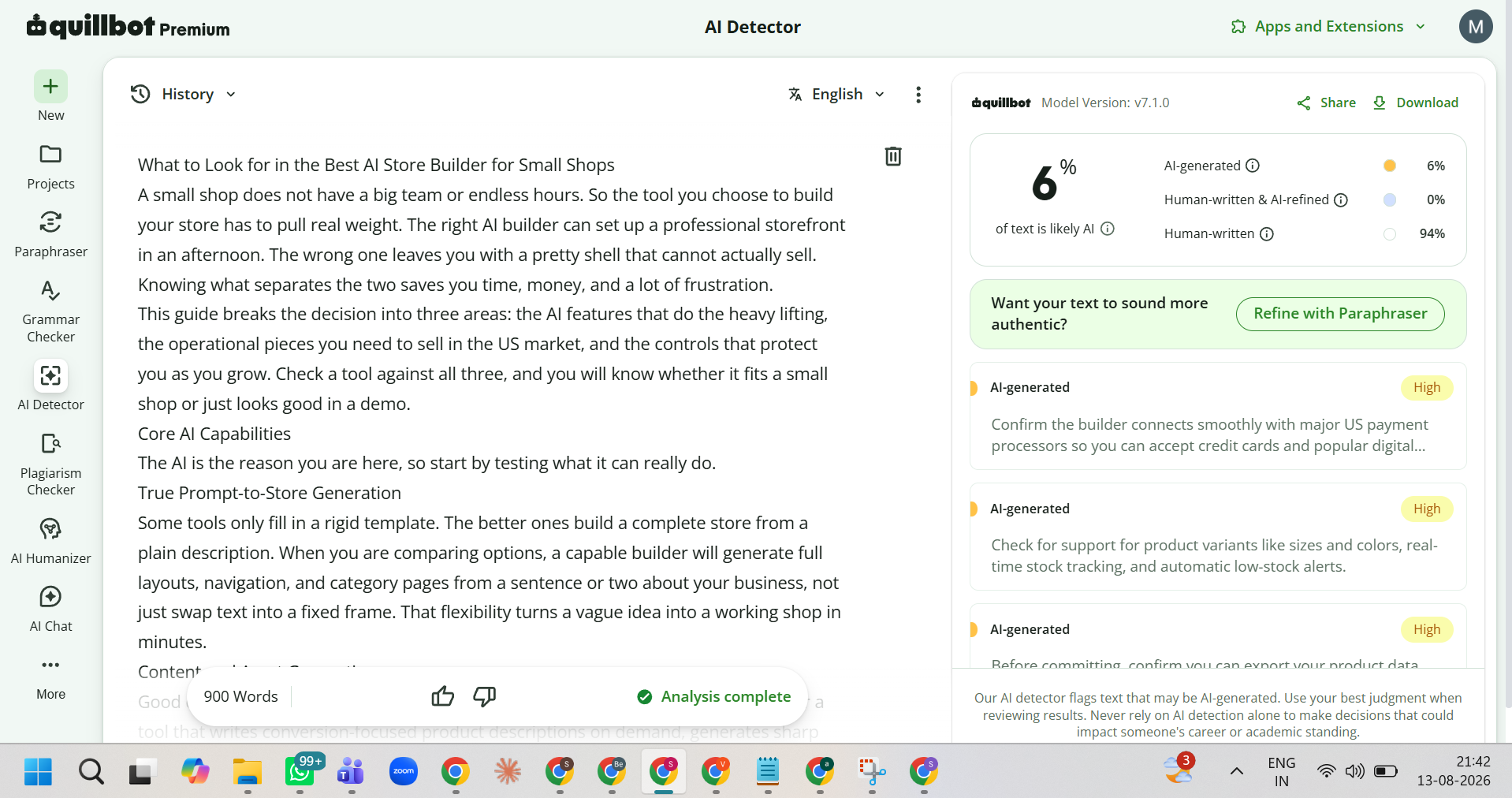
This guide breaks the decision into three areas: the AI features that do the heavy lifting, the operational pieces you need to sell in the US market, and the controls that protect you as you grow. Check a tool against all three, and you will know whether it fits a small shop or just looks good in a demo.
Core AI Capabilities
The AI is the reason you are here, so start by testing what it can really do.
True Prompt-to-Store Generation
Some tools only fill in a rigid template. The better ones build a complete store from a plain description. When you are comparing options, a capable builder will generate full layouts, navigation, and category pages from a sentence or two about your business, not just swap text into a fixed frame. That flexibility turns a vague idea into a working shop in minutes.
Content and Asset Generation
Good copy and clean images sell products, and writing both by hand is slow. Look for a tool that writes conversion-focused product descriptions on demand, generates sharp product imagery, and can even draft marketing content for your audience. The more it produces on its own, the faster your store goes from empty to ready. Consistent wording across every page also helps your products surface in search results.
Conversational Editing
Editing should not get harder after launch. You want to move a section, change a color palette, or add a feature like reviews or bookings without touching code. The best AI store builder lets you do all of that just by describing the change in plain language. That keeps small tweaks quick, so you are never stuck digging through menus after launch.
E-Commerce Essentials for the US Market
Slick design means nothing if the store cannot handle a real sale. These essentials keep your shop running.
Reliable Payment Options
Customers expect choices at checkout. Confirm the builder connects smoothly with major US payment processors so you can accept credit cards and popular digital wallets. Reliable, secure checkout is the difference between a completed sale and an abandoned cart, so treat it as non-negotiable and test it before launch. A slow or confusing checkout is one of the most common reasons shoppers abandon a purchase halfway through.
Automated Sales Tax and Shipping
US sales tax is a maze of state-by-state rules, so lean on a builder that calculates it for you and pulls live shipping rates from major carriers. Automation handles the day-to-day math, but you still own the bigger picture. The IRS spells out the federal business taxes every owner is responsible for, and keeping both straight from the start prevents painful corrections later.
Inventory and Catalog Depth
A growing shop needs a system that can keep up. Check for support for product variants like sizes and colors, real-time stock tracking, and automatic low-stock alerts. These features quietly prevent overselling and keep your catalog accurate, which matters more with every new product you add.
Control, Ownership, and Growth
The right tool serves you today and does not trap you tomorrow. Look past launch day.
Data Portability
Your store is your asset, so make sure you can take it with you. Before committing, confirm you can export your product data, customer lists, and core design files if you ever switch platforms. A tool that locks your data inside its walls quietly limits your options down the road. Owning your data also means you are never held hostage by a provider that hikes prices or stops improving.
A Healthy App Ecosystem
No single tool does everything well. A reliable marketplace of add-ons lets you bolt on loyalty programs, stronger email marketing, or fulfillment automation as your needs grow. Wide, well-supported extensions mean your store can expand without a rebuild, which protects the time you invest now. The best add-ons install cleanly and stay updated, so they never break.
Strong Mobile Optimization
Most people shop from their phones, so a store that stumbles on mobile loses sales daily. The builder should scale your site cleanly to every screen on its own, with fast loading and easy navigation. Test the mobile view yourself, because that is where the majority of your customers will land. Fast, thumb-friendly pages keep those visitors browsing instead of bouncing straight to a competitor.
Conclusion
Picking a builder for a small shop is not about chasing the longest feature list. It is about matching real strengths to what your shop actually needs. Strong AI generation, dependable US operations, and genuine control over your data cover the essentials that keep a small business moving.
Weigh each option against those three areas and trust what you see, not the marketing around it. A tool that generates a real store, handles payments and taxes cleanly, and lets you grow on your own terms is worth far more than one that only dazzles in a demo. Choose on that basis, and your shop starts on solid ground.
Discover the Ultimate Ad Library with Quickads.ai for AI Store Builder for Small Shops

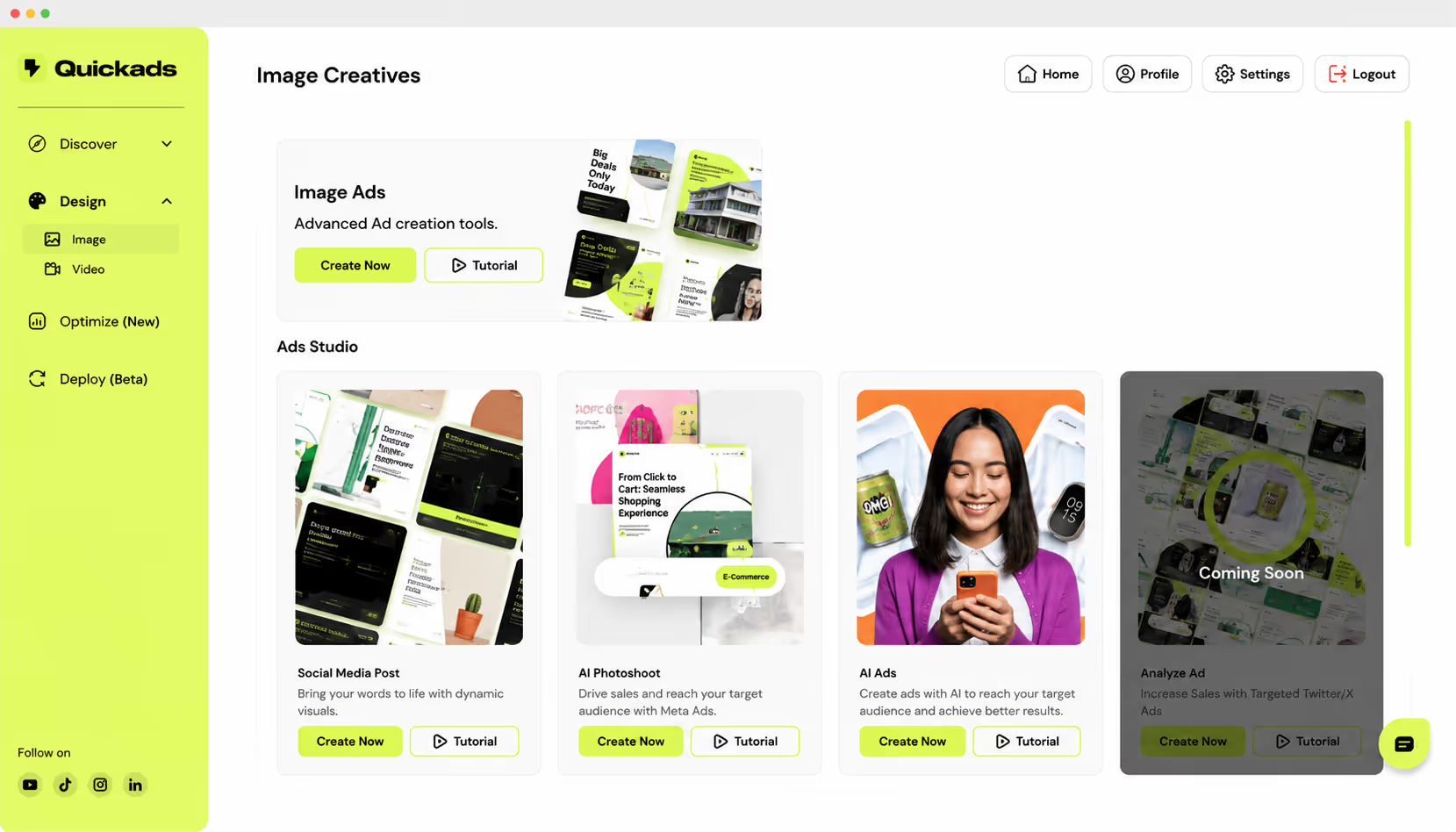
Tired of having bad AD inspirations? Quickads.ai offers an unparalleled ad library designed to give you instant access to the latest, high-performing ads across all industries. Unlike other ad libraries, Quickads.ai goes beyond basic insights, providing marketers and business owners with the competitive edge they need.
Why Choose QuickAds.ai?
- Comprehensive Coverage: Access ads from multiple platforms, including Facebook, Instagram, Google, and more. Whether you're in e-commerce, tech, fashion, or any other industry, QuickAds.ai gives you extensive access to ad creatives across various formats, such as video, carousel, and static ads. With powerful filtering options, you can drill down into specific industries, niches, and ad formats to find exactly what you need, enabling you to understand trends across different sectors.
- Real-Time Data: Gain a competitive edge by staying updated with real-time data. QuickAds.ai continuously refreshes its ad library, ensuring that you’re always seeing the latest ads and emerging trends before they become mainstream. This helps you identify what’s working right now in the market, allowing you to adjust your campaigns proactively and capitalize on trends ahead of your competition.
- User-Friendly Interface: Finding the right ads should be effortless, and QuickAds.ai ensures this with an intuitive, easy-to-navigate interface. The platform is designed with simplicity in mind, allowing users of all experience levels to quickly locate relevant ads without wasting time. The well-structured categorization and robust search functionality help streamline the research process, making it easier than ever to find exactly what you're looking for.
- Precision Keyword Filtering: Searching for specific ads has never been more precise. QuickAds.ai's advanced keyword filtering allows you to search ads based on product names, brands, campaign themes, or even specific ad copy. This level of granularity helps you discover ads that are most relevant to your goals, saving time and providing deeper insights into competitor strategies and messaging.
- In-Depth Performance Metrics: QuickAds.ai goes beyond just displaying ads—it provides detailed analytics to help you understand which ads are truly resonating with audiences. Access performance indicators like estimated engagement, audience reach, and creative effectiveness to understand why certain ads work. This data-driven approach helps you evaluate ad success based on real metrics, empowering you to make informed decisions and optimize your campaigns for better performance.
With QuickAds.ai, you don’t just discover ads—you gain the critical insights necessary to craft campaigns that dominate your industry. Ready to transform your advertising strategy? Try QuickAds.ai today and elevate your campaigns.









Privacy is important to us, so you have the option of disabling certain types of storage that may not be necessary for the basic functioning of the website. Blocking categories may impact your experience on the website. View Our Privacy Policy


