
Influencer Platform Comparison: A Demo Checklist
A search for the best influencer marketing platforms can leave you with five polished demos and the same unanswered question: who will actually run this thing?
The useful comparison starts with your next campaign. Ask each supplier to find suitable creators, explain the evidence and show what happens when a video needs fixing. Then compare the work your team keeps. Here’s a practical way to evaluate Modash, Aspire, SideShift, Trybe and QuickAds without pretending one tool is best for everybody.
By Nitin Mahajan · Last updated 19 November 2026
Suppose a small consumer-app team needs three creators to demonstrate one feature. They can approve product claims but have little time for coordination. A large discovery database may help; it does not settle their operating problem.
Use the five checks below as your live demo script. Record what was demonstrated, what was only described, what is missing and who must act. For broader vendor positioning and pricing, start with the platform comparison hub.
1. Give everyone the same unfinished brief
Provide the product, target customer, market, desired demonstration and intended use. Ask suppliers to identify what is missing. A good evaluation should reveal an unclear brief before it becomes a disappointing video.
2. Inspect a candidate explanation
Ask for relevant content, audience evidence and missing fields. Open the work behind the recommendation. If AI produced the match, ask what supports it. Database size cannot answer whether a particular creator suits your campaign.
3. Follow a rejected video
Ask who notices a wrong claim, sends feedback, tracks the revision and approves the replacement. Have the person who will operate the platform attend. A workflow only helps if your team can use it and someone owns the decisions.
4. Compare a fully scoped quote
Separate software, creator fees, human services, editing, rights and internal time. Ask which plan supports the demonstrated workflow. Leave missing terms unscored rather than assuming the cheapest public price buys the complete job.
5. Choose against your constraint
A staffed marketing team may value control and integrations. A founder without an operator may need an explicitly managed scope or a smaller pilot. Record why the supplier fits your constraint, then test that assumption with bounded work.
Use the vendor shortlist as context, not a result
The comparison below describes public positioning checked on 18 November 2026, rather than a signed-in test or a ranking of campaign results. No current plan is assumed to include every advertised capability.
Modash
Public positioning to investigate: Discovery, management, tracking and creator payments; Shopify and email workflows
Question for your demo: Can you demonstrate our category, audience checks and paid-use handoff in the proposed plan?Aspire
Public positioning to investigate: Creator discovery, program management, measurement and services
Question for your demo: Which work is software-supported and which human services are included?SideShift
Public positioning to investigate: Creator campaigns, content tracking, payments and organic-to-paid workflows
Question for your demo: Who reviews the content and what evidence justifies testing it as an ad?Trybe
Public positioning to investigate: Page title describes performance-based UGC; readable public detail was limited
Question for your demo: What are the current payment terms, training duties, review work and rights?QuickAds
Public positioning to investigate: AI-assisted creator sourcing and a connected campaign workflow, with human review
Question for your demo: Show why a candidate fits, which checks remain and who owns each next action.
Which suppliers should you shortlist first?
Use the following as a route into a demo, not an independently tested winner list. The best-fit suggestions are editorial judgments from public positioning checked on 18 November 2026; your proposal must confirm the plan, scope and evidence.
A staffed e-commerce team wants creator discovery, program operations and Shopify-linked workflows
Start by evaluating: Modash; compare Aspire
Why it belongs on that shortlist: Their official sites describe discovery and program operations; Modash specifically lists Shopify workflows
What would rule the proposed offer out: Your actual integration, needed data or paid-use workflow is absent from the quoted planAn e-commerce marketing leader wants to compare a platform with an optional services scope
Start by evaluating: Aspire
Why it belongs on that shortlist: Its public offer includes creator-program tools and a services route
What would rule the proposed offer out: The quoted human service leaves the critical coordination tasks with your teamA consumer-app team wants to evaluate an ongoing creator-content program and organic-to-paid testing
Start by evaluating: SideShift
Why it belongs on that shortlist: Its public workflow covers campaigns, content tracking, payments and taking ideas into paid ads
What would rule the proposed offer out: The proposal cannot explain review ownership, compensation or the evidence used to advance content into adsA team wants explainable AI-assisted sourcing with separate audience review before the brief and outreach
Start by evaluating: QuickAds
Why it belongs on that shortlist: The supplied Remy captures let you inspect match reasons, audience findings and an unsent scope message
What would rule the proposed offer out: The live demo cannot support your actual category or resolve the checks your booking depends onA team is investigating a performance-based UGC offer specifically
Start by evaluating: Trybe, after obtaining a current written proposal
Why it belongs on that shortlist: The public page title identifies that category; detailed readable terms were unavailable in this review
What would rule the proposed offer out: The provider cannot give sufficient detail to evaluate responsibilities, rights and payment events
Sources: Modash’s capability navigation, Aspire’s platform and services, SideShift’s workflow, Trybe’s public page. The QuickAds observation comes from the actual product captures supplied for this guide. Vendor descriptions establish an advertised capability, not delivery quality or comparative campaign return.
Inspect the work behind a recommendation
Ask each supplier to open a relevant candidate from your brief, show the work behind the match and preserve the unresolved audience fields. A persuasive explanation is something to check, not a completed booking decision.
A staffed Shopify team and a founder with no campaign operator may leave the evaluation with different shortlists. That is a useful result. The mistake would be forcing them into the same ranking because one provider has the largest database or the cheapest entry plan.
Put the example to work
Open the working decision resource. It includes fictional inputs, editable decision fields and a local export. Keep your own evidence and the unresolved questions beside the decision.
Why include QuickAds in the comparison?
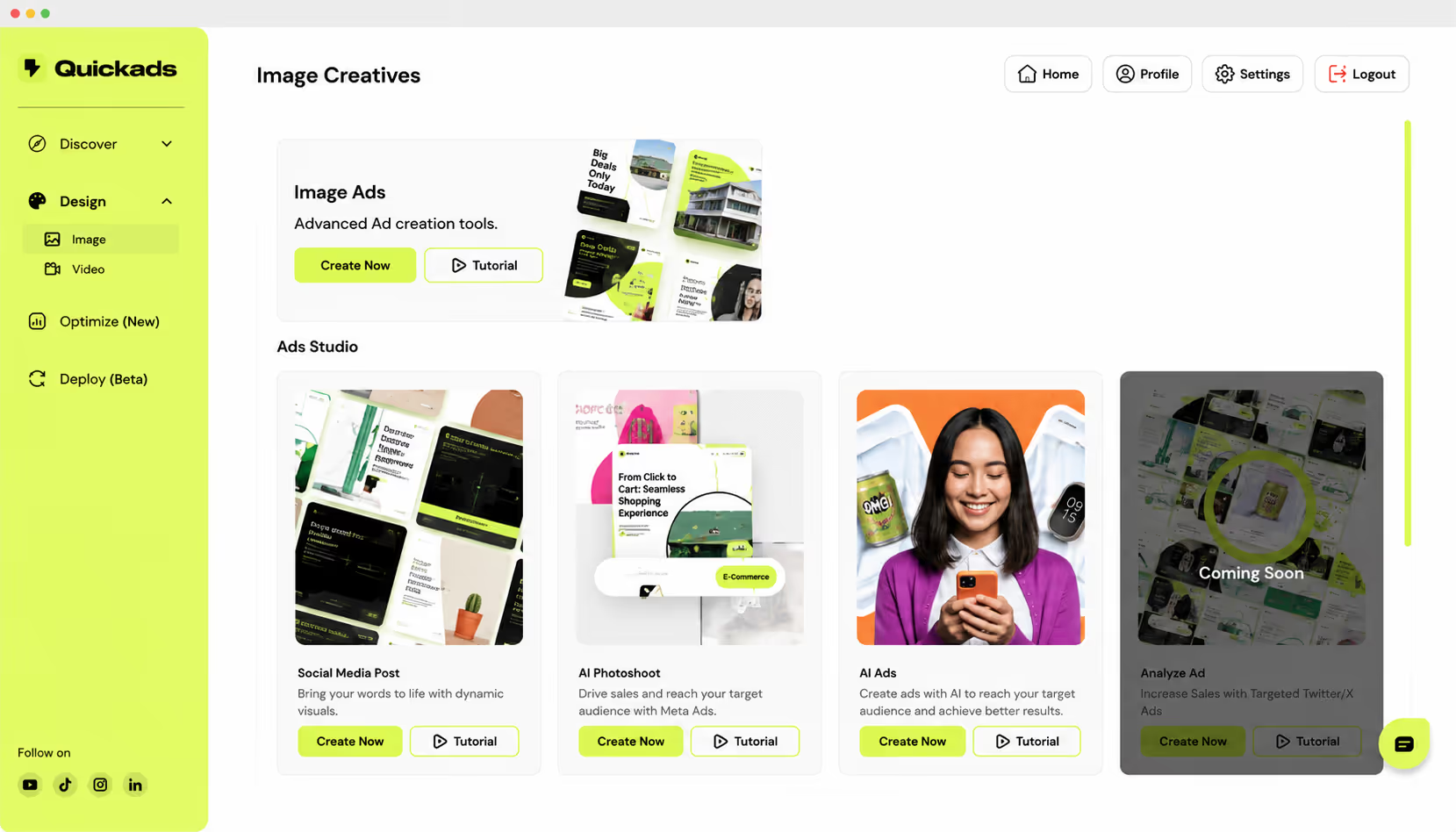
I founded QuickAds. Our difference in this evaluation is the connection between the creator search, the reasons for a match, audience review and the brief. The supplied Remy captures show candidate reasons and separate audience concerns; they do not establish that we outperform these vendors.
Ask us to work through your brief. Use the same questions and demand the same evidence.
Copy the worked example and blank decision sheet.
Questions before the next decision
What should I bring to an influencer platform demo?
Bring one product, buyer, market, intended demonstration and usage requirement. Ask every supplier to identify missing information and work through the same brief.
Can public feature pages establish the best platform?
They establish advertised capabilities, not delivery quality or campaign return. Confirm the quoted plan, human responsibilities and evidence through your own demo and pilot.
Keep the next decision connected
Continue with the broader platform and pricing comparison and the creator workflow · creative testing.
About the author
Nitin Mahajan is the founder of QuickAds, which publishes this guide and sells related software and services.







Privacy is important to us, so you have the option of disabling certain types of storage that may not be necessary for the basic functioning of the website. Blocking categories may impact your experience on the website. View Our Privacy Policy


