
2 AI Ad Generators Compared: Adsmaker.ai vs UGCVideo.ai for Modern Creative Production

The Real Problem Is Not Making One Ad
Advertising teams rarely struggle to make one creative. The harder problem is producing enough different creatives to test without turning every campaign into a mini production house. A recent Meta Blueprint course notes that visually distinct creatives can deliver up to 32% higher performance than similar creatives, based on large-scale Meta ad tests.
That makes the choice of an AI Ad Generator more interesting than a simple question of speed. I wanted to compare two tools with noticeably different approaches: Adsmaker.ai and UGCVideo.ai. I tested their advertised workflows around product promotion, social ads, and creative variation, then looked at where each one makes the most sense.
Two Tools, Two Different Creative Philosophies
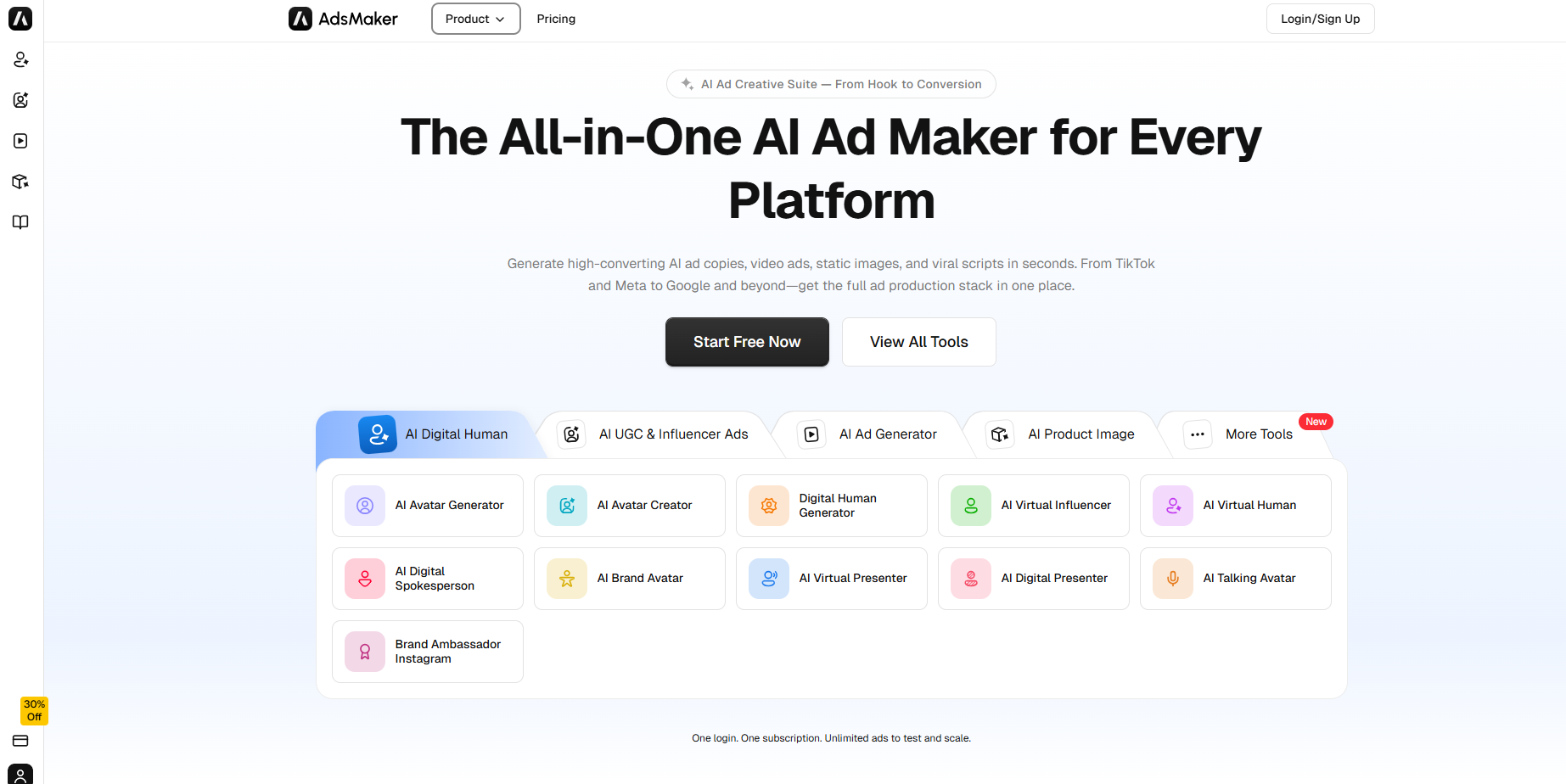
Adsmaker.ai: The Broader Advertising Toolbox
Adsmaker.ai approaches advertising as a complete creative pipeline. Its current feature set includes AI ad copy, static ad generation, AI product photography, video ads, digital humans, UGC-style content, and search-ad creation.
The interesting part is the combination. A marketer can work with product visuals, copy, images, and video without treating each format as a separate project. In my test workflow, this made Adsmaker.ai feel closer to an advertising workspace than a single-purpose generator.
UGCVideo.ai: Built Around the Human Face
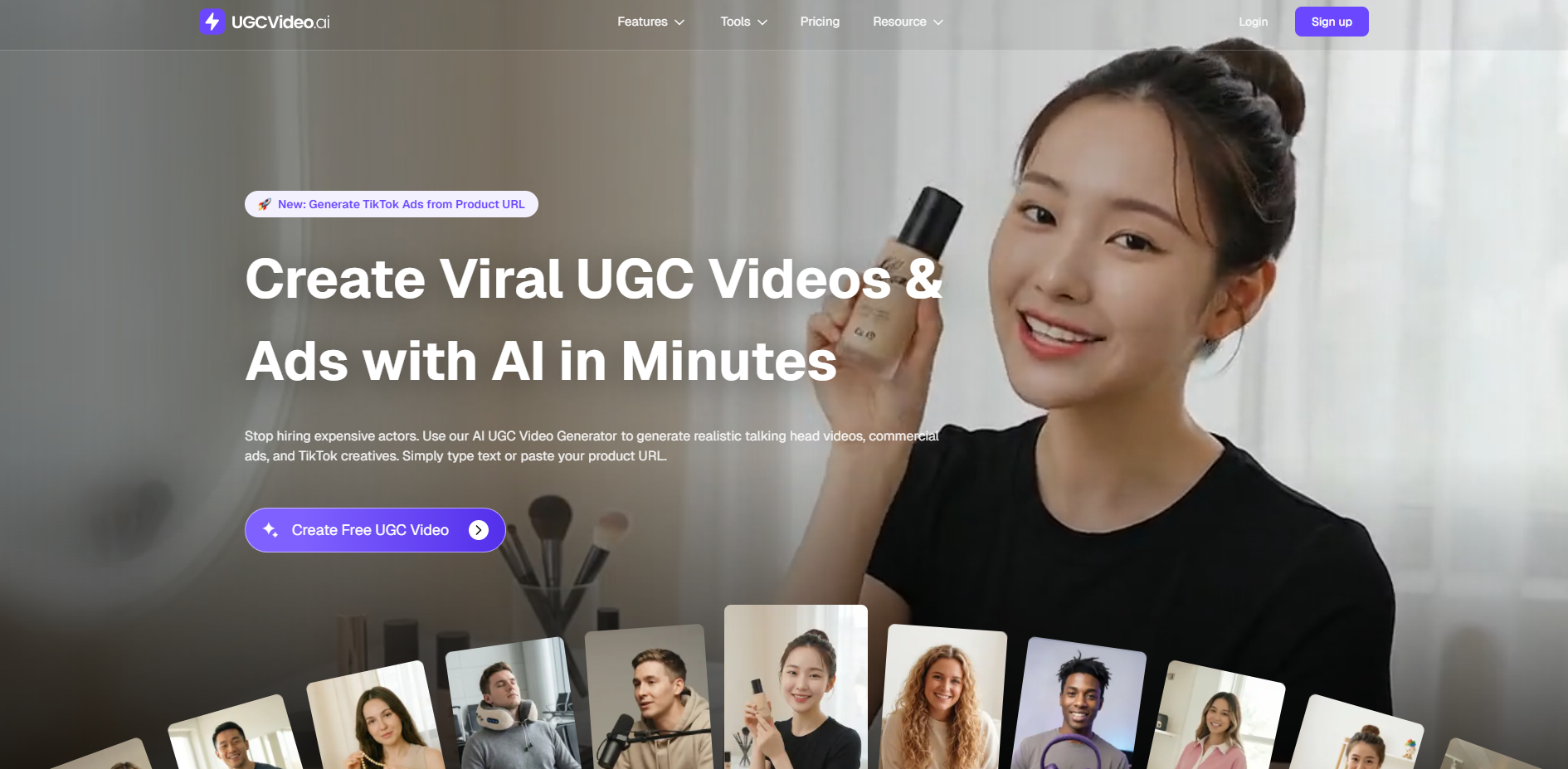
UGCVideo.ai takes a narrower but distinctive route. Its core workflow focuses on AI UGC videos, talking avatars, digital influencers, product ads, and social-first video formats. Users can start from a script or paste a product URL.
The platform also offers more than 100 ready-to-use digital humans and templates, according to its website. Its strongest identity is therefore easy to understand: turn a product or script into a person-led video rather than simply placing a product inside another static graphic.
What I Actually Tested
The Same Product, Different Starting Points
To make the comparison fair, I used the same basic scenario for both tools: a consumer product that needed several social advertisements. I wanted a product image, a short promotional message, and enough variation to imagine a small paid campaign.
With Adsmaker.ai, I explored static advertisements, product visuals, copy, and video-related features. With UGCVideo.ai, I concentrated on its script-to-video workflow, avatar selection, and UGC-style presentation.
This matters because an AI Ad Generator can be judged badly when every tool is tested with the wrong job. A video-first platform should not be criticized for lacking the same workflow as a broad creative suite.
The First Difference Appeared Immediately
Adsmaker.ai gave me more directions to explore. Its homepage lists AI ad copy, video ads, static images, product photography, search ads, and social media ad creation as parts of the same system.
UGCVideo.ai felt more focused. Its interface and feature structure repeatedly pushed the workflow toward talking-head content, avatars, influencers, testimonials, product demonstrations, and UGC-style advertisements.
That distinction is useful. One behaves more like a creative toolbox. The other behaves more like a virtual creator pipeline.
Adsmaker.ai: Better When Variety Is the Assignment
What Adsmaker.ai Does Well
The biggest advantage I noticed was breadth. Adsmaker.ai supports multiple advertising formats and creative stages, including copy, images, product photography, video, digital humans, and social advertising.
Its AI Ad Generator also supports multiple creative angles for hooks, headlines, and primary text. The platform says users can switch between more than 10 creative angles for Meta, TikTok, and Google campaigns.
Where It Fits Best
I would consider Adsmaker.ai when the campaign needs several types of creative rather than one hero video. An e-commerce marketer, for example, could start with a product photo, develop different visual treatments, generate copy variations, and then explore video or digital-human formats within the same ecosystem.
That makes it particularly relevant to teams trying to increase creative diversity. Meta itself recommends diversification by concept and format because its delivery systems use creative signals to identify relevant audiences.
The Trade-Off
Breadth can create a small learning curve. There are many tools, and not every campaign needs all of them.
I also would not interpret the platform's own performance testimonials as independent evidence. Its website displays user claims such as lower production costs and higher CTR, but those figures are presented by the company rather than by an independent research organization.
That distinction matters when evaluating an AI Ad Generator objectively. The feature set can be tested directly; performance claims require campaign-specific evidence.
UGCVideo.ai: When the Person Is the Advertisement
A Stronger Focus on UGC-Style Video
UGCVideo.ai makes a different assumption: sometimes the easiest way to explain a product is to put a person in front of it. Its platform supports AI avatars, talking avatars, influencers, product ads, testimonials, review videos, and TikTok-oriented advertising formats.
During testing, this made the workflow feel closer to producing a creator-led advertisement. Instead of beginning with a blank graphic, I was thinking about who should deliver the message and how that person should present it.
The Avatar Details Are Not Just Cosmetic
One unusual feature is its emphasis on imperfect-looking skin. UGCVideo.ai specifically highlights skin texture, pores, redness, and minor blemishes as ways to avoid the overly polished appearance associated with some AI characters.
That is an interesting design decision because UGC advertising depends partly on relatability. A perfectly polished virtual presenter can look like an advertisement immediately. A more ordinary visual style may fit better when the intended format is a casual product recommendation.
The Trade-Off
The specialization can also be a limitation. If the campaign mainly requires banners, static product advertisements, search creatives, or several unrelated visual formats, UGCVideo.ai is less naturally positioned than a broader AI Ad Generator platform.
Its strength is more specific. If the campaign needs talking-head content or creator-style videos, the focused workflow makes sense. If the campaign needs ten different creative formats, the comparison becomes less straightforward.
Where the Two Tools Overlap
Both Reduce the Production Bottleneck
Despite their differences, both platforms address the same fundamental problem. They reduce the amount of manual production needed to turn an advertising idea into a usable creative.
Both also support social advertising workflows. Adsmaker.ai lists TikTok, Meta, and Google among its supported advertising environments, while UGCVideo.ai specifically emphasizes TikTok and e-commerce-oriented video use cases.
Neither Eliminates Creative Judgment
This was perhaps the most important takeaway from my comparison. AI can create variations, but it does not automatically know which message is strategically right for a particular audience.
That is consistent with broader industry research. AppsFlyer's 2025 creative optimization report analyzed 1.1 million creative variations and $2.4 billion in advertising spend, highlighting the growing importance of measurement and optimization as AI makes creative production easier to scale.
Which One Makes More Sense?
Choose Adsmaker.ai for Creative Breadth
Adsmaker.ai makes more sense when the objective is to build a varied advertising pipeline. Its combination of copy, static creative, product imagery, video, digital humans, and social advertising tools gives marketers more ways to approach the same campaign.
I would look at it for e-commerce campaigns, agencies, small marketing teams, and advertisers who regularly need different formats. It is particularly interesting when the same product needs multiple creative angles rather than one polished advertisement.
Choose UGCVideo.ai for Person-Led Content
UGCVideo.ai is the more focused choice when the campaign depends on human presentation. Its AI avatars, talking-head videos, digital influencers, testimonials, and UGC formats all point toward the same use case.
I would consider it for TikTok-style campaigns, product demonstrations, testimonial concepts, and brands that want creator-like video without arranging an actual shoot. Its value becomes clearer when the person delivering the message matters as much as the product itself.
The Bigger Shift in AI Advertising
More Ads Does Not Automatically Mean Better Ads
The advertising industry is moving toward higher creative volume, but volume alone is not the answer. A 2026 Meta Blueprint resource says visually distinct creatives can perform up to 32% better than similar creatives in large-scale tests.
That suggests marketers should ask a better question: are these new advertisements actually different? Five versions with the same hook and visual idea may provide less learning than five concepts aimed at different motivations.
AI Makes the Testing Loop More Realistic
This is where an AI Ad Generator becomes useful beyond simple convenience. If producing one additional concept takes hours, teams naturally limit experimentation. If generating an initial set of alternatives becomes easier, more concepts can enter the testing process.
Industry research points in the same direction. A Digiday survey found that 76% of respondents used A/B testing to optimize advertising creative, while 67% said improving relevance and personalization was a priority and another 67% prioritized expanding AI and automation for creative production.
Final Verdict
Different Tools for Different Creative Problems
After comparing Adsmaker.ai and UGCVideo.ai, I would not describe one as universally better. They solve related problems from different angles.
Adsmaker.ai is the broader option for marketers who want images, copy, product visuals, video, and multiple advertising formats in one workflow. UGCVideo.ai is more specialized around AI people, talking-head videos, influencers, and UGC-style advertisements.
The more useful question is therefore not which AI Ad Generator is the winner. It is what kind of creative bottleneck you have. If your problem is variety across formats, Adsmaker.ai deserves consideration. If your problem is producing person-led advertising content, UGCVideo.ai has the more focused proposition.
For either tool, I would still judge success through actual campaign metrics rather than generation speed alone. Creative production is only the first half of the job; testing, audience response, and iteration determine whether those extra variations were worth making.








Privacy is important to us, so you have the option of disabling certain types of storage that may not be necessary for the basic functioning of the website. Blocking categories may impact your experience on the website. View Our Privacy Policy


