
The 5 AI-Generated Ad Formats Actually Printing Money in 2026 (and the Two That Quietly Burn Budget)
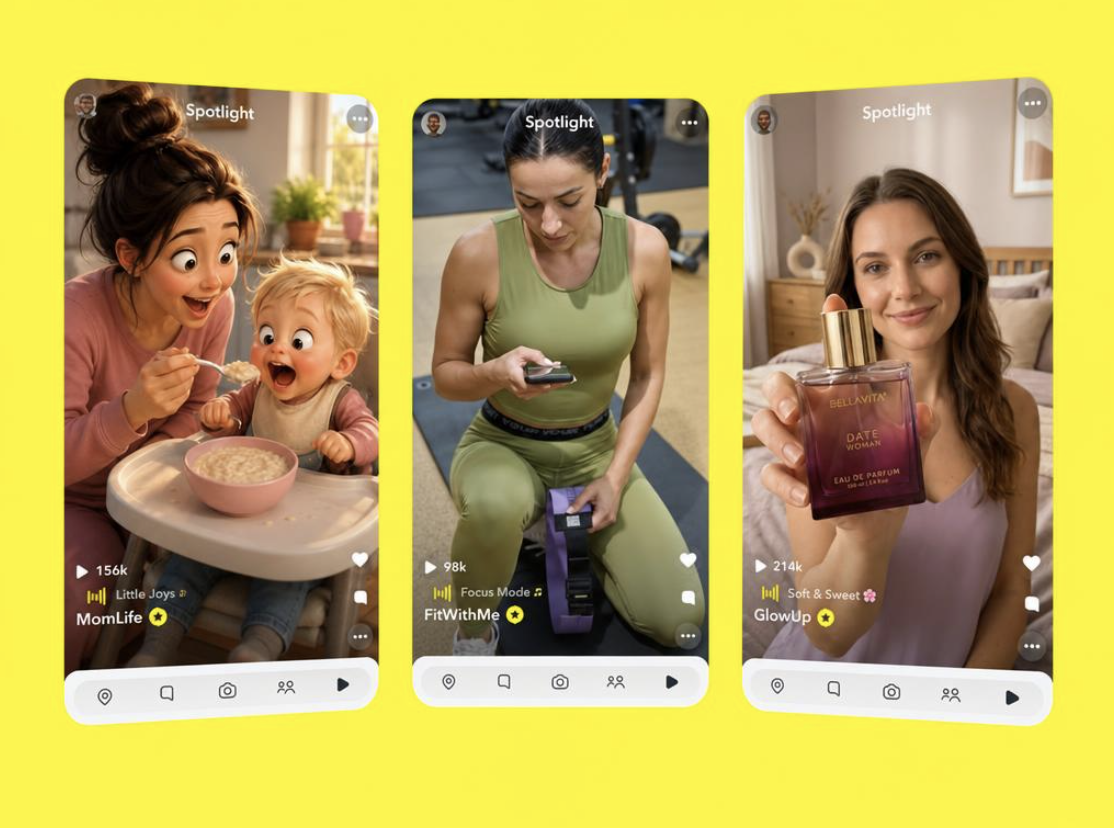
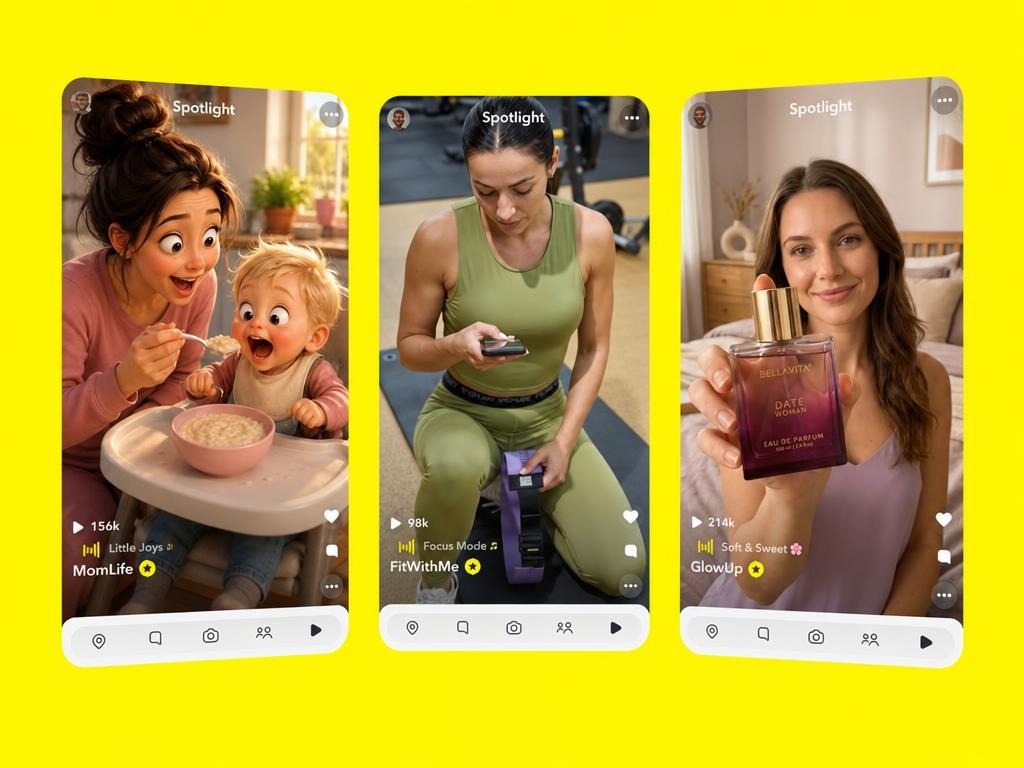
Somewhere between the $2,000 Kalshi spot that aired during the NBA Finals and the fifteenth AI avatar telling you to "stop scrolling," AI ads stopped being a novelty. They became infrastructure. Roughly four in ten digital video ads now carry a generative AI fingerprint.
But here is the uncomfortable part. Consumers noticed. And they are not nearly as enthusiastic as the people buying the media think they are.
This is not a tool roundup. It is a format-by-format look at what is converting right now, what the numbers say, and what to do about it this quarter. Five formats made the cut. Two popular ones did not.
The state of play in five numbers
A quick calibration first. When everyone has cheap creative, cheap creative stops being an edge.
- 86% of digital video buyers use or plan to use generative AI to build video creative, per IAB's Digital Video Ad Spend & Strategy report.
- Buyers projected gen AI would touch about 40% of all video ads in 2026, up from 22% in 2024 and 30% in 2025; IAB's 2026 update now points to 43% by 2027.
- Cost efficiency is now the number-one reason advertisers cite for using AI (64%), up from fifth place in 2024. Creative innovation slipped to 61%.
- Only 45% of Gen Z and Millennial consumers feel positive about AI-generated ads. 82% of ad executives believe they do. That is a 37-point perception gap, and it widened from 32 points two years ago.
- 96% of small and mid-size spenders told IAB they are unsatisfied with their gen AI implementations and want proof of ROI. Adoption is high; satisfaction is not.
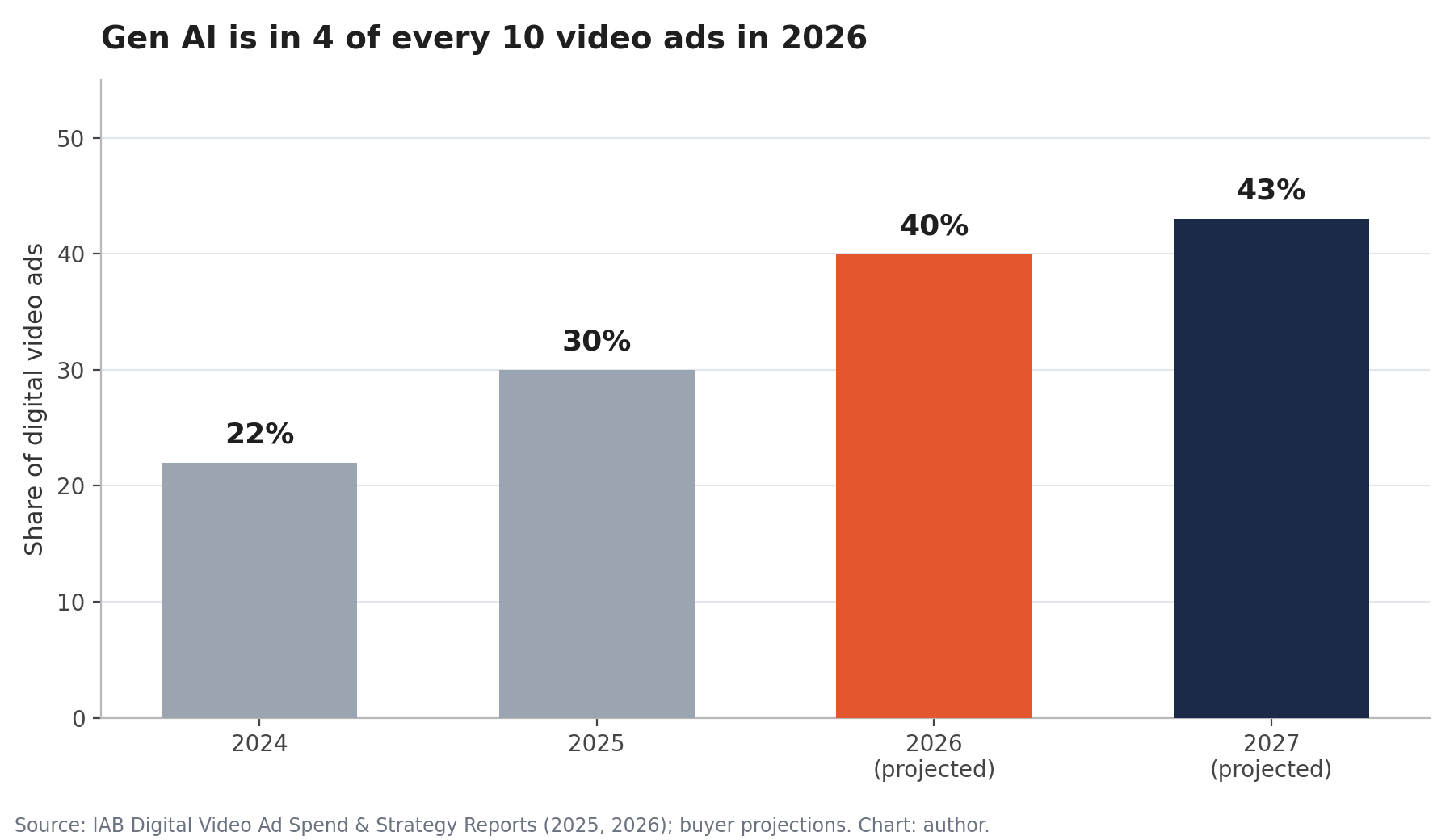
Chart 1. Generative AI's share of digital video ads, 2024 to 2027 (IAB buyer data and projections).
The pattern: the industry is buying AI creative to cut costs at exactly the moment the audience is getting better at spotting it. The formats that work in 2026 resolve that tension.
Format #1: The AI-UGC avatar testimonial (the creator who never sleeps)
What it is
A synthetic presenter delivers a scripted hook to camera in the grammar of creator content: handheld framing, captions, a face, a claim. Tools like HeyGen, Synthesia, Creatify and Arcads generate dozens of variants from one script. This is the workhorse of 2026 performance marketing on Meta, TikTok and Shorts, and the format most likely to embarrass you if done lazily.
What the data says
Split-test data is more sober than vendor decks. Across direct-response accounts tracked since 2024, avatar UGC lands 10 to 20% behind real-creator UGC on hook rate and click-through. The gap is real, but small enough that production savings usually make avatars the better unit-economics bet.
On cold traffic, AI avatars and human UGC sit within 10 to 15% of each other on CPA. On warm retargeting, human testimonials still win by 20 to 25% on conversion rate, because that is where authenticity is actually judged.
The real edge is velocity. Brands running avatars alongside human UGC find winning hooks two to three times faster. Those running 15 to 25 active variants on a 7-to-10-day refresh typically see CPA improve 20 to 35% over 90 days.
How to run it
- Treat the script as 80% of performance. A strong hook on a mediocre avatar beats a perfect avatar with a vague opener. Brief specific hook patterns ("problem-agitation in the first two seconds"), not "an engaging opening."
- Use avatars for top-of-funnel volume and hook discovery. Keep real humans for retargeting and high-consideration purchases.
- Measure thumb-stop rate (3-second views over impressions) separately from CPA. A high thumb-stop and low CVR means the hook works and the offer or CTA is failing, which is a brief fix, not a format problem.
- Expect 15 to 20% shorter creative lifespan than strong human UGC. Plan the refresh cadence before launch, not after fatigue hits.
In B2B and technical categories the avatar is less "customer who loves the product" and more "the explainer your sales team never has time to record." Volodymyr Lebedenko, CMO at HostZealot, puts it this way:
"In hosting, nobody buys because a face on a screen is charming. They buy because someone finally explained the difference between a VPS and a dedicated server in 40 seconds without a whiteboard. AI avatars let us produce that explainer in eleven languages in an afternoon, and test five different openings against each other by Friday. The trick is that the script has to be written by an engineer and then made human, not the other way round. When we let the tool write the technical part, the click-through held up but the trial-to-paid rate fell, because the people who clicked felt misled by the simplification. Now we generate the delivery, never the substance."
Format #2: Ads inside the AI answer (conversational placements)
What it is
The newest surface, and the one most likely to reshape 2027 media plans. Instead of running next to search results, the ad lives inside a conversation: a sponsored card beneath a ChatGPT response, or Google's Conversational Discovery and Highlighted Answers units embedded in AI Mode. Here AI does not just generate the ad; the AI is the placement.
What just happened
Two developments make this urgent. OpenAI expanded ChatGPT Ads to 31 European countries in August 2026, its largest expansion yet, after opening self-serve Ads Manager to all US businesses in May and dropping the $200,000 minimum. Then, in the week of September 11, Amazon announced a partnership letting select US brands run ChatGPT ads through Amazon's own ad platform, with OpenAI controlling delivery.
Google is also testing exact and phrase match Search ads inside AI Mode for high-intent queries, pulling tightly controlled campaigns into AI placements whether you planned it or not. Conversational placements are becoming a default you have to manage, not an experiment you opt into.
What the data says
Early benchmarks look scary if you come from search. Similarweb pegged ChatGPT ad CTR at 0.68% in May; eMarketer says closer to 0.9%, against roughly 6.4% for Google Search. A seven-times gap on paper.
The economics live one step later. Practitioner data shows ChatGPT clicks converting at 1.5 to 4 times the rate of Google Search in matching verticals, with 4 to 7% click-to-action rates considered healthy. OpenAI publishes no cross-advertiser benchmarks, so treat every number as provisional.
Channel (2026, early data)
Typical CTR
Typical CPC
Click-to-action CVR
What it means
ChatGPT Ads (sponsored card)
0.7 to 1.3%
$3 to $5 ecommerce; $8 to $18 software/finance
4 to 7% (8%+ top decile)
Low volume, high intent; CPA competitive despite pricey clicks
Google Search (text ads)
~6.4% avg
Varies widely by vertical
Baseline
Highest click volume; AI Mode now pulling in exact/phrase match
Meta (feed and Reels)
~1.7%
$0.50 to $3
1 to 3%
Cheapest clicks; creative volume drives results
Table 1. Early conversational-ad benchmarks versus established channels. Sources: Similarweb, eMarketer, Tru Commerce, Lapis practitioner data; all ChatGPT figures are beta-stage and updated quarterly.
How to run it
- Write context hints, not keywords. ChatGPT matches on conversation topic and history. A sub-0.5% CTR is almost always a relevance problem, not a creative one.
- Build the landing page for a researcher, not a browser. The user arrives mid-decision with a long, specific question. Answer it above the fold.
- Budget for a learning phase. With a $25 daily minimum and no vertical benchmarks, run a four-week test with a single clear conversion event before judging.
- Audit your Google Search campaigns now. If exact and phrase match are leaking into AI Mode, decide deliberately whether you want them there.
Format #3: The infinite-variant dynamic ad (one brief, ten thousand creatives)
What it is
Upload a product image, a catalog, and a budget. The platform generates headlines, backgrounds, video cuts and aspect ratios, assembles thousands of combinations, tests them live, and shifts spend toward winners. Meta's Advantage+ generative tools, Google's AI Max and Performance Max, Pinterest's auto-collages and TikTok's Symphony all sit here. The ad is whatever the machine decided worked for that person, in that placement, at that moment.
What just happened
Starting September 1, 2026, Google began automatically migrating campaign-level Broad Match and legacy Automatically Created Assets campaigns to AI Max, with Dynamic Search Ads scheduled to follow in February 2027. Microsoft switched its own AI Max on by default in the same window. Meta, for its part, is replacing placement exclusion checkboxes with value rules that can cut a bid by 90% but cannot switch a placement off.
Each change moves a decision from your team to the platform. You can fight it or feed it, but not ignore it.
Smaller brands are already living in this workflow, and the ones doing it well draw a clear line. Ryan Close, founder and CEO of cocktail-maker brand Bartesian, told Digiday that AI now handles about 80% of the early creative work in-house, letting the team test messaging, imagery, tone and performance before an agency touches anything. But he is wary of everything starting to look AI-generated: "the heart of the brand is still built in the real world," he said. That is the split most mid-size teams should copy: let the machine do the versions, keep humans on the thing worth versioning.
What the data says
The upside is concrete. Pinterest's AI auto-collages, which turn a catalog into thousands of shoppable collages in minutes, were saved twice as often as standard Pins in early testing. StackAdapt reports motion and video production up 59% year over year as AI versioning got cheap.
The downside is also concrete. Comcast Advertising's survey found 61% of advertisers have not yet seen meaningful results from AI, and only 20% use it for full ad production. The machine scales what you give it. Give it something thin and it scales thin.
Layer of the ad
Let the machine generate it
Keep a human on it
Why
Aspect ratios, crops, safe zones
Yes, always
Spot-check monthly
Pure production; zero brand risk
Background swaps, scene variants
Yes
Approve a style library first
Fast wins; occasional weird artifacts
Headline and body variants
Yes, from an approved claim set
Write the claim set; check compliance
Machine remixes; it should not invent claims
Offer, price, promo logic
Only from a structured feed
Own the feed
Errors here are expensive and public
Core concept, insight, tone
No
Yes, non-negotiable
This is the part consumers are judging
Regulated disclaimers (finance, gambling, health)
No
Yes, locked template
One wrong variant is a regulator letter
Table 2. A practical split of what to automate and what to keep human in dynamic creative programs.
Few verticals feel this more than iGaming, where creative changes hourly with fixtures and odds, and one non-compliant variant can cost a license. Artem Fedin, CEO of aff.studio, describes how his team handles it:
"iGaming in 2026 is a variant game. A Champions League matchday gives us maybe six hours where a specific market is interesting, and the creative has to hit that window in twelve GEOs with twelve different bonus structures and twelve regulators watching. Two years ago that was thirty people. Now it is one brief, a locked template for the compliance block, and a generation pipeline that produces eight hundred variants before kickoff. What we absolutely do not automate is the claim. The AI can change the background from Munich to Madrid; it does not get to decide what 'free bet' means in Ontario versus Sweden. The operators who confused those two things in 2025 are the ones paying fines in 2026."
Format #4: The cinematic AI video spot (the $2,000 commercial)
What it is
Fully text-to-video commercials built with Veo, Sora, Runway or Kling, often with no human footage at all. Kalshi's NBA Finals spot is the reference case: 15 seconds, produced in two to three days by one person, roughly $2,000 in generation costs, 300 to 400 generations to get 15 usable clips, and about a 95% cost reduction versus a traditional shoot.
Coca-Cola ran an AI-generated holiday campaign for the second year running; Volvo and others followed. The format has moved from stunt to line item.
What the data says, and why it is only conditionally on this list
Here the hype and the split tests disagree most. In direct-response accounts, full text-to-video with no human anchor still runs 30 to 50% behind human-produced video on CTR, and closes the gap slowest of any AI format. Narrative and lifestyle video is where the uncanny valley still bites.
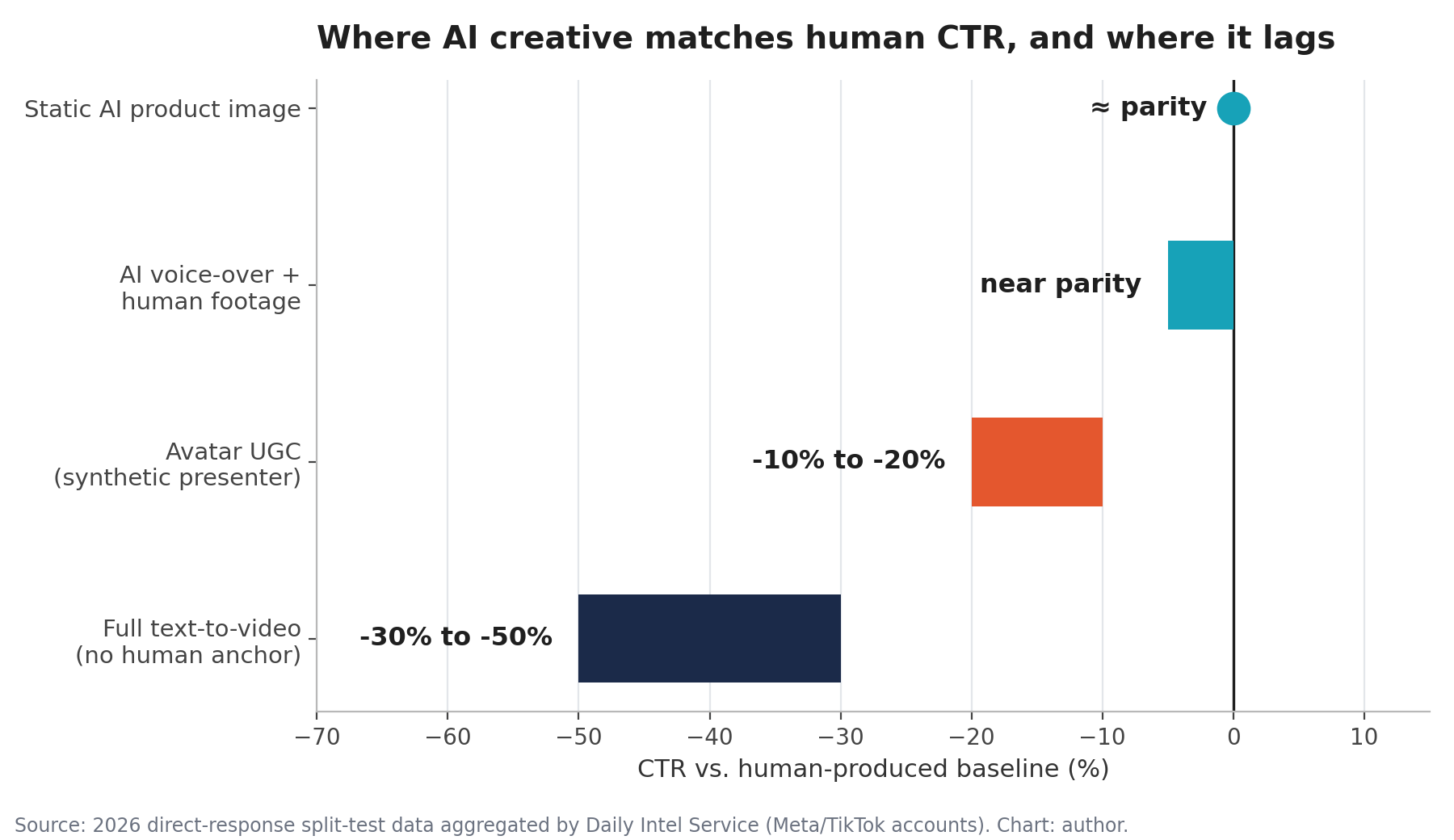
Chart 2. Click-through rate of AI-generated creative relative to human-produced baselines, by format (2026 DR split tests).
So why include it? Because Kalshi did not win on CTR parity. It won on attention per dollar and a deliberate embrace of the aesthetic. Three million views on X came because it looked like AI, not despite it. The rule for 2026: lean in or stay out. Cinematic AI video works for brand moments, event tie-ins, absurdist humor and fast cultural reaction. It does not yet replace a product film that needs to feel trustworthy.
How to run it
- Budget for generations, not minutes. Expect a 20-to-1 ratio of generated clips to usable ones, and price the creative director's time accordingly.
- Use a chatbot to write the shot list and prompts from a human script, five prompts at a time. Quality drops when you ask for more in one go.
- Keep humans in the frame where trust matters. Hybrid spots (AI environments, real presenter) test far closer to parity than pure synthetic narrative.
- Disclose. IAB's consumer research found that awareness an ad was AI-made can raise purchase likelihood for a meaningful share of young consumers. Hiding it is the higher-risk choice.
Format #5: The AI-localized, lip-synced ad (one shoot, every market)
What it is
Take one strong creative, human or synthetic, and use AI dubbing with voice cloning and frame-level lip-sync to produce native-language versions for every market. The face stays. The voice stays recognizably the same person. Only the language and cultural references change. Meta now offers AI dubbing to advertisers, YouTube is piloting automated lip-sync, and standalone tools have reached broadcast quality. It is the least glamorous format here and arguably the highest-ROI one for any brand selling across borders.
What the data says
Studio dubbing runs roughly $50 to $200 per finished minute and takes two weeks or more. AI dubbing runs $2 to $30 per minute and finishes in hours, which is why localization firms consistently cite 70 to 90% cost reductions. One lip-sync vendor's published case data shows YouTube CTR roughly doubling versus subtitled originals.
The catch: early tools had 200 to 500 millisecond lip delays and viewers punished them. The good 2026 tools are frame-accurate, but a literal idiom still reads as foreign. Cultural adaptation, not translation, is the work.
Travel is the natural home for this format: one destination, dozens of source markets, a customer who decides in their own language. Alexandra Dubakova, CMO at Freetour.com, explains what changed:
"We sell the same walking tour in Lisbon to a family from Seoul, a couple from São Paulo and a solo traveler from Berlin, and each of them wants to hear about it from someone who sounds like them. Until recently that meant either subtitles nobody read or a localization budget we could only justify for our three biggest markets. Now our guides record one honest, slightly imperfect video, and we ship it in fourteen languages with their own voice and their own face by the next morning. The performance jump was not subtle. Completion rates in our smaller markets went from 'barely measurable' to the same level as English. The one rule we learned the hard way: a human native speaker reviews every version before it goes live, because an AI that translates 'hidden gem' literally into Korean is not selling anyone a tour."
How to run it
- Localize the hook and the CTA first. If budget is tight, dub the first three seconds and the last three, and subtitle the middle.
- Build a glossary of brand terms and cultural swaps per market before the first job, then reuse it. Glossary-driven tools cut revision rounds dramatically.
- Keep a native-speaker review step. It costs a fraction of a reshoot and catches the errors that damage trust most.
- Track completion rate by language, not just CTR. Lip-sync failures show up as mid-video drop-off before they show up in conversion data.
Two formats that are burning budget in 2026
Two formats keep getting pitched and keep underdelivering.
The fully synthetic influencer
Digital humans with backstories are a real creative frontier, and major brands are testing them. But where authenticity is being judged, human testimonials still beat synthetic ones by 20 to 25%. A synthetic influencer is a brand mascot with extra steps. Budget it as one and stop expecting it to behave like a creator.
The pure AI narrative spot for direct response
The same 30 to 50% CTR deficit that makes cinematic AI video a brand play makes it a poor performance play. If the KPI is CPA and the product needs trust, a synthetic story with no human anchor is the most expensive way to find that out.
The trust tax: what the perception gap actually costs you
Every format above runs into the same headwind: consumers are seeing more AI ads and liking them less. 71% of Gen Z and Millennials believe they have seen an AI-made ad, up from 54% in 2024. Negative sentiment rose 12 points in that time and the neutral middle shrank from 34% to 25%. Opinions are hardening.
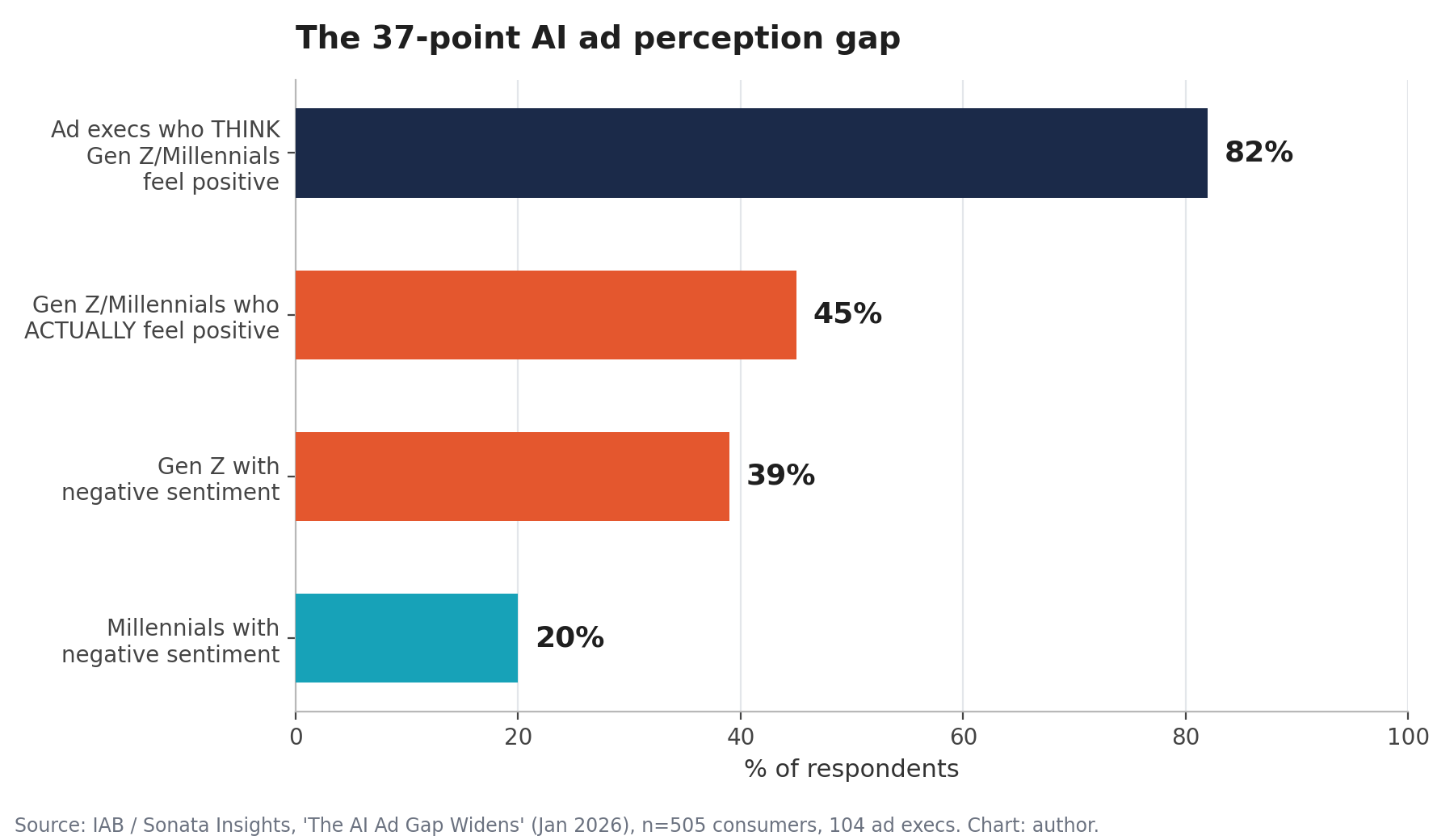
Chart 3. Advertiser beliefs versus consumer sentiment on AI-generated ads, and the Gen Z versus Millennial split.
Gen Z is the most comfortable using AI personally and the most skeptical of brands using it. 39% report negative sentiment, nearly double Millennials at 20%. Consumers are twice as likely as executives to call AI-using brands "manipulative." Debra Aho Williamson of Sonata Insights, who co-authored the IAB study, noted that Gen Z has a finely tuned instinct for spotting AI imagery and is quick to complain publicly when something looks off.
Regulators are moving too. South Korea now requires labels on AI-generated ads and has promised fines. Build disclosure into the workflow before you are forced to.
Stephan Pretorius, WPP's Chief Technology Officer, offered the clearest framing in a January 2026 Fortune interview. The critical thing, he said, is "making sure that humans are in control of the output," evaluating and applying taste and judgment, while still letting the tools expand the thinking rather than turning people into passive passengers. With 85,000 of WPP's 108,000 staff on its AI operating system monthly, that is not a theoretical position.
The practical translation for a CMO:
- Disclose AI use where the audience skews young. IAB's data shows disclosure can increase purchase likelihood; concealment is what triggers the "manipulative" label.
- Define what the machine is never allowed to touch: the core idea, regulated claims, the offer logic. Write it down. Enforce it in the pipeline.
- Measure the perception, not just the performance. Add one brand-sentiment question to your post-campaign survey that asks whether the ad felt "real."
- Watch your Gen Z cohorts separately. A format that lifts Millennial CPA by 20% and quietly erodes Gen Z brand favorability is not a win.
Your 30-day action plan
You do not need all five formats. You need the two that fit your funnel, run properly, with guardrails. A lean team can execute this in a month.
- Week 1: Audit exposure. Pull a list of every Google campaign affected by the September AI Max migration and every Meta ad set relying on placement exclusions. Decide, campaign by campaign, whether to feed the automation or rebuild.
- Week 1: Pick two formats. For DTC and app: AI-UGC avatars plus dynamic variants. For B2B and considered purchases: conversational placements plus localization. For brand moments: cinematic AI video with a human anchor.
- Week 2: Write the claim set and the compliance template. This is the single document that prevents the machine from inventing a promise you cannot keep. Get legal to sign it once, then reuse it.
- Week 2: Launch a four-week ChatGPT Ads test with one conversion event and a $50 to $100 daily budget. Judge it on click-to-action rate, not CTR.
- Week 3: Stand up an avatar or localization pipeline with a native-speaker review step. Produce 15 to 25 variants, not three. Set a 7-to-10-day refresh calendar.
- Week 4: Add a disclosure line and a "did this feel real?" survey question. Read results by generation. Kill anything that lifts CPA while sinking Gen Z sentiment.
- Week 4: Report to the CFO in their language. Meta and Google are pitching cost certainty to finance; show your own version: cost per test, time to winning creative, CPA trend.
The bottom line
AI-generated advertising in 2026 is not one thing. Avatars are a velocity play. Conversational placements are an intent play. Dynamic variants are a scale play. Cinematic spots are an attention play. Localization is a reach play. Each has a number that proves it works and a number that shows where it breaks.
The brands winning are not the ones with the best prompts. They are the ones that decided, clearly and in writing, what the machine is for, and what it is not. Everything else is production.








La privacidad es importante para nosotros, por lo que tiene la opción de deshabilitar ciertos tipos de almacenamiento que pueden no ser necesarios para el funcionamiento básico del sitio web. El bloqueo de categorías puede afectar a su experiencia en el sitio web. Más información


