
A Modern Social Media Advertising Strategy That Actually Works
A solid social media advertising strategy is your map for turning clicks into customers. It makes sure every pound you spend is a deliberate move toward growing your business. This means setting clear goals, figuring out who you're talking to, picking the right platforms, and constantly checking what's working. It’s the difference between just posting stuff and getting predictable, repeatable results.
Building Your Strategic Foundation
Before you even think about launching an ad, you have to lay the groundwork. A winning social media ad strategy doesn't start with a clever campaign idea or picking a platform. It starts with knowing your business goals inside and out.
Think of it like building a house. You wouldn't just start throwing up walls without a detailed blueprint. Your strategy is that blueprint, making sure every single action has a clear purpose.
This first step is all about getting past vanity metrics like likes and followers. Sure, those numbers can be a nice ego boost, but they don't pay the bills. The real focus has to be on goals that actually affect your bottom line. What do you really want to accomplish?
From Business Goals to Actionable KPIs
The whole process starts by taking your big-picture business ambitions and breaking them down into specific, measurable targets, often with the support of an AI business plan generator to help structure strategic priorities and define realistic projections. This structured planning approach is also commonly taught in a digital marketing course, where marketers learn how to translate business goals into measurable marketing actions. This hierarchy ensures that your day-to-day advertising efforts stay directly connected to the main objective. This hierarchy keeps your day-to-day advertising efforts tied directly to the main goal.
- Business Growth: This is the ultimate prize. It could be anything from increasing total revenue to breaking into a new market or becoming the go-to name in your industry.
- Campaign Objectives: These are the specific marketing goals that will get you there. Think generating qualified leads, driving online sales, or getting more people to install your app.
- Key Performance Indicators (KPIs): These are the concrete numbers you track to see if you're hitting your objectives. They’re what tell you if the strategy is actually working.
This top-down approach makes every decision intentional. You can see how these pieces all fit together to create a strong foundation.

As the diagram shows, every KPI you watch should feed into an objective, and every objective should fuel your overall business growth. Simple as that.
Defining Your Core Metrics
Once your objectives are crystal clear, it’s time to pick the right KPIs. If your main objective is to drive sales, your primary KPIs will likely be Return on Ad Spend (ROAS) and Customer Acquisition Cost (CAC). If you're focused on lead generation, you'll be watching Cost Per Lead (CPL) and Conversion Rate like a hawk.
The best strategies are ruthlessly focused. Instead of getting bogged down tracking dozens of metrics, pinpoint the 2-3 KPIs that have the most direct impact on your main goal. This clarity keeps you from drowning in data and helps you make smarter decisions, faster.
With global social media ad spend expected to reach $276.7 billion in 2025, the space is more crowded than ever. Businesses are shelling out an average of $46.47 per user just to be seen, which means a precise, goal-driven strategy isn't just a nice-to-have—it's essential.
For a deeper look into the wider discipline, it’s worth exploring the full scope of Social Media Marketing UK. Nailing this foundation is a financial necessity to make sure your investment actually pays off.
Finding and Targeting Your Ideal Customer

Let's be blunt: the most creative, high-budget ad in the world is completely useless if it’s shown to the wrong people. Getting your audience targeting right is the difference between shouting into a hurricane and having a quiet, compelling conversation with someone already leaning in to listen. It’s all about precision, not just raw reach.
Think of yourself as a locksmith, not a demolition crew. You're not trying to bash down every door. You're trying to find the one key that perfectly fits the lock of your ideal customer. This surgical approach is a non-negotiable part of any modern social media ad strategy—it’s how you make sure your message lands and your budget isn't just evaporating.
To do this well, you have to get comfortable with the three main audience types that social platforms offer. Each one has a specific job to do, whether it's finding brand new faces or bringing back old friends.
The Three Core Audience Types
Mastering these three categories is your key to building an advertising funnel that actually works and can grow with you. They let you connect with people at every stage of their journey with your brand.
- Core Audiences: This is your starting block, where you find people who don't know you exist yet. You build these audiences from scratch using demographics (age, gender, location), interests (what pages they follow, hobbies), and behaviors (what phone they use, online purchasing habits). It’s how you introduce yourself to a cold but potentially interested crowd.
- Custom Audiences: Here’s where the real money is made. These audiences are built from your data. We're talking about people who have visited your website (retargeting), engaged with your social posts, or are on your email list. These are warm leads who are already familiar with you, making them far more likely to convert.
- Lookalike Audiences: This is where the platform’s algorithm does the heavy lifting for you. You give the platform a high-quality Custom Audience—say, your best customers—and it goes out and finds millions of new people who share similar characteristics. It’s the single most powerful tool for scaling your campaigns and finding new prospects that behave like your existing fans.
By weaving these three types together, you create a complete targeting machine. You use Core audiences to fill the top of your funnel, nurture interest with Custom audiences, and scale what works with Lookalikes.
Building Your Buyer Persona
Before you even touch the audience builder in Ads Manager, you need a crystal-clear picture of who you're trying to reach. That’s where a buyer persona comes in—a detailed, semi-fictional profile of your ideal customer, grounded in research and actual data.
Don't just stop at the basics. What are their real-world goals and frustrations? What truly motivates them? Which social platforms are they scrolling through, and why? The sharper this picture, the more deadly accurate your targeting will be.
Think of your buyer persona as your North Star for every targeting decision. It stops you from guessing and makes sure every ad speaks to a real person, not just a faceless data point.
For example, a B2B software company might build a "Marketing Manager Mary" persona and target her on LinkedIn using job titles, company size, and specific industry filters. A DTC skincare brand, however, might be looking for "Skincare Savvy Sarah" on Instagram, targeting her based on interests in specific beauty influencers, competitor brands, and wellness topics.
This level of detail is what turns an ad from annoying background noise into a genuinely helpful message. When you consider that 78% of consumers say a brand's social media presence heavily influences their trust, you start to see how critical this is. Precise targeting builds that trust from the very first impression, making your ads feel welcome, not intrusive. That's the foundation of a winning strategy.
Choosing the Right Platforms for Your Ads

Where you run your ads is just as important as what your ads say. A brilliant campaign on the wrong platform is like setting up a beautiful storefront on a deserted street—it just won’t be seen by the right people.This isn’t about jumping on the platform with the most users, but choosing the right channel, whether that’s Instagram, LinkedIn, or WhatsApp Marketing, based on where your audience actually engages. It's about finding the right environment for your specific brand and goals. Every social network has its own culture, user behavior, and advertising strengths.
Aligning Platforms with Your Campaign Goals
Think of social media platforms as different tools in a toolbox. You wouldn't use a hammer to turn a screw, right? In the same way, the platform you pick has to match what you’re trying to achieve, whether that's landing B2B leads, driving e-commerce sales, or just getting your name out there.
For instance, a B2B software company trying to reach C-suite executives will find its most valuable audience on LinkedIn. The entire platform is built for professional networking, making it perfect for targeting by job title, industry, and company size.
On the flip side, an e-commerce brand selling beautiful home decor will probably get far better results on visually driven platforms like Instagram and Pinterest, where people are actively looking for inspiration.
Your platform choice is a strategic decision that directly impacts your budget's efficiency. When you match the platform’s context to your campaign's intent, your ads feel native and relevant, not disruptive.
This alignment between your brand guidelines and the platform stops you from wasting money and dramatically increases your odds of connecting with an audience ready to act. While an estimated 81% of consumers use social media to find new products, their mindset changes completely as they scroll from one app to another.
A Deeper Look at Platform Strengths
To help you decide, here’s a quick overview of what the major platforms do best. This matrix matches common advertising goals with the platforms and ad formats most likely to deliver results.
Platform Selection Matrix Based On Campaign Goals
Campaign GoalPrimary Platform(s)Best Ad Format(s)Target AudienceBrand AwarenessTikTok, InstagramShort-Form Video, StoriesBroad, younger demographicsLead Generation (B2B)LinkedInLead Gen Forms, Sponsored ContentProfessionals by industry, job titleE-commerce Sales (B2C)Meta (Facebook & Instagram), PinterestCarousel Ads, Collection Ads, Shoppable PinsInterest-based, lookalike audiencesCommunity EngagementFacebook, InstagramLive Video, Polls, Interactive StoriesExisting followers, local communitiesWebsite TrafficPinterest, FacebookImage Ads, Video Ads with strong CTAsUsers seeking inspiration or solutions
This table is a starting point. The real magic happens when you understand the unique personality of each platform and how it fits your brand.
Here's a breakdown of what makes each one tick:
- Meta (Facebook & Instagram): Still the giant in the room, with unmatched audience size and incredibly detailed targeting options. It’s a powerhouse for driving direct actions like sales and leads, especially for B2C businesses. Its algorithm is exceptional at finding buyers. If you're in e-commerce, this detailed playbook on Facebook Ads for Ecommerce is essential reading.
- TikTok: The undisputed king of short-form video and cultural trends. TikTok is the place for top-of-funnel campaigns that rely on authentic, entertaining, and user-generated-style content. It’s less about the hard sell and more about grabbing attention and starting a conversation.
- LinkedIn: The go-to B2B advertising network, period. It's the most effective channel for reaching professionals in specific roles or industries, making it invaluable for generating high-quality leads, promoting webinars, and running account-based marketing campaigns.
- Pinterest: A visual discovery engine where users are actively planning their next purchase. This makes it a goldmine for brands in home goods, fashion, food, and DIY. Your ads can catch people right at the beginning of their buying journey when they're most open to ideas. You can also consider hiring a Pinterest marketer from Upwork or Fiverr to make things more easy for you
Picking the right mix of platforms is a cornerstone of any successful social media advertising strategy. It ensures your message doesn't just reach people, but that it reaches them in the right place, at the right time.
4. Crafting Ads That Stop the Scroll
In the endless river of content that is a social media feed, your ad creative is your lifeline. It's the hook, the story, and your best salesperson all rolled into a three-second audition for someone's attention. In the endless river of content that is a social media feeds, your ad creative is your lifeline. It's the hook, the story, and your best salesperson all rolled into a three-second audition for someone's attention. Even the most perfectly targeted ad is dead on arrival if the creative is dull, confusing, or just blends in with everything else.
The goal isn’t just to be seen; it's to be felt. You have to craft visuals and write words that are compelling enough to physically stop a user’s thumb mid-scroll. This is where the art of advertising smashes into the science of it—mixing proven psychological triggers with a disciplined testing process to find out what really makes people tick.
The Anatomy of a High-Performing Ad
No matter the platform, the ads that truly connect and convert share a few key ingredients. Think of these as the fundamental building blocks for grabbing attention and getting people to take the action you want. If you master these, you’ll have a reliable framework for building ads that just plain work.
Here are the critical elements:
- A Scroll-Stopping Hook: This is priority number one. It could be a jaw-dropping image, a bold headline that challenges a common belief, or the first few seconds of a video asking a burning question. Its only job is to earn you three more seconds of their time.
- Clear and Compelling Copy: Get to the point. Your ad copy needs to be short, focused on the benefits, and speak directly to your audience's problems or dreams. Ditch the jargon and spell out exactly what's in it for them.
- High-Quality Visuals: Whether it’s a static image, a carousel of photos, or a video, your visuals have to look professional. Grainy, poorly lit creative instantly screams "amateur" and kills trust before you even get a chance to make your pitch.
- A Single, Obvious Call-to-Action (CTA): What, exactly, do you want them to do next? "Shop Now," "Learn More," "Sign Up"—be crystal clear and make it easy. Giving people too many choices often leads to them making none at all.
Making sure every ad you run checks these four boxes sets a baseline for quality. From there, you can dive into the really fun part: testing and improving.
Moving from Guesswork to Data with A/B Testing
How do you really know if a blue button works better than a green one? Or if a headline framed as a question gets more clicks than a bold statement? You don’t guess—you test. A/B testing, also known as split testing, is simply the process of comparing two versions of an ad against each other to see which one comes out on top.
This is the engine that drives creative improvement. It pulls all the emotion and "I think this looks better" opinions out of the equation and replaces them with cold, hard data. The process is straightforward: you change only one single thing at a time and see what happens. Starting from standardized social media templates makes it easier to isolate variables and run cleaner A/B tests.
The point of A/B testing isn't just to find one "winning" ad. It's to build a deep, data-backed understanding of what your audience truly responds to, so you can create better ads, more consistently, over the long haul.
For instance, you could run tests like:
- Headline A vs. Headline B: Does a benefit-driven headline ("Get Flawless Skin in 30 Days") beat one that agitates a pain point ("Tired of Acne Breakouts?")?
- Image A vs. Image B: Does a lifestyle photo of your product in action outperform a clean studio shot on a white background?
- CTA A vs. CTA B: Does the directness of "Shop Now" get more clicks than the lower-commitment "Explore the Collection"?
By isolating just one variable, you can say with confidence that any change in performance—like a higher click-through rate or a lower cost per conversion—is because of that specific element. A great way to get started is by using a solid foundation. For those looking to jumpstart this process, exploring different social media ad templates can give you a fantastic launchpad for building and testing your variations.
This constant loop of launching, measuring, and learning is what separates the amateurs from the pros. It turns your ad account from a slot machine into a predictable growth engine, making sure every dollar you spend teaches you something and gets you closer to your goals.
Managing Your Budget and Bidding Strategy

Let's talk about the money. A killer creative can get you noticed, but smart financial management is what makes paid social profitable. To really succeed, you need a firm grasp on your budget and a clear understanding of how your bidding choices actually drive performance.
Think of your budget as the fuel in your advertising tank. Your bidding strategy, on the other hand, is the accelerator. You need both working in harmony to get where you're going efficiently without running out of gas halfway there.
Daily Budgets vs Lifetime Budgets
One of the first calls you'll have to make is whether to set a daily or a lifetime budget. Both cap your total spend, but they give the platform’s algorithm very different marching orders on how to spend your cash.
A daily budget puts a strict limit on what you're willing to spend each day. This is your go-to for predictable, steady spending. It's perfect for ongoing, "always-on" campaigns where you need consistent ad delivery over the long haul.
A lifetime budget, in contrast, gives the platform the total amount you're willing to spend for the entire campaign flight. This hands the keys over to the algorithm, letting it spend more on days it sniffs out better opportunities. It can often lead to more efficient results, especially for campaigns with a clear start and end date.
So, when should you use which?
- Choose a Daily Budget for:
- Evergreen campaigns that you plan to run indefinitely.
- Top-of-funnel brand awareness efforts needing a steady presence.
- Situations where you need predictable daily spending to manage cash flow.
- Time-sensitive promotions, like a flash sale or event registration.
- Campaigns where you expect performance to naturally ebb and flow.
- When you want to empower the platform to hunt for the cheapest conversions over a set period.
Understanding Your Bidding Options
Once your budget is locked in, you have to tell the platform how to compete for ad space in the real-time auction. This is a critical decision because it signals to the algorithm what you value most.
Picture a real-world auction. You can either tell your bidder the absolute maximum price you'll pay for an item (manual bidding), or you can give them a goal and trust their expertise to get you the best possible deal (automated bidding).
The "best" bidding strategy isn't always the cheapest one. It's the one that directly supports your campaign objective. Are you just trying to get the most clicks for your buck, or are you laser-focused on profitable conversions? Your answer points you to the right bid.
Here are the most common strategies you'll encounter:
- Lowest Cost (or Highest Volume): This is the "get me the most bang for my buck" option. It tells the algorithm to secure the highest number of results (clicks, leads, etc.) possible within your budget. It’s a great starting point, but offers less control over the cost of each individual result.
- Cost Cap (or Target Cost): Here, you set an average cost you’re willing to pay per result. The platform then works to hit that target, which is fantastic for keeping your cost per acquisition (CPA) stable and predictable.
- Bid Cap: This is the most hands-on approach. You set the absolute maximum you're willing to pay in any single auction. It gives you ultimate control but requires constant monitoring to ensure your ads are actually getting delivered.
Profitability is all about putting your money where it works the hardest. A smart move is to start with a broader, automated strategy like Lowest Cost to gather some initial data. Once you have a clear idea of your performance benchmarks, you can then refine your approach with more controlled options like Cost Cap.
6. Measure, Optimize, and Then Optimize Again
Here’s a hard truth: launching your ad campaign is just the starting pistol. The real race is won in the days and weeks that follow. This is where you roll up your sleeves and get into the rhythm of measuring, learning, and optimizing. It’s how you shift from simply spending money to truly investing it.
Think of yourself as a pilot. You wouldn't just point the plane in the right direction and hope you land in Paris. You're constantly checking your instruments—speed, altitude, fuel—and making small, critical adjustments to stay on course. Your ads manager is your cockpit, and the metrics are your gauges.
Laying a Solid Tracking Foundation
Before you spend a single dollar, you absolutely must have your tracking in place. This isn’t optional. It usually means installing a small snippet of code, like the Meta Pixel or LinkedIn Insight Tag, on your website.
This little tag is the bridge connecting what happens on social media to what happens on your site. Without it, you’re flying completely blind. You’ll see clicks, sure, but you'll have no idea which ad actually led to a sale or a lead. Getting this right from day one is non-negotiable.
How to Read the Tea Leaves in Your Ads Manager
Okay, your campaigns are running and data is starting to pour in. Opening up your ads manager for the first time can feel like staring at a wall of numbers. Don’t panic. The key is to ignore the noise and focus only on the metrics tied directly to your objective.
This dashboard view gives you a quick, at-a-glance comparison of your campaigns and ad sets. It’s your first stop for spotting what’s hitting the mark and what’s falling flat.
To cut through the clutter, here’s what to zero in on based on your goals:
- Awareness Goal: Keep your eyes on Reach (how many unique people saw your ad) and Impressions (total views). If your frequency (impressions ÷ reach) starts climbing too high, it’s a sign people are seeing your ad over and over—time for a refresh.
- Engagement Goal: Your main metric here is Click-Through Rate (CTR). A chronically low CTR usually means there’s a mismatch between your creative and your audience. Something isn't resonating.
- Conversion Goal: This is where the money is. You live and die by your Cost Per Result (like Cost Per Lead or Cost Per Purchase) and Return on Ad Spend (ROAS). These numbers tell you, point-blank, if you’re making a profit.
Don’t make the rookie mistake of killing an ad just because its CTR is low. I’ve seen ads with a "poor" CTR bring in a fantastic ROAS. Always, always prioritize the metrics that are closest to your actual business goal.
The Never-Ending Loop of Optimization
Optimization isn't a task you check off a list; it’s a continuous process. You’re like a detective, constantly looking for clues in the data to figure out what’s working so you can do more of it, and what’s not so you can cut it loose. Increasingly, marketers are offloading parts of this continuous monitoring loop to AI marketing agents that watch performance signals 24/7 and surface optimization opportunities before a human would catch them.
Start by spotting the big trends. Is one ad creative blowing the others out of the water? Is a specific audience segment converting at half the cost of another? These are your marching orders. If you're testing multiple ad variations, you need a structured way to manage it all. For marketers who aren't data scientists, a whole category of ad testing tools has popped up to make this much less painful.
Once you have those insights, it’s time to act:
- Shift the Budget: This is the easiest win. Take money away from the ads and audiences that are struggling and give it to your winners. It’s an instant way to make your overall campaign more efficient.
- Prune Your Targeting: If an audience just isn't delivering, don’t be afraid to pause it. Then, take your best customers and build a new lookalike audience to find more people just like them.
- Iterate on Your Creative: Look at your best-performing ad. What’s the magic formula? Is it the headline? The image? The call-to-action? Use those winning elements as the template for your next batch of ads.
This constant feedback loop—analyze, adjust, test, repeat—is the engine of profitable growth. It’s how you turn a good campaign into a great one, ensuring every dollar you spend is working as hard as it possibly can.
Frequently Asked Questions
Jumping into paid social ads can feel like a maze. To help you find your way, I've put together answers to some of the most common questions that come up when building a social media advertising strategy.
How Much Should I Spend on Social Media Advertising?
Everyone wants a magic number, but the truth is, it doesn't exist. It all comes down to your specific business and goals.
A solid rule of thumb is to allocate 10-20% of your overall marketing budget to social ads. If you're brand new to this, don't go all in at once. Start small with a test budget—even $10-$20 per day is enough to start collecting data and see what resonates with your audience.
The real focus shouldn't be on how much you spend, but on what you get back. Keep a close eye on your Customer Acquisition Cost (CAC) and Return on Ad Spend (ROAS). Once you find a campaign that's actually making you money, you can scale your budget with confidence because you're operating on real-world data, not just guessing.
What Are the Most Important Metrics to Track?
This is another "it depends" answer, and for a good reason. The metrics you obsess over should tie directly back to your campaign's primary goal. Don't get bogged down in vanity metrics; focus on what truly matters.
Here’s a simple breakdown based on your objective:
- Building Awareness: If you just want people to know you exist, keep your eyes on Reach and Impressions.
- Driving Engagement: To see if your content is hitting the mark, track Likes, Comments, Shares, and Click-Through Rate (CTR).
- Getting Conversions: When sales are the goal, it's all about Conversion Rate, Cost Per Acquisition (CPA), and Return on Ad Spend (ROAS).
While every metric tells a piece of the story, ROAS is usually the final boss. It’s the clearest indicator of whether your ad dollars are actually turning into revenue, making it the bedrock of a healthy advertising strategy.
How Long Does It Take to See Results From Social Media Ads?
You'll start seeing something almost right away. Clicks, impressions, and other surface-level data will begin trickling in within the first 24-48 hours. But don't pop the champagne just yet.
Real results require a bit of patience. It usually takes about 1-2 weeks for the ad platform's algorithm to work its magic and exit the "learning phase." During this time, it's figuring out who to show your ads to for the best results. For campaigns aimed at sales or leads, you'll need even more time to gather enough conversion data to know if you're profitable.
The biggest mistake you can make is pulling the plug too early. Give your campaigns the time they need to gather data before you start making changes.
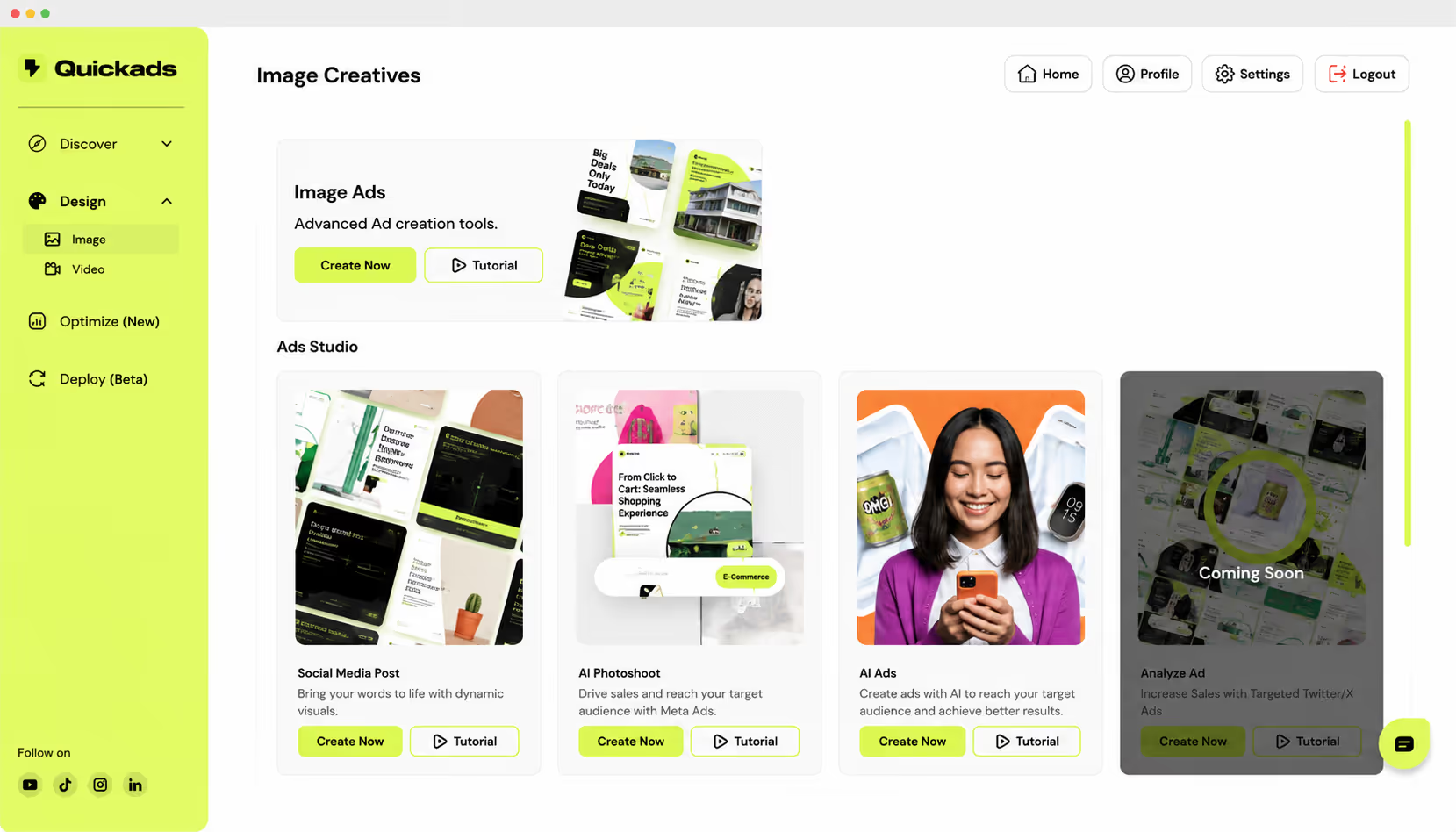
Ready to create stunning, high-performance ads without the hassle? quickads.ai uses AI to generate image and video ads in seconds, helping you launch better campaigns, faster. Start creating for free today!








Privacy is important to us, so you have the option of disabling certain types of storage that may not be necessary for the basic functioning of the website. Blocking categories may impact your experience on the website. View Our Privacy Policy


