
Mastering the Art of the Perfect Post: Your Ultimate Social Media Guide

Trying to get your social media posts to actually do something? It feels like a lot, right? You're trying to figure out what people want to see, how often to post, and if anyone's even looking. Plus, keeping up with all the different sites and what works on each one is a whole other ballgame. This guide is here to help make sense of it all, so you can stop guessing and start making posts that connect with your audience and get results. We'll break down how to make content that pops, when to share it, and how to know if it's even working.
Key Takeaways
- To make a good post on social media, you first need to know who you're talking to and what they care about. Think about what they want, not just what you want to sell.
- Mix it up: Don't just push products all the time. Share fun stuff, ask questions, and join in on conversations to keep people interested in your page.
- Plan your posts using a calendar. This helps you stay organized and make sure you're posting different kinds of content regularly, not just the same thing over and over.
- Figure out when your followers are actually online and looking at social media. Posting at the right time means more people will see what you put out there.
- Look at your numbers to see which posts did well and which ones flopped. Use this info to make your future posts better and get more people to pay attention.
Crafting Your Compelling Social Media Post
So, you want to make social media posts that actually get noticed? It’s not just about throwing something up and hoping for the best. It’s about thinking about who you’re talking to and what they actually care about. Let’s break down how to make your posts work harder for you.
Understanding Your Audience's Desires
First things first, who are you even trying to reach? Think about the people who follow you or who you want to follow you. What makes them tick? Are they looking for a good laugh, some helpful tips, or maybe just a bit of inspiration to get through their day? If you sell handmade pottery, your audience probably isn't looking for stock market tips. They want to see beautiful photos of your work, maybe a peek into your creative process, or even just a relatable quote about the joy of creating. The more you know what your audience wants, the easier it is to give it to them.
It’s a good idea to keep a rough balance in mind. A common suggestion is the 80/20 rule: about 80% of your content should be stuff your audience enjoys and engages with, and only about 20% should be directly selling something. People are on social media to relax and connect, not to be bombarded with ads. If you can make them laugh or teach them something new, they’ll be much more receptive when you do decide to mention your product or service.
Balancing Promotional Content with Engagement
This ties right into knowing your audience. You can’t just post “Buy my stuff!” all the time. It gets old fast. Think about what makes people stop scrolling. It could be a funny meme that relates to your industry, a quick tutorial video, or even just a question that gets people talking in the comments. These engagement-focused posts build a community around your brand. When people feel connected, they’re more likely to pay attention when you do have something to promote.
Consider these types of posts:
- Informative: Share tips, how-tos, or interesting facts related to your niche.
- Entertaining: Post jokes, relatable stories, or behind-the-scenes glimpses.
- Interactive: Ask questions, run polls, or start discussions.
- Promotional: Highlight your products or services, but do it sparingly.
Social media is a conversation, not a billboard. If you only talk about yourself and what you're selling, people will eventually tune you out. Make sure you're listening and responding too.
Leveraging Hashtag Holidays for Connection
Ever notice those random holidays popping up on your feed, like #NationalCoffeeDay or #InternationalDogDay? These are often called "hashtag holidays," and they're a goldmine for engagement. They give you a ready-made topic to talk about that’s relevant to a lot of people. You don’t have to be a coffee company to post about #NationalCoffeeDay; you could share your favorite coffee shop or a funny story about your morning brew. It’s a simple way to join a larger conversation and show a more human side of your brand. Plus, it’s a great way to fill out your content calendar without having to come up with entirely new ideas all the time. Just remember to pick holidays that make sense for your brand or audience, or at least put a unique spin on them.
Strategic Content Creation for Social Media
Developing a Consistent Visual Brand Identity
Think about your brand's look. Is it bright and playful, or more serious and professional? Having a consistent visual style across all your posts makes your brand instantly recognizable. This means using the same colors, fonts, and logo placement whenever possible. It helps people remember you and makes your feed look put-together, not messy.
Generating Engaging Captions with a Clear Call to Action
Your pictures and videos grab attention, but your words seal the deal. Write captions that tell a story, ask a question, or offer a tip. The goal is to get people to interact with your post. Don't forget to tell people what you want them to do next, whether it's visiting your website, signing up for a newsletter, or leaving a comment. This is your call to action, or CTA.
Here's a quick look at what makes a good caption:
- Hook: Start with something interesting to grab attention.
- Value: Share something useful, entertaining, or informative.
- CTA: Clearly state what you want the reader to do.
- Hashtags: Use relevant hashtags to increase visibility.
Utilizing User-Generated Content and Influencer Partnerships
Sometimes, the best content comes from your own customers or people who already have a following. User-generated content (UGC) is when your customers share photos or videos of themselves using your product or service. It's like free advertising and builds trust. Partnering with influencers, people with a good number of followers who align with your brand, can also get your message out to new audiences. Just make sure they genuinely like what you offer.
Creating content that feels authentic is key. People are tired of overly polished ads. They want to see real people and real experiences. This is where UGC and influencer collaborations can really shine, making your brand feel more relatable and trustworthy.
Optimizing Your Social Media Post Schedule

So, you've got your content ideas, you've figured out what your audience likes, and you're ready to start posting. But when should you actually hit publish? Timing is more important than you might think. Posting when your followers are actually online means more people see your stuff, plain and simple. It's not just about throwing content out there; it's about strategic placement.
The Importance of an Editorial Calendar
Think of an editorial calendar as your social media roadmap. It's where you map out what you're going to post, when, and on which platform. This isn't just about staying organized, though that's a big part of it. It helps you keep a steady flow of content, avoid last-minute scrambling, and make sure you're hitting all your content goals. You can plan out themes, special events, and even those fun "hashtag holidays" we talked about earlier. Having it all written down, maybe using a visualizing tool like a content calendar, helps you see the big picture and make sure you're not repeating yourself or missing key opportunities.
Identifying Your Optimal Posting Times
Figuring out the best times to post can feel like a guessing game, but there's a method to the madness. Generally, weekdays tend to perform better than weekends. Mid-morning and early afternoon often see higher engagement. For instance, many studies point to Tuesdays, Wednesdays, and Thursdays between 10 a.m. and 5 p.m. as prime time for most platforms. However, this isn't a hard and fast rule for everyone. Your specific audience might be night owls or early birds. The best way to find out is to look at your own analytics. Most social media platforms provide data on when your followers are most active. Pay attention to that information and adjust your schedule accordingly. You can even experiment with different times and track the results to see what works best for your unique following. This kind of data-driven approach is key to getting your content seen by the right people at the right moment.
Scheduling and Publishing Across Platforms
Manually posting to each platform takes up a ton of time. That's where social media scheduling tools can make a big difference. These platforms let you upload your content once and schedule it to go live across all your chosen social networks at the times you've decided are best. This saves you from having to log in and out of different apps multiple times a day. It also helps maintain consistency, which is super important for keeping your audience engaged. You can batch your work, creating and scheduling a week or even a month's worth of content in one sitting. This frees you up to focus on other important tasks, like engaging with your audience or creating new content ideas. It's all about working smarter, not harder, to keep your social media presence active and effective.
Consistency is more than just posting regularly; it's about showing up when your audience is most receptive. Understanding their online habits and aligning your schedule with them is a simple yet powerful way to boost visibility and engagement without needing to constantly create more content.
Analyzing and Refining Your Social Media Strategy
So, you've put in the work, crafted some killer posts, and you're feeling pretty good about your social media game. That's awesome! But here's the thing: social media isn't a 'set it and forget it' kind of deal. To really make it work for you, you've got to keep an eye on what's happening and be ready to tweak things. It's all about looking at the numbers and figuring out what's actually connecting with people.
Tracking Key Engagement Metrics
This is where you get to play detective. You need to know what's working and what's not. Forget just looking at likes; there's a whole lot more to see. Think about:
- Reach: How many unique people actually saw your post? This tells you if your content is getting out there.
- Impressions: This is the total number of times your post was displayed. It's different from reach because one person might see your post multiple times.
- Engagement Rate: This is a big one. It's usually calculated as (likes + comments + shares + saves) / reach or impressions. It shows how much people are interacting with your content relative to how many saw it.
- Click-Through Rate (CTR): If you're including links, this shows how many people clicked on them. It's a direct measure of how compelling your call to action is.
- Comments and Shares: These are gold. They show that people are not just passively scrolling but are actively engaging and want to spread your message.
It's easy to get lost in all the data, but focusing on these core metrics gives you a solid picture of your performance. You can find most of this information right within the analytics sections of each platform, or if you're using a management tool, it'll often consolidate it for you.
Interpreting Data for Content Improvement
Okay, so you've got the numbers. Now what? This is where the real strategy comes in. You need to look at these metrics and ask yourself why they are what they are. For example, if a certain type of video gets way more shares than your static images, it's a pretty clear signal about what your audience prefers. Don't just look at the top-performing posts; also, look at the ones that flopped. What was different about them? Was the caption too long? Was the image blurry? Was it posted at a time when no one was online?
Analyzing your social media performance isn't about finding fault; it's about finding opportunities. Every piece of data, good or bad, is a clue pointing you toward creating content that your audience will genuinely appreciate and interact with. It's a continuous feedback loop that helps you get better over time.
Here’s a quick way to think about it:
- High Reach, Low Engagement: Your content is being seen, but it's not grabbing attention. Try more compelling visuals or stronger opening hooks in your captions.
- Low Reach, High Engagement: Your content is great, but not enough people are seeing it. You might need to look at your posting times, hashtag strategy, or consider boosting posts.
- High Engagement on Specific Topics: Double down on those subjects! Your audience clearly wants more of that.
Adapting Your Strategy Based on Performance
This is the final, and arguably most important, step. You can't just look at the data and then go back to doing the exact same thing. You have to act on it. If your analytics show that posts with user-generated content get the most saves, then make a plan to actively seek out and share more of that. If your audience is most active on Tuesdays and Thursdays between 10 AM and 12 PM, adjust your posting schedule accordingly. It’s about being flexible and willing to change your approach based on what the data tells you. Think of it like this: your social media strategy is a living document, not a rigid rulebook. Regularly reviewing your performance and making smart adjustments will keep your content fresh, relevant, and effective in reaching your goals.
Mastering Different Social Media Platforms
Instagram's Visual Appeal and Storytelling
Instagram is all about the visuals. Think stunning photos, short, punchy videos, and those ever-popular Stories that disappear after 24 hours. It's a place where aesthetics really matter, so keeping your feed looking good is key. Using a visual planner can help make sure everything flows together nicely as people scroll through your profile. Don't forget Reels, either – they're huge for getting your content seen by new people. The goal here is to tell a story visually, making people stop and engage.
TikTok's Video-First Engagement
TikTok is the place to be if you're into short-form video. It's grown like crazy, and it's where a lot of trends start. If you want to make an impact, you've got to get comfortable with creating videos. It's not just about being polished; authenticity often wins out. Think quick cuts, catchy sounds, and content that grabs attention right away. It’s a platform that rewards creativity and a willingness to jump on what’s popular.
LinkedIn's Professional Networking Dynamics
LinkedIn is a different beast entirely. It’s where professionals hang out, so the vibe is more business-focused. People are there to connect with others in their industry, share insights, and look for career opportunities. Posts that offer advice, discuss industry trends, or share professional achievements tend to do well. It’s less about flashy visuals and more about thoughtful content that sparks conversation and shows your expertise. Building connections here is about providing value to your network.
Facebook's Broad Reach and Promotional Power
Facebook might seem older, but it still has a massive user base, especially with millennials and Gen X. It’s a great spot for reaching a wide audience and for running promotions. Because there's so much content, you really need to make your posts stand out. It’s a good place to share links, longer text updates, and videos. Groups on Facebook can also be super effective for building communities around specific interests. You can use it for everything from sharing company news to running targeted ads. It’s a versatile platform that can serve many different purposes for your social media strategy.
Each platform has its own personality and audience. Trying to use the exact same content everywhere usually doesn't work. You need to tweak your message and format to fit where you're posting it. Think about what people expect to see on that specific app or site.
Here’s a quick look at what works best:
- Instagram: High-quality photos and videos, Stories, Reels. Focus on visual appeal and storytelling.
- TikTok: Short, engaging videos, trending sounds, challenges. Be creative and authentic.
- LinkedIn: Professional articles, industry insights, career advice, networking. Focus on value and expertise.
- Facebook: Community building, promotions, sharing links, longer updates, videos. Broad reach and diverse content types.
Essential Tools for Social Media Management
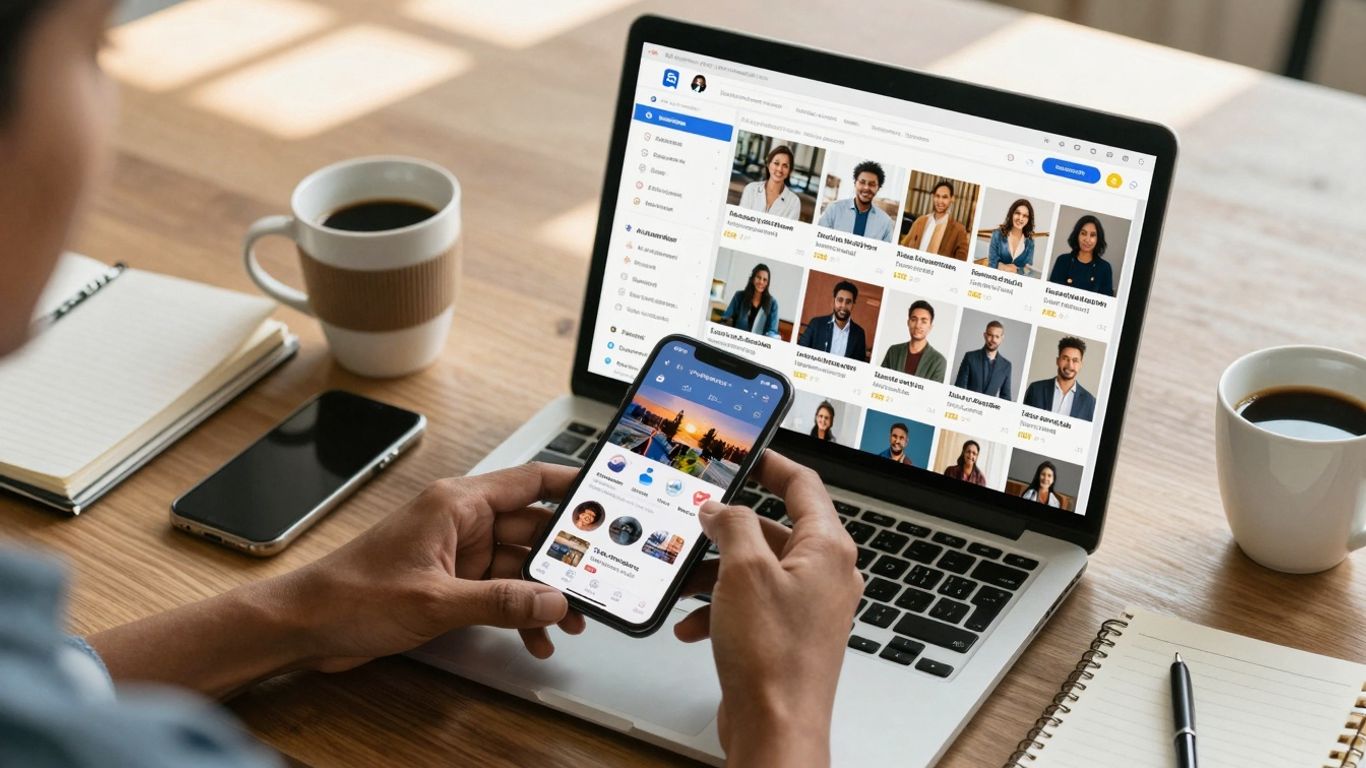
Juggling all those social media accounts can feel like a lot, right? You've got Instagram, TikTok, Facebook, LinkedIn – each with its own vibe and best practices. Trying to keep up with posting, engaging, and tracking everything manually is a recipe for burnout. Thankfully, there are some pretty neat tools out there that can make your life a whole lot easier.
Leveraging Social Media Management Platforms
These platforms are like your command center for all things social. They let you plan, schedule, and publish content across multiple networks from one spot. Think of it as having a personal assistant who handles all the repetitive tasks so you can focus on the creative stuff. They often come with analytics dashboards too, which is super helpful for seeing what's actually working.
Some popular ones include:
- Hootsuite: Good for monitoring mentions and scheduling across many platforms.
- Sprout Social: Offers a more robust set of tools for analytics and team collaboration.
- Buffer: Known for its straightforward scheduling and clean interface.
- Later: Great for visual planning, especially for Instagram, and has AI features.
The right platform can save you hours each week and help keep your brand's voice consistent everywhere.
Utilizing Visual Planners for Feed Cohesion
Especially for platforms like Instagram, how your profile looks at a glance matters. A visual planner lets you see your upcoming posts laid out like a grid. You can drag and drop content, rearrange it, and make sure your photos and videos flow together nicely. This helps create a more polished and appealing feed that draws people in. It's like arranging a beautiful mosaic before you lay down the tiles.
Employing Caption Generators for Consistency
Staring at a blank screen trying to come up with the perfect caption can be tough. Caption generators, often powered by AI, can give you a starting point or even help you brainstorm different angles. They can help you maintain a consistent tone and style, and sometimes even suggest relevant hashtags. While you'll always want to tweak them to sound like you, they're a fantastic way to overcome writer's block and speed up your content creation process.
Managing social media effectively isn't just about posting; it's about strategic planning, consistent execution, and smart analysis. These tools are designed to support those efforts, helping you work smarter, not harder, and ultimately connect better with your audience.
Wrapping It Up
So, there you have it. We've gone over a lot of ground, from figuring out what your audience actually wants to see, to making sure your posts look good and get seen. It’s not always easy, and honestly, it takes some practice. Don't expect to be a social media wizard overnight. Keep trying different things, watch what works, and don't be afraid to adjust your plan. The most important thing is to stay consistent and be real with the people following you. Social media is always changing, but if you stick to these ideas, you'll be well on your way to making posts that actually connect.
Frequently Asked Questions
What's the main goal when posting on social media?
The main goal is to connect with people! Think about what your audience likes and wants to see. It's like having a conversation. You want to share interesting stuff, maybe a funny video or a cool picture, and get people to talk back to you. It's not just about selling things all the time; it's more about building friendships online.
How often should I post on social media?
There's no magic number, but being regular is key. Imagine you have a favorite show; you want to know when the next episode is coming. Social media is similar. Posting consistently, maybe a few times a week or even daily if you can, helps people remember you. It's better to post good stuff regularly than to post a lot of not-so-great stuff all at once.
What makes a social media post 'good'?
A 'good' post grabs attention! This could be through a cool picture, a funny video, or a question that makes people think. It should also be easy to understand and maybe give people something useful, like a tip or a laugh. And don't forget to tell people what you want them to do next, like 'visit our website' or 'share your thoughts'.
Why are hashtags important?
Hashtags are like labels that help people find your posts. When you use a hashtag like #SummerVibes, anyone searching for that tag might see your post. It's also a fun way to join in on popular topics or special days, like #NationalDonutDay. Think of them as little signposts pointing people to your content.
Should I use just one social media platform?
It's usually best to be on a few platforms, but focus on the ones where your audience hangs out the most. For example, if you're sharing cool art, Instagram and TikTok might be great. If you're talking about business, LinkedIn is a good choice. Each platform is like a different room in a big house, and people use them for different reasons.
How do I know if my social media posts are working?
You can check things like how many people liked your post, commented on it, or shared it. These are called 'likes,' 'comments,' and 'shares.' If lots of people are doing these things, it means your post is probably hitting the mark! You can also see how many people clicked on links you shared. It's like checking the feedback on your work.





Privacy is important to us, so you have the option of disabling certain types of storage that may not be necessary for the basic functioning of the website. Blocking categories may impact your experience on the website. View Our Privacy Policy


