
Display Advertising Best Practices: display advertising best practices
In the crowded digital landscape, simply running display ads isn't enough to capture attention, let alone drive conversions. Success demands a strategic, data-driven approach that combines compelling creative with precision targeting. For creative strategists and agency owners, mastering the nuances of modern campaigns is the key to unlocking significant ROI and demonstrating measurable growth for clients. Moving beyond traditional branding, a strategic blueprint for display advertising success increasingly emphasizes the principles of performance advertising, focusing on tangible results and a clear return on investment.
This guide moves beyond generic advice to provide a comprehensive roundup of 10 essential display advertising best practices. We'll cut straight to the actionable insights you need to refine your approach. From defining razor-sharp targeting parameters and optimizing ad creative with AI tools to implementing sophisticated retargeting and maintaining brand safety, each point is designed to be immediately applicable. You will learn how to structure A/B tests that yield clear winners, manage frequency caps to avoid ad fatigue, and align your display efforts with broader marketing objectives.
Whether you are auditing existing campaigns or building a new strategy from the ground up, these insights will serve as your blueprint. This list is designed to help you create display ads that don’t just get seen, they deliver concrete results and contribute directly to your business goals. It would fit naturally in the section discussing display advertising strategies and platforms.
1. Define Clear Targeting Parameters
Effective display advertising begins long before the first ad is designed. The foundation of a successful campaign is built on knowing exactly who you are trying to reach. Defining clear targeting parameters means moving beyond a vague "ideal customer" and creating specific, data-driven audience segments. This practice ensures your ad spend is directed toward users most likely to convert, maximizing relevance and minimizing waste.

This process involves identifying demographics, psychographics, online behaviors, and contextual placements that align with your offer. By segmenting audiences, you can tailor creative and messaging to resonate with different groups, significantly improving engagement and ROI. This foundational step is one of the most crucial display advertising best practices because it directly influences every subsequent decision, from creative strategy to budget allocation. The same principle applies when deploying content across physical and in-store screens, where the best digital signage software depends on structured audience logic to determine what is shown, where, and when.
How to Implement Precise Targeting
To put this into practice, combine different data sources to build a holistic view of your audience. Start by leveraging your own first-party data from your CRM and website analytics.
- Behavioral Targeting: Target users based on their online actions, such as visiting specific product pages, abandoning a shopping cart, or downloading a whitepaper. For example, a travel agency can target users who recently researched flights to specific destinations.
- Contextual Targeting: Place ads on websites, apps, or videos whose content is relevant to your product. A SaaS company selling project management tools could target articles and forums about business productivity.
- Demographic & Interest Targeting: Use platform data from Google Ads or social networks to reach users based on age, location, interests, or life events. An e-commerce brand selling athletic wear might target users interested in fitness, marathons, and healthy living.
Key Insight: The most powerful targeting strategies often layer multiple approaches. Combine behavioral retargeting with demographic filters or contextual placements with interest-based audiences to pinpoint high-intent users with unparalleled accuracy.
2. Optimize Ad Creative and Design
Once your targeting is set, the ad creative itself becomes the most critical lever for campaign success. Optimizing ad creative and design involves creating visually compelling, on-brand, and action-oriented display ads that capture attention and drive conversions. An ad can reach the perfect user, but if its design is unappealing or its message is unclear, the opportunity is lost.

This practice goes beyond aesthetics; it's about strategic communication. Every element, from the imagery and color palette to the typography and call-to-action (CTA), must work in harmony to convey value and guide the user toward a specific action. Mastering this is one of the essential display advertising best practices because strong creative directly boosts click-through rates, brand recall, and overall campaign performance.
How to Implement Creative Optimization
A systematic approach to creative development and testing is key. Start by establishing a clear visual hierarchy that directs the viewer's eye to the most important elements: the value proposition and the CTA.
- Prioritize Visual Impact and Clarity: Use high-quality images or graphics that resonate with your target audience. Airbnb, for example, uses stunning destination-focused visuals that evoke emotion and desire. Ensure your brand logo is present but not overpowering, and keep your messaging concise and benefit-driven.
- Design for Multiple Formats & Devices: Your ads will appear across a vast landscape of websites and apps. Create designs that are responsive and remain effective across various banner sizes and device screens. Text must be easily readable even on a small mobile phone.
- Focus on a Strong Call-to-Action (CTA): The CTA should be the focal point. Use a contrasting button color and clear, urgent language like "Shop Now," "Learn More," or "Get Your Free Trial." A weak or hidden CTA is a common reason for poor ad performance.
Key Insight: Don't just test small changes like button colors. The most significant performance lifts come from testing fundamentally different creative concepts, value propositions, and emotional angles. Pit a product-focused ad against a lifestyle-focused one to uncover what truly motivates your audience.
3. Implement Retargeting/Remarketing Campaigns
Some of the most valuable audiences are those who have already shown interest in your brand. Implementing retargeting (or remarketing) campaigns allows you to reconnect with users who have previously visited your website, used your app, or engaged with your content. This strategy keeps your brand top-of-mind, guiding warm leads back into the conversion funnel and significantly boosting conversion rates.
Because these users are already familiar with your offerings, ads can be more personalized and direct. By serving relevant ads across the web, you create multiple touchpoints that nurture the user along their customer journey. This makes retargeting one of the most cost-effective display advertising best practices for driving high-quality conversions from an engaged audience segment.
How to Implement Effective Retargeting
Successful retargeting requires thoughtful segmentation and messaging. Instead of showing the same ad to every past visitor, create distinct campaigns based on the user's specific actions and where they are in the funnel.
- Segment by Behavior: Create audience lists for different actions. For example, an e-commerce site can create separate lists for users who viewed a product, added an item to their cart but didn't buy, and completed a past purchase.
- Use Dynamic Retargeting: Automatically show ads featuring the exact products or services a user viewed on your site. A travel website could show an ad for the specific hotel a user was browsing, complete with current pricing.
- Exclude Converters: To avoid ad fatigue and wasted spend, make sure to exclude users who have already completed the desired action (e.g., made a purchase, signed up for a trial).
- Apply Frequency Capping: Limit how often a user sees your ad (e.g., 3-5 times per week) to prevent it from becoming intrusive. For a deeper look, you can learn more about creative best practices for retargeting on quickads.ai.
Key Insight: Implement sequential messaging to tell a story over time. A software company could first show an ad highlighting a key feature to a recent visitor, followed by a case study ad a few days later, and finally an ad with a special trial offer.
4. Choose Appropriate Ad Formats and Placements
Choosing the right ad format and placement is as critical as the message itself. This is especially true for brands using digital signage software, where screen placement, context, and audience attention windows directly impact engagement and recall. In some cases, businesses extend this approach with solutions like those offered by LOOK Digital Signage to better manage content across multiple screens in real time. With digital signage software like NoviSign, businesses can easily control screen content, adjust ad placements, and deliver targeted messages based on location and audience behavior. To further strengthen brand visibility, many companies also invest in commercial signage services by Arc Signs to create eye-catching storefront displays, wayfinding systems, and custom signage solutions that complement their digital advertising strategies and improve customer engagement. This practice involves selecting the specific ad types (e.g., banner, video, native) and the digital environments where they will appear to ensure your creative is seen in the most effective context. The format dictates how a user interacts with your ad, while the placement determines their mindset and receptiveness when they see it.
A well-chosen format can dramatically boost engagement, while a premium placement can enhance brand perception and credibility. For example, a visually compelling rich media ad on a high-authority news site like The New York Times will have a different impact than a standard banner on a niche forum. This strategic selection is one of the core display advertising best practices because it aligns your campaign goals with user behavior and platform capabilities, maximizing both visibility and impact.
How to Implement Strategic Format & Placement Selection
To optimize your campaigns, match your ad format to your objective and the platform's user experience. Analyze where your target audience spends their time and how they consume content on those channels.
- Match Format to Objective: For brand awareness, video ads on platforms like YouTube can generate significantly higher engagement. For driving app installs, mobile interstitials are highly effective as they capture the user's full attention at key transition points within an app experience.
- Prioritize Viewability and Brand Safety: Use placement reports to identify high-performing, brand-safe publishers. An ad that is technically served but never seen is a wasted impression. Partnering with premium publishers or using curated placement lists ensures your brand appears alongside trustworthy content.
- Leverage Native and Rich Media Ads: Native ads that blend seamlessly with a website's content often outperform standard banners by capturing user attention without being disruptive. Rich media ads, which include interactive elements, are excellent for showcasing product features and driving deeper engagement on premium publisher sites.
Key Insight: Don't treat all placements and formats as equal. Continuously test different combinations to discover what resonates. A high-performing creative on a desktop news site may fail as a mobile in-app banner. The key is to adapt your strategy to the specific context of each impression.
5. Monitor Key Performance Metrics and Analytics
Launching a campaign without a clear measurement plan is like navigating without a map. To understand what’s working and what isn’t, you must diligently monitor key performance metrics (KPIs) and analytics. This practice moves beyond simply tracking clicks and impressions to evaluating the true impact of your ads on business goals, enabling data-driven optimizations that improve performance and prove ROI.

Effective measurement involves selecting metrics that directly align with your campaign objectives, whether that's brand awareness, lead generation, or sales. By establishing a robust tracking framework before launch, you can gather clean, actionable data from day one. This continuous feedback loop is a cornerstone of display advertising best practices, allowing you to refine targeting, adjust creative, and reallocate budget to the most effective tactics.
How to Implement Performance Tracking
Start by defining what success looks like for your specific campaign and configure your analytics tools to capture the necessary data points. This ensures you can connect ad performance to meaningful business outcomes.
- Align KPIs with Objectives: For an awareness campaign, focus on metrics like impressions, reach, frequency, and view-through conversions. For a direct-response campaign, prioritize click-through rate (CTR), conversion rate, cost per acquisition (CPA), and return on ad spend (ROAS).
- Implement Comprehensive Tracking: Use UTM parameters on all destination URLs to precisely track performance by campaign, ad group, and creative variant in tools like Google Analytics. Set up conversion tracking for all key user actions, such as form submissions, purchases, or sign-ups.
- Leverage Attribution Modeling: Go beyond last-click attribution to understand how your display ads contribute to conversions across the entire customer journey. Data-driven or time-decay models can provide a more accurate picture of your campaign's true impact, especially for top-of-funnel initiatives.
Key Insight: Create custom dashboards in your analytics platform to monitor your primary KPIs in real-time. Review performance daily for the first two weeks of a new campaign to quickly spot trends and make initial optimizations, then switch to a weekly review cadence for ongoing management.
6. Implement Proper Frequency Capping
Seeing the same ad repeatedly can quickly turn a potential customer into an annoyed user. Implementing proper frequency capping means setting a limit on how many times an individual sees your ad within a specific timeframe. This crucial practice prevents ad fatigue, protects your brand perception, and stops you from wasting your budget on users who are either not interested or already converted.
Without this control, your campaign's performance can suffer as click-through rates decline and negative sentiment rises. By finding the right balance between visibility and oversaturation, you ensure your message remains effective without becoming intrusive. This makes frequency management one of the most vital display advertising best practices for maintaining a positive user experience and maximizing campaign efficiency.
How to Implement Frequency Capping
Most ad platforms, including Google Ads and DV360, allow you to set frequency caps at the campaign, ad group, or even ad level. The ideal number depends on your campaign goals, audience intent, and industry.
- For Brand Awareness: A higher frequency might be acceptable. A B2B tech company could set a cap of 8-10 impressions per user over a month to build brand recall during the consideration phase.
- For Direct Response: A lower, more concentrated frequency is often better. A streaming service might limit its subscription ads to twice per day to drive immediate sign-ups without annoying users.
- For Retargeting: Be especially careful here. An e-commerce brand could cap ads for a specific shoe at three impressions per user per week to avoid a "stalker" effect.
Key Insight: Don't use a one-size-fits-all approach. Test different frequency caps for different audience segments. A warm retargeting audience may tolerate a higher frequency than a cold prospecting audience.Test different frequency caps for different audience segments. A warm retargeting audience may tolerate a higher frequency than a cold B2B prospecting audience. Analyze performance data to find the sweet spot where impression volume is high but ad fatigue hasn't set in.
7. Leverage Programmatic Buying and Real-Time Bidding
Manual ad placement is a thing of the past. Modern display advertising relies on automated, data-driven technology to buy and place ads efficiently. Leveraging programmatic buying and real-time bidding (RTB) allows advertisers to purchase ad impressions on an individual basis through an automated auction, ensuring each ad is served to the most relevant user at the optimal price. This approach enhances precision, reduces manual workload, and often lowers costs.
Instead of negotiating bulk inventory purchases, programmatic platforms use algorithms and machine learning to make split-second decisions based on audience data, context, and bidding strategies. For instance, platforms like The Trade Desk or Google Display Network allow for sophisticated audience matching and continuous optimization in real time. This automated process is one of the most impactful display advertising best practices as it scales campaign reach and effectiveness far beyond what human oversight can achieve.
How to Implement Programmatic Buying
To effectively harness programmatic advertising, focus on setting up your campaigns for machine learning success and maintaining strict quality controls. For those new to the ecosystem, a practical guide to Google Ads can provide a foundational understanding of the bidding mechanisms involved.
- Start with Automated Bidding: Begin with goal-oriented bidding strategies like Target CPA (Cost Per Acquisition) or Target ROAS (Return On Ad Spend). These strategies empower the platform's algorithm to automatically adjust bids to meet your specific performance goals.
- Integrate First-Party Data: Enhance targeting precision by uploading your customer lists or pixel data. This allows platforms like Amazon DSP or Criteo to find lookalike audiences or execute powerful dynamic product retargeting campaigns.
- Monitor Brand Safety and Viewability: Use private marketplaces (PMPs) for more control over where your ads appear and regularly monitor viewability and ad fraud metrics. Ensuring your ads are seen by real people in brand-safe environments is critical for campaign integrity.
Key Insight: Programmatic isn’t just about automation; it’s about data-driven intelligence. The real power comes from feeding the algorithms high-quality first-party data and clear performance goals, allowing the technology to find pockets of opportunity you would never discover manually.
8. Maintain Brand Safety and Quality Standards
Your ad creative can be perfect, but its impact is instantly undermined if it appears next to inappropriate, off-brand, or harmful content. Maintaining brand safety and quality standards means actively controlling where your ads are served to protect your brand's reputation and ensure your message is received in a positive context. This involves preventing your ads from appearing on untrustworthy sites, next to sensitive content, or in fraudulent environments.
Failing to manage placements can lead to negative brand association, wasted ad spend on non-human traffic, and long-term damage to consumer trust. For example, a family-focused CPG brand would suffer if its ads appeared alongside misinformation or violent video content. Proactive brand safety is one of the most essential display advertising best practices because it safeguards your most valuable asset: your brand's integrity.
How to Implement Brand Safety Measures
A multi-layered approach is the most effective way to protect your brand across the vast digital landscape. This combines automated tools with manual oversight to create a secure advertising environment.
- Implement Placement & Category Exclusions: Most ad platforms (like Google Ads) allow you to exclude entire categories of content, such as "tragedy and conflict" or "sensitive social issues." An insurance company, for instance, should exclude content related to financial hardship to avoid appearing insensitive.
- Use Whitelists and Blacklists: Create a "whitelist" of pre-approved, high-quality websites where you know your ads will perform well and align with your brand. Conversely, use a "blacklist" to block specific low-quality or inappropriate domains that you identify during campaign monitoring.
- Leverage Third-Party Verification Tools: Partner with brand safety vendors like Integral Ad Science (IAS) or DoubleVerify. These tools provide advanced fraud detection, viewability measurement, and contextual analysis to ensure your ads are served in brand-safe and suitable environments.
Key Insight: Brand safety is not a "set it and forget it" task. Regularly review your placement reports to identify and exclude poor-performing or questionable sites. A consistent, weekly review process is critical to maintaining a clean and effective advertising presence.
9. Test and Optimize Continuously
Display advertising is not a "set it and forget it" channel. The most successful campaigns are those that embrace a culture of continuous improvement through systematic testing. Systematically testing variables like creative, targeting, bidding, and messaging allows you to gather data-driven insights, identify winning combinations, and make incremental gains that compound into significant performance lifts over time.
This iterative process transforms your advertising from a series of gambles into a scientific method for growth. By isolating variables and measuring their impact, you can confidently reallocate budget to strategies that work and refine your approach for maximum ROI. This commitment to optimization is one of the most critical display advertising best practices because it ensures your campaigns evolve and adapt in a dynamic digital landscape.
How to Implement Continuous Optimization
To put this into practice, develop a structured testing framework that prioritizes high-impact variables first. Start with a clear hypothesis, define what success looks like, and ensure your tests have statistical significance before drawing conclusions.
- A/B Test Creative Elements: Test one variable at a time to get clean data. For example, test a product-focused image against a lifestyle image, or compare a headline emphasizing a discount versus one highlighting a key benefit. Creative testing can often yield the biggest initial performance gains.
- Multivariate Test Landing Pages: For higher traffic campaigns, test multiple elements on a landing page simultaneously, such as the headline, call-to-action button color, and form length. Unbounce has shown this can increase conversions by 20-40% by finding the optimal combination of elements.
- Test Audience and Messaging Pairs: Beyond creative, test how different audience segments respond to specific messaging. A B2B campaign could test social proof messaging ("Join 10,000+ businesses") against ROI-focused messaging ("Cut costs by 30%") for different industries.
Key Insight: Create a testing plan that documents your hypothesis, variables, duration, and success metrics for every experiment. Document all learnings in a shared playbook so your entire team can build upon past results, avoiding repeated mistakes and accelerating optimization.
10. Align Display Campaigns with Overall Marketing Strategy
Display advertising campaigns do not exist in a vacuum. The most successful strategies treat display as a critical component of a larger, integrated marketing ecosystem, rather than a standalone tactic. Aligning your display efforts with other channels like email, content marketing, social media, and even offline events ensures a cohesive customer journey and amplifies the impact of every marketing dollar spent.
This approach creates a seamless brand experience, guiding users from initial awareness through to conversion and retention. When messaging and creative are consistent across all touchpoints, it builds brand trust and recall. This holistic view is one of the most vital display advertising best practices because it transforms disparate actions into a unified force that drives meaningful business outcomes, not just channel-specific metrics.
How to Implement an Integrated Strategy
To effectively align your campaigns, you must foster cross-channel communication and shared objectives. Start by creating an integrated marketing calendar that maps out all channel activities, themes, and promotions.
- Sequential Messaging: Design ad sequences that mirror the customer journey. Use broad-reach display ads for top-of-funnel awareness, then retarget engaged users with more specific, benefit-driven ads on social media, followed by a promotional email to drive conversion.
- Consistent Creative Themes: Ensure your visual identity and core messaging are consistent across all channels. For instance, if Warby Parker launches an email campaign for its new collection, its display ads should feature the same models, taglines, and color palettes.
- Shared KPIs and Attribution: Move beyond last-click attribution. Implement a multi-touch attribution model that gives credit to display’s role in assisting conversions. Align all channel teams around shared business goals like Customer Lifetime Value (CLV) or lead quality, not just impressions or clicks.
Key Insight: Coordinate frequency caps across different platforms and channels. By managing how often a single user sees your ads across the entire digital landscape, you prevent ad fatigue and ensure your brand remains a welcome presence rather than an annoyance.
Display Advertising: 10 Best Practices Comparison
Tactic🔄 Implementation Complexity⚡ Resource Requirements📊 Expected Outcomes💡 Ideal Use Cases⭐ Key AdvantagesDefine Clear Targeting ParametersModerate — audience research & data setupModerate — CRM, analytics, segmentation toolsHigher relevance, CTR & conversions; reduced wasted spendE‑commerce, SaaS, travel; campaigns needing precise reachImproved ROI and engagement; better brand safety alignmentOptimize Ad Creative and DesignModerate — creative production and testing cyclesHigh — designers, asset production, testing platformsHigher CTR, brand recall, and conversion likelihoodBrand campaigns, competitive categories, multi‑device audiencesStronger engagement and brand recognitionImplement Retargeting / Remarketing CampaignsModerate–High — pixel/list setup and sequencingModerate — tag management, dynamic feeds, CRM3–5x higher conversions; lower CPA; reduced abandonmentE‑commerce, travel, subscription services, cart recoveryPersonalized messaging; higher conversion efficiencyChoose Appropriate Ad Formats & PlacementsModerate — managing multiple formats & publishersModerate — creative variants, placement researchImproved viewability and engagement; format‑dependent performanceCross‑device campaigns, premium branding, video goalsBetter engagement and format flexibility; higher viewabilityMonitor Key Performance Metrics & AnalyticsModerate–High — tracking, attribution, dashboardsModerate — analytics tools, implementation, analystsData-driven optimization and clear ROI visibilityAll campaigns, scaling and optimization phasesFaster optimization; informed budget and channel decisionsImplement Proper Frequency CappingLow–Moderate — set rules and calibrate by audienceLow — platform settings; minimal ongoing resourcesReduced ad fatigue; improved CPA and brand perceptionHigh‑frequency channels; sensitive brand sectorsPrevents annoyance; improves spend efficiencyLeverage Programmatic Buying & RTBHigh — DSP setup, integrations, algorithm tuningHigh — platform fees, data integrations, specialistsFaster scale, precise targeting, efficient spend allocationLarge-scale campaigns, data‑driven audience strategiesAutomation, scale, access to premium inventoryMaintain Brand Safety & Quality StandardsModerate — blocklists, contextual rules, monitoringModerate–High — verification services, auditsReduced fraud and negative associations; protected reputationSensitive industries, major brands, premium placementsProtects brand trust; lowers fraud riskTest and Optimize ContinuouslyModerate — testing framework and significance analysisModerate — testing tools, traffic, analyst timeIncremental performance gains; validated learningsConversion optimization, iterative growth programsData-backed improvements; reduced guessworkAlign Display Campaigns with Overall Marketing StrategyHigh — cross-channel coordination & attributionHigh — integrated tracking, shared KPIs, meetingsConsistent messaging; improved cross-channel ROIMulti-channel launches, brand-to-performance strategiesHolistic ROI, better customer experience and efficiency
Integrating Best Practices into Your Workflow
We have journeyed through the ten foundational pillars of modern, high-performance display advertising. From the granular precision of audience targeting and the creative nuance of ad design to the strategic oversight of programmatic buying and continuous A/B testing, these principles form a comprehensive roadmap. However, knowledge alone is not enough. The true differentiator between a campaign that merely exists and one that excels lies in the consistent, disciplined integration of these display advertising best practices into your everyday operations.
Mastering this discipline is not about a one-time overhaul. Instead, it is a continuous process of refinement, adaptation, and learning. It's about transforming abstract concepts into a tangible, repeatable workflow that powers every campaign you launch. By moving beyond theoretical understanding and into practical application, you build a resilient advertising engine capable of navigating market shifts, evolving consumer behaviors, and emerging technologies. This systematic approach is what turns good advertisers into great ones, enabling you to drive predictable growth and maximize your return on ad spend (ROAS).
Your Actionable Blueprint for Implementation
To help you transition from reading to doing, here is a structured plan to embed these best practices into your strategic framework. Think of this not as a checklist to complete, but as a cycle of continuous improvement.
1. Conduct a Foundational Audit (Weeks 1-2):
- Targeting Review: Pull the data from your last three campaigns. Who did you actually reach versus who you intended to reach? Identify gaps in your audience personas and refine your targeting parameters for the next campaign based on real performance data, not just assumptions.
- Creative Performance Analysis: Categorize your top 10 and bottom 10 performing ads from the last quarter. What common elements do the winners share (e.g., specific CTAs, color palettes, imagery)? What are the recurring flaws in the losers? Use this insight to create your next creative brief.
- KPI Alignment Check: Does every metric you track directly connect to a core business objective? Eliminate vanity metrics and focus on the data that truly reflects campaign impact on your bottom line, such as Cost Per Acquisition (CPA) or lead quality.
2. Systemize Your Testing Framework (Weeks 3-4):
- Establish a Hypothesis Calendar: Don't just test randomly. Plan your tests in advance. For example, dedicate one week to testing headline variations, the next to CTA button colors, and the following to different background images. Document every hypothesis, variable, and outcome.
- Define "Significance": Determine your threshold for statistical significance before you launch a test. This prevents you from making premature decisions based on insufficient data. A clear, predefined benchmark ensures your optimizations are data-driven, not gut-driven.
3. Optimize Your Operational Cadence (Ongoing):
- Weekly Performance Huddles: Institute a brief, data-focused weekly meeting. The agenda should be simple: What worked last week? What didn’t? What are our optimization priorities for the next seven days? This keeps the principles of continuous improvement top of mind.
- Monthly Strategy Sessions: Zoom out once a month to ensure your display campaigns remain aligned with your broader marketing strategy. Are your display ads effectively supporting new product launches, content marketing efforts, or sales promotions? This macro view prevents your campaigns from operating in a silo.
By embracing this structured, methodical approach, you transform display advertising best practices from a static list of rules into a dynamic system for sustained success. It is this operational rigor that builds momentum, turning each campaign into a learning opportunity that fuels the next. Your display ads will evolve from simple brand placements into sophisticated, hard-working assets that consistently deliver measurable results, building a powerful competitive advantage for your brand or your clients.
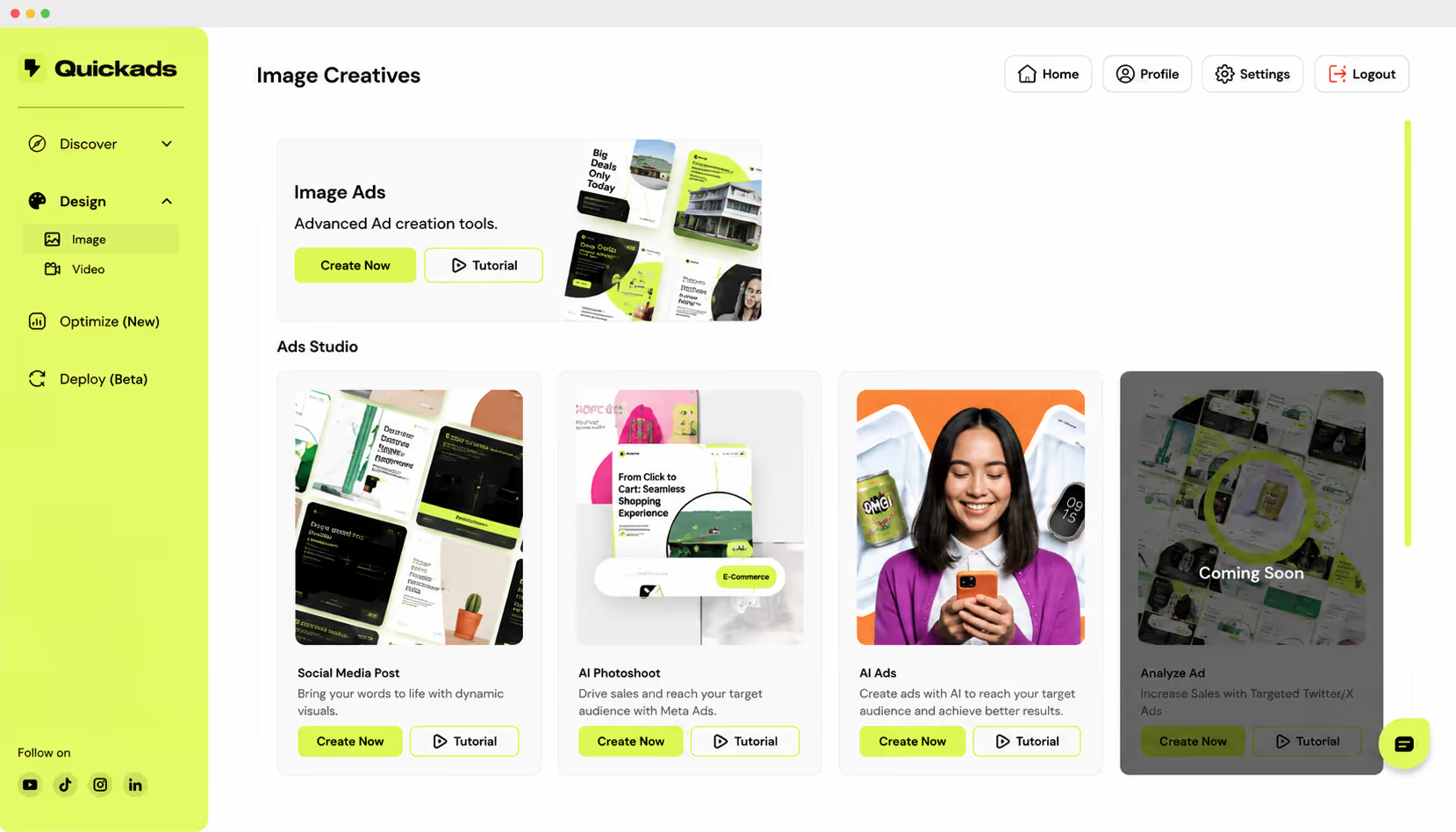
Ready to supercharge your creative process and implement these best practices at scale? quickads.ai empowers you to generate hundreds of high-performing ad variations in minutes, making continuous A/B testing effortless. Stop guessing and start creating with the power of AI by visiting quickads.ai today.








Privacy is important to us, so you have the option of disabling certain types of storage that may not be necessary for the basic functioning of the website. Blocking categories may impact your experience on the website. View Our Privacy Policy


