
10 Actionable Conversion Rate Optimization Tips for Marketers in 2025
In the competitive digital marketplace, attracting traffic is only half the battle. The real challenge lies in turning those visitors into loyal customers, subscribers, or leads. This is the core of Conversion Rate Optimization (CRO), the systematic process of increasing the percentage of website visitors who take a desired action. It’s not about guesswork or chasing trends; it’s a data-driven discipline that blends user psychology, UX design, and rigorous testing to achieve measurable growth.
This guide provides a comprehensive blueprint of powerful, actionable conversion rate optimization tips designed for modern marketers, founders, and creative strategists. We'll move beyond the basics, offering specific frameworks and real-world examples to help you methodically improve your ad creative, landing pages, and overall user journey. You will learn to refine everything from your checkout process and call-to-action copy to page speed and trust signals. Understanding the foundational principles of user behavior and design is key to maximizing your site's potential. To dive deeper into these core concepts, you can learn more about how to create a website that converts visitors before applying the advanced tactics in this article.
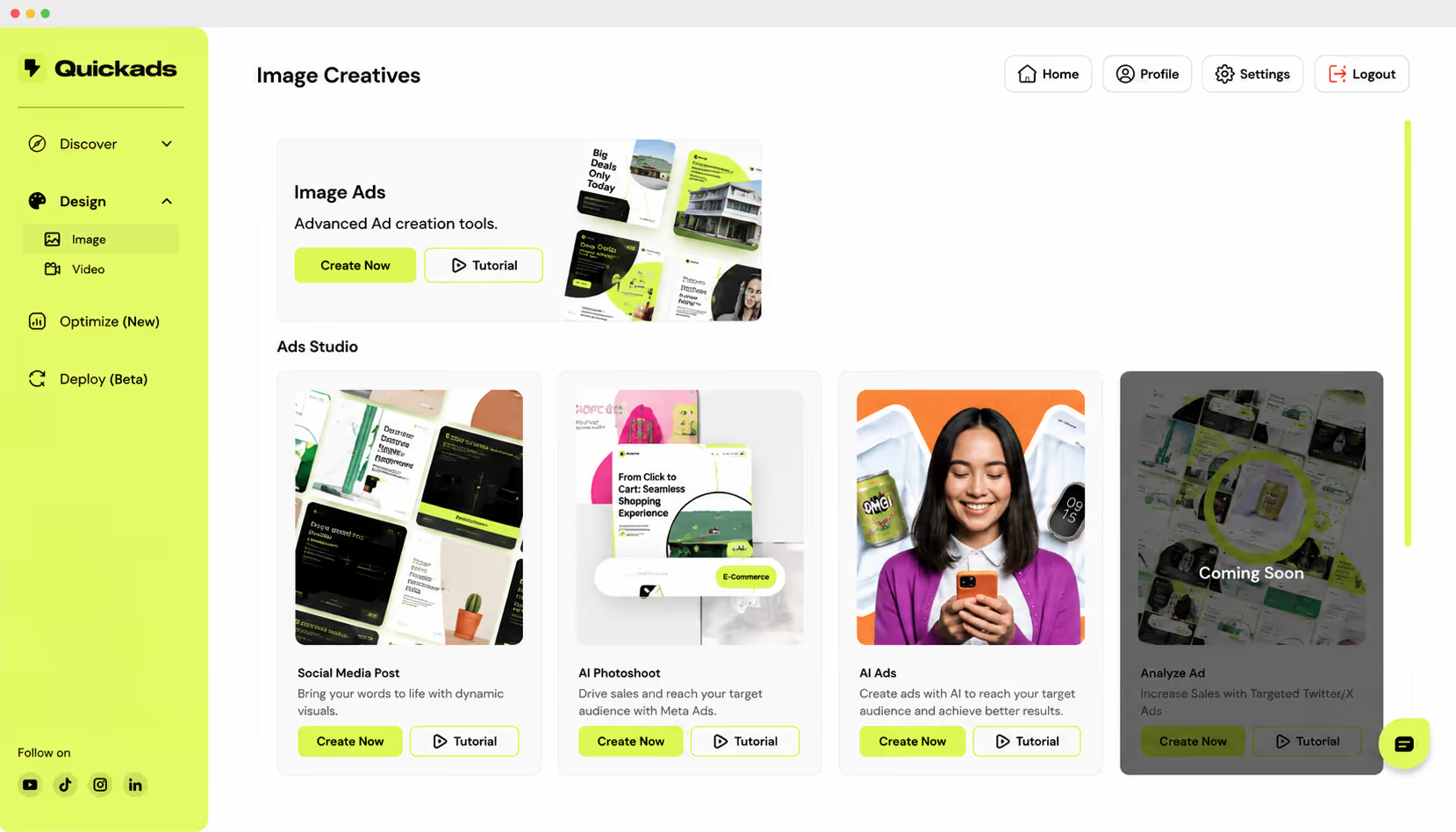
Each tip is crafted to be immediately implementable, whether you’re A/B testing value propositions or reducing friction in a signup form. Furthermore, we will explore how to accelerate this entire optimization cycle by integrating these strategies with AI ad-generation workflows, like those from quickads.ai, enabling faster testing, iteration, and ultimately, superior results. Let's begin building your high-conversion machine.
1. A/B Testing and Multivariate Testing
At its core, conversion rate optimization is a science, and A/B testing is the cornerstone of that scientific method. A/B testing, or split testing, involves creating two versions of an asset (like a landing page or an ad) and showing them to different segments of your audience to see which one performs better. For ecommerce stores, the same approach can also be applied to ecommerce popups, testing different offers, copy, designs, triggers, and lead capture experiences to determine which variation converts better. This data-driven approach removes guesswork and allows you to make decisions backed by real user behavior, not just intuition.
Multivariate testing takes this concept a step further by evaluating multiple variables simultaneously. For example, instead of just testing a red button versus a green button, you could test two different headlines, two button colors, and two images all at once to find the winning combination. This is a powerful technique for understanding how different elements interact with each other to influence conversions.
Actionable Implementation
To get started, follow a structured process:
- Establish a Hypothesis: Before launching a test, clearly define what you are changing and why you believe it will improve conversions. For example, "Changing the CTA button text from 'Submit' to 'Get My Free Guide' will increase form submissions by making the value proposition clearer."
- Calculate Sample Size: Use a statistical significance calculator to determine how many visitors you need in each variation to get a reliable result. Aim for a confidence level of at least 95%.
- Run the Test: Allow the test to run long enough to account for weekly traffic fluctuations, typically at least one to two full business cycles. Avoid ending a test prematurely just because one version is pulling ahead.
- Document Everything: Keep a detailed log of every test you run, including your hypothesis, the variations, the results, and the final decision. This creates a valuable knowledge base for your entire team.
Many platforms now offer advanced tools to streamline this process. For creative strategists looking to apply this rigor to their ad campaigns, understanding how to simplify ad testing is crucial for faster iteration and better performance. By consistently applying these principles, you build an incremental, evidence-based path to higher conversion rates, turning your marketing efforts into a predictable growth engine. Teams without dedicated experimentation resources can work with a conversion rate optimization agency to develop hypotheses, launch tests, analyze user behavior, and turn winning variations into ongoing website improvements.
2. Streamlined Checkout Process
The checkout page is the final frontier of your conversion funnel; it's where revenue is won or lost. A streamlined checkout process focuses on minimizing steps, form fields, and friction points that cause users to abandon their carts. By reducing cognitive load and hesitation, you create a frictionless path from "add to cart" to "purchase confirmed," which is a critical aspect of any successful conversion rate optimization strategy.
This approach transforms the checkout from a hurdle into a seamless final step. Companies that invest in simplifying this process see significant returns. For instance, ASOS famously reduced cart abandonment by 25% simply by removing unnecessary form fields, and Target saw a major conversion lift by cutting their checkout steps from 15 down to 5. These examples prove that less is truly more when it comes to finalizing a sale.

Actionable Implementation
To optimize your checkout, focus on removing every possible barrier:
- Implement Guest Checkout: Forcing users to create an account is a major conversion killer. Make guest checkout the default, most visible option.
- Minimize Form Fields: Only ask for essential information. Do you really need their phone number or a separate billing address? Each extra field is a reason for a user to leave.
- Show Progress Indicators: Use a visual progress bar (e.g., Step 1: Shipping > Step 2: Payment > Step 3: Review) to manage user expectations and reduce anxiety.
- Offer Diverse Payment Options: Cater to user preferences by including digital wallets like PayPal, Apple Pay, and Google Pay alongside traditional credit card inputs. Integrating these options can significantly speed up the process, and understanding the benefits of a PayPal Checkout can provide a competitive edge.
By meticulously auditing and simplifying every element of your checkout flow, you directly address the primary cause of cart abandonment. This makes your path to purchase not only easier for customers but also more profitable for your business.
3. Persuasive Copy and Call-to-Action Optimization
Beyond design and layout, the words you use are your primary tool for persuasion. Strategic copywriting that speaks directly to a user's pain points, clearly articulates the benefits of your offer, and creates a sense of urgency can dramatically lift conversions. This is where your brand's voice connects with the customer's needs, transforming passive visitors into active participants. A compelling narrative guides the user, and a powerful call-to-action (CTA) gives them the final, confident push to convert.

The CTA is the pinnacle of your persuasive efforts. Simple tweaks can yield significant results. For instance, Dropbox famously increased sign-ups by changing its CTA from the generic "Sign Up" to the more inviting "Get Started." Similarly, Grammarly's benefit-focused copy, such as "Make Your Writing Better," directly addresses a user's goal and has been a cornerstone of their growth. These examples highlight how focusing on value and action-oriented language is a critical component of conversion rate optimization tips.
Actionable Implementation
To refine your messaging, adopt a user-centric copywriting framework:
- Focus on Benefits, Not Features: Instead of listing what your product does, explain what your customer gets. For example, instead of "10GB of cloud storage," use "Never lose a file again." This shifts the focus to the value the user receives.
- Use Action-Oriented Language: Start your CTAs with strong verbs that prompt action. Words like "Get," "Unlock," "Discover," and "Start" are more compelling than passive alternatives like "Submit" or "Learn More."
- Create Urgency and Scarcity: Motivate immediate action by incorporating phrases like "Limited-time offer," "Only 3 spots left," or "Sale ends Friday." This psychological trigger can overcome user hesitation.
- Personalize the CTA: Use first-person language to create a sense of ownership. A button that says "Get My Free Guide" often outperforms "Get Your Free Guide" because it helps the user envision themselves receiving the benefit.
By treating your copy and CTAs as dynamic elements to be tested and refined, you can create a powerful dialogue with your audience. This approach, championed by experts like Joanna Wiebe of CopyHackers, ensures your messaging is not just heard but felt, directly impacting your bottom line and turning your words into a high-performance conversion tool.
4. High-Quality Visual Design and Page Layout
First impressions are digital, and your website's design is the first handshake with a potential customer. High-quality visual design and an intuitive page layout are not just aesthetic choices; they are critical components of conversion rate optimization. Professional, clean design builds immediate trust and credibility, while a logical layout guides users effortlessly toward the desired action. Many businesses enhance this process by working with specialist design partners like Excited agency to ensure that every visual element serves both form and conversion. This combination reduces cognitive load and friction, making the path to conversion smooth and inviting. A growing number of teams are also starting to extend this thinking beyond design itself, using no-code AI website builders like Zite with built-in branding and layout systems to speed up execution without sacrificing consistency. Teams building with Framer can also start with conversion-focused Framer templates to launch professionally structured landing pages faster while retaining full control over design and messaging.
A well-executed design uses visual hierarchy to direct attention to the most important elements, like the call-to-action button or value proposition. Companies like Apple master this, using minimalist aesthetics and ample white space to make their products the heroes and the "Buy Now" button an obvious next step. Similarly, Airbnb’s use of stunning, high-quality photography doesn't just showcase properties; it sells an experience and builds the confidence needed to make a booking.
Actionable Implementation
To leverage design for higher conversions, focus on clarity, trust, and user guidance:
- Establish Visual Hierarchy: Use size, color, and placement to guide the user's eye. Follow natural reading patterns like the F-pattern or Z-pattern, placing your most critical information where users instinctively look first.
- Prioritize High-Quality Imagery: Invest in professional product photos and authentic lifestyle images. All visuals should be high-resolution yet optimized for fast page loads (aim for under 3 seconds) to prevent user drop-off.
- Embrace White Space: Avoid clutter. Generous use of white space (negative space) creates a clean, sophisticated look, improves readability, and helps key elements stand out.
- Ensure Mobile-First Responsiveness: With a majority of traffic coming from mobile devices, your design must look and function flawlessly on smaller screens. A poor mobile experience is a guaranteed conversion killer.
By treating design as a strategic tool rather than just decoration, you create an environment that not only looks good but actively works to convert visitors into customers. This focus on a professional and user-centric layout is a fundamental aspect of building a high-performing digital presence.
5. Strategic Use of Social Proof and Trust Signals
People are inherently social creatures, often looking to others for cues on how to act, especially when uncertain. Strategic use of social proof leverages this psychological principle by showing potential customers that others have tried and loved your product or service. This builds credibility and reduces purchase anxiety by validating their decision. Trust signals like testimonials, reviews, partner logos, and security badges act as powerful endorsements that can significantly boost confidence and improve conversions.
For instance, Amazon's entire ecosystem is built on a foundation of user reviews and star ratings, which directly influence purchasing decisions. Similarly, B2B companies like Slack prominently display the logos of well-known customers to signal authority and trustworthiness to potential enterprise clients. This is one of the most effective conversion rate optimization tips because it outsources persuasion to your happiest customers, whose voices often carry more weight than brand messaging.

Actionable Implementation
To effectively integrate social proof, focus on authenticity and strategic placement:
- Place Proof Near Key Decision Points: Position your best testimonials, reviews, or case study statistics directly next to your primary call-to-action buttons, pricing tables, or sign-up forms. This reinforces the value proposition at the exact moment a user is considering converting.
- Use Specific and Quantifiable Proof: Instead of a generic "Customers love us," use precise numbers like "Trusted by over 15,000 marketing teams" or "Featured in Forbes." Specificity makes the claim more believable and impactful.
- Enhance Authenticity with Visuals: Whenever possible, accompany written testimonials with a high-quality headshot, name, and company of the person providing the quote. Video testimonials are even more powerful for high-consideration products, as they add a layer of genuine human connection.
- Showcase Third-Party Validation: Display security badges (like Norton or McAfee), industry certifications, or awards from reputable third-party sites like G2 or Capterra. These unbiased signals serve as a powerful shortcut to building trust with new visitors.
6. Personalization and Segmentation
In an era of information overload, generic messaging fails to capture attention. Personalization and segmentation cut through the noise by delivering tailored experiences based on user data, such as behavior, demographics, or referral source. By treating visitors as individuals rather than a monolith, you create a more relevant and engaging journey, which directly boosts conversion rates. This makes personalization a core part of any effective CRO strategy. This approach moves beyond a one-size-fits-all strategy, making users feel understood and valued.
This can range from simple tactics like addressing a user by name in an email to more complex strategies like dynamically changing website content based on their past browsing history. For instance, an e-commerce site can show product recommendations based on previous purchases, similar to Amazon's highly effective model. The core principle is relevance; the more relevant the content, the higher the likelihood of a conversion. This is a fundamental concept in modern conversion rate optimization tips that drives significant results.
Actionable Implementation
To implement personalization effectively, segment your audience and tailor the experience:
- Segment by Behavior: Group users based on their actions, not just their demographics. Segments could include first-time visitors, repeat customers, or users who have abandoned a cart. Each group has different needs and should receive different messaging.
- Use Dynamic Content: Modify headlines, calls-to-action, and images on your landing pages based on the user's location, traffic source, or past interactions. A visitor from a Google Ad for "running shoes" should see a different hero image than someone who clicked a link in an email about "hiking boots."
- Personalize Key Touchpoints: Go beyond landing pages. Customize email subject lines, push notifications, and in-app messages to reflect the user's journey. Use their name, reference past purchases, or acknowledge their loyalty.
- Test Against a Control: Always measure the impact of personalization. Run A/B tests where one segment receives the personalized experience and a control group receives the generic version. This proves the ROI and justifies further investment in the strategy.
By systematically segmenting your audience and delivering customized content, you build a stronger connection that fosters trust and encourages action. This turns your website from a static brochure into a dynamic, responsive sales tool.
Another effective way to strengthen personalization is by building your own email audience through newsletter subscriptions. Instead of relying only on paid traffic, you can capture visitors and nurture them with relevant content based on their interests and behavior. For WordPress websites, Newsletter Plugin from Tribulant offers features like customizable subscription forms, audience segmentation, email automation, and campaign management. When combined with your CRO strategy, personalized email follow-ups can help recover abandoned visitors, promote relevant offers, and improve repeat conversions.
7. Reducing Form Friction and Field Optimization
Forms are the final gateway to conversion, whether it’s a B2B lead generation form, a newsletter signup, or a checkout process. Every field you add creates friction, a small point of resistance that can cause a user to abandon the process entirely. The goal of form optimization is to create a seamless, intuitive, and painless experience that guides users to completion rather than frustrating them into leaving.
This principle is a critical component of conversion rate optimization tips because even the most persuasive ad or landing page will fail if the final step feels like a chore. By strategically removing unnecessary fields, clarifying instructions, and improving usability, you directly lower the barrier to conversion. For example, Unbounce famously increased their conversion rate by 160% simply by reducing their form from 11 fields to just five, proving that less is often significantly more.
Actionable Implementation
To minimize form friction and maximize submissions, follow these steps:
- Audit Every Field: Go through your form and ask, "Is this information absolutely essential right now?" Every field you remove is a potential boost to your conversion rate. If you can gather the data later, do so.
- Optimize for Mobile: Ensure your form is mobile-friendly by using large tap targets and input types that trigger the correct keyboard (e.g., a number pad for phone numbers). Use date pickers and other native mobile UI elements.
- Provide Clear Feedback: Use inline validation to give users instant feedback as they fill out the form, rather than waiting until they hit "submit." Error messages should be specific and helpful, telling users exactly how to fix the problem (e.g., "Please enter a valid email address").
- Implement Smart Defaults: Use smart field detection or pre-fill known information to reduce the user's workload. For multi-step forms, clearly display a progress bar to manage expectations and show users how close they are to completion.
By treating your forms as a crucial part of the user experience, you can transform them from a conversion bottleneck into a high-performance conversion tool. Each removed field and every clarified instruction contributes to a smoother journey, making it easier for motivated prospects to become valued customers.
8. Value Proposition Clarity and Messaging Hierarchy
Your value proposition is the most critical element on any landing page. It must immediately answer a visitor’s two fundamental questions: "What is this?" and "Why should I care?" If the answer isn't clear, compelling, and visible within the first few seconds, users will bounce. A strong value proposition, communicated through a strategic messaging hierarchy, forms the foundation of high-converting pages by instantly connecting with user intent and demonstrating relevance.
This isn’t just about a clever tagline; it’s about a structured presentation of benefits. Messaging hierarchy uses visual cues like font size, weight, and placement to guide the user's eye from the primary benefit (the headline) to supporting details (subheadings) and finally to proof points (testimonials or data). Think of Slack’s concise “Bring your team together” or Grammarly’s benefit-driven “Great writing, simplified.” These statements don't list features; they promise an outcome, which is a key component of effective conversion rate optimization tips.
Actionable Implementation
To refine your messaging, focus on clarity and structure:
- Craft a Compelling Headline: Your main headline should state the primary benefit in under 10 words. It needs to be the largest, most prominent text on the page to grab attention immediately.
- Use a Supportive Subheading: Directly below the headline, add a one or two-sentence subheading that expands on the value proposition. This is where you can briefly explain how you deliver the benefit or who it is for.
- Prioritize Benefits Over Features: Instead of saying "Our software has an AI-powered analytics dashboard," say "Make smarter decisions, faster, with AI-powered insights." Always frame your copy around the user's desired outcome.
- Incorporate Immediate Proof: Reinforce your claims with social proof near the top of the page. This could be a short customer testimonial, a key statistic ("Trusted by over 100,000 businesses"), or logos of well-known clients.
By structuring your message with a clear hierarchy, you reduce cognitive load and guide visitors effortlessly toward the conversion goal. Ensure this messaging is consistent from the initial ad click to the landing page to create a seamless and trustworthy user journey.
9. Speed Optimization and Page Performance
In the world of digital marketing, speed is a non-negotiable feature. Page load speed directly impacts user experience, bounce rates, and ultimately, your bottom line. Even a one-second delay can cause a significant drop in conversions, as impatient users will quickly abandon a slow-loading site. Prioritizing technical performance is one of the most effective conversion rate optimization tips because it creates a frictionless path for your visitors from click to conversion.
Major companies have quantified the cost of slow performance for years. Amazon famously found that a 100-millisecond delay cost them 1% in sales, while Google reported a massive increase in bounce rates for pages taking longer than three seconds to load. This demonstrates that a fast, responsive website isn't just a technical nicety; it's a fundamental requirement for maximizing revenue and user satisfaction.

Actionable Implementation
To turn your website into a high-performance machine, focus on these technical optimizations:
- Establish a Baseline: Use tools like Google PageSpeed Insights or GTmetrix, or Nostra’s website page speed test to measure your current performance. This gives you a clear starting point and helps identify the biggest opportunities for improvement. Aim for a First Contentful Paint (FCP) under 1.8 seconds.
- Compress and Optimize Media: Large images are often the biggest culprits of slow load times. Aggressively compress all images, use modern formats like WebP, and implement lazy loading so that images below the fold only load as the user scrolls down.
- Minify Code and Scripts: Reduce the file size of your CSS, JavaScript, and HTML by minifying them, which removes unnecessary characters like spaces and comments without affecting functionality. Enable server-side GZIP compression to further shrink these files. This step is often overlooked, yet it has a direct impact on performance at scale. Larger teams typically rely on dedicated JavaScript developers to manage script optimization, testing logic, and front-end changes without introducing regressions.
- Leverage Caching and CDNs: Implement browser caching so repeat visitors can load your site almost instantly. Use a Content Delivery Network (CDN) to store static assets like images and scripts on servers closer to your users, drastically reducing latency.
- Audit Third-Party Scripts: Be ruthless with third-party tracking codes and plugins. Each one adds a performance overhead, so only keep what is absolutely essential for your business operations and analytics. For your technical work, you can also partner with a digital marketing agency to ensure your performance optimizations are implemented correctly and consistent site performance is maintained.
10. Risk Reversal and Guarantee Strategies
Every purchase, no matter how small, involves a degree of perceived risk for the customer. They might worry the product won't work, it won't be a good fit, or that they’ll regret the expense. Risk reversal is a powerful conversion rate optimization tip that directly addresses this anxiety by shifting the perceived risk from the buyer to the seller. By offering strong guarantees, free trials, and easy return policies, you build immense trust and remove the primary obstacle to a conversion.
This strategy is effective because it communicates confidence in your own product. When a company like Zappos offers a 365-day return policy, it signals that they are certain customers will love their purchase. Similarly, Salesforce's free trial without requiring a credit card demolished the barrier to entry for its software, leading to massive user adoption. This approach fundamentally changes the purchase decision from a potentially risky commitment to a safe, consequence-free evaluation.
Actionable Implementation
To effectively implement risk reversal, you must make your guarantee a central part of your value proposition:
- Be Prominently Visible: Your guarantee shouldn't be hidden in the fine print. Feature it prominently on product pages, pricing tables, and especially during the checkout process. Use trust seals or icons to make it stand out.
- Use Specific and Bold Language: Vague promises like "satisfaction guaranteed" are weak. Be specific. A "30-Day, No-Questions-Asked Money-Back Guarantee" is far more credible and reassuring. Use words like "risk-free" and "guaranteed" in your copy.
- Remove All Friction: The process for claiming a refund or canceling a trial must be as simple as possible. If a customer has to jump through hoops to use your guarantee, it erodes trust and defeats the purpose. Emphasize the ease of cancellation or return in your messaging.
- Leverage in All Marketing: Don't just save your guarantee for the checkout page. Include it in your ad creative, email campaigns, and social media posts. Highlighting your risk-reversal strategy can be a primary driver of clicks and initial interest.
By strategically removing the customer's fear of making a mistake, you create a frictionless path to purchase. This not only boosts immediate conversions but also fosters long-term brand loyalty by demonstrating that you stand firmly behind the quality of your offering.
10 CRO Tips Comparison
StrategyImplementation Complexity 🔄Resource Requirements ⚡Expected Impact 📊Ideal Use Cases ⭐Key Advantage / Tip 💡A/B Testing and Multivariate TestingModerate–High: statistical setup, tracking, experiment designHigh traffic + testing platform, analysts, QAMeasurable conversion lifts when sample sizes adequate; high-confidence ROIMature sites, major UX/pricing changes, hypothesis-driven improvementsData-driven wins; ensure sample size and ~95% significanceStreamlined Checkout ProcessMedium–High: UX redesign, payment & backend integrationDevelopers, payment gateway work, security and QALarge increase in completions (≈15–30% typical uplift)E‑commerce with high cart abandonmentReduce steps; offer guest checkout and visible progressPersuasive Copy & CTA OptimizationLow–Medium: iterative copy testing and alignmentSkilled copywriter, basic A/B testing toolsQuick, low-cost lifts (single- to low double-digit %)Landing pages, CTAs, email subject linesUse benefit-driven, action-oriented CTAs; test variants rapidlyHigh-Quality Visual Design & LayoutMedium: design system, responsive layouts, asset creationDesigners, photographers, front-end devs, UX testingImproves trust and engagement; reduces bounce ratesBrand/product pages, premium offerings, first impressionsPrioritize clear visual hierarchy and mobile-optimized imagerySocial Proof & Trust SignalsLow–Medium: gather reviews/certifications and place them strategicallyCustomer reviews, CMS updates, review platformsNotable uplift (≈20–30%) when authentic and well-placedNew visitors, high-consideration purchases, SaaS & marketplacesDisplay real reviews/logos near CTAs; rotate and keep currentPersonalization & SegmentationHigh: data collection, rules engine, content variantsData infrastructure, personalization tools, marketing opsSignificant uplift (10–30% typical); higher AOV and engagementRepeat customers, large catalogs, targeted campaignsSegment by behavior; test vs control and respect privacy/consentReducing Form Friction & Field OptimizationLow–Medium: form redesign, validation, conditional logicFront-end dev, UX testing, form toolsLarge improvements in completion (20–40%)Signups, lead gen, checkout formsAsk essentials only, use inline validation and smart inputsValue Proposition Clarity & Messaging HierarchyLow–Medium: strategic copy and layout tuningCopywriters, designers, stakeholder alignmentImmediate reduction in bounce; clearer engagement signalsHomepages, landing pages, ad-driven trafficAnswer “What is this?” and “Why care?” within seconds; test variantsSpeed Optimization & Page PerformanceHigh: technical audits, CDN, caching, code changesDevelopers, infra (CDN), monitoring toolsDirect conversion gains (1–7% per second saved); SEO benefitsHigh-traffic sites, mobile-first audiencesMeasure baseline (PageSpeed/Lighthouse); prioritize FCP ≲1.8sRisk Reversal & Guarantee StrategiesMedium: policy design, UX placement, operationsLegal/finance input, customer support capacityLarge lift in trust/conversions (20–50%) but higher returnsTrial offers, high-ticket items, subscription signupsMake guarantees visible, specific timeframes, and frictionless claims
Putting Your Optimization Plan into Action
You now have a comprehensive playbook of conversion rate optimization tips, moving far beyond generic advice into the realm of strategic, data-driven growth. We've dissected everything from the foundational pillars of A/B testing and page speed optimization to the nuanced arts of persuasive copywriting and risk reversal. Each tactic, whether it's streamlining your checkout process or clarifying your value proposition, is a powerful lever you can pull to transform user interest into tangible business results.
However, the true power of this knowledge isn't in understanding it; it's in applying it. Conversion Rate Optimization (CRO) is not a one-time project with a clear finish line. It is a continuous, iterative cycle of hypothesizing, testing, learning, and improving. It's a mindset that embeds a culture of curiosity and customer-centricity into your marketing DNA. Your website and ad funnels should not be static digital brochures but dynamic, evolving ecosystems designed to maximize value for every single visitor.
Your First Steps: From Knowledge to Action
The sheer number of opportunities can feel overwhelming. The key is to start small, build momentum, and let the data guide you. Don't try to overhaul your entire website at once. Instead, adopt a methodical approach to turn these conversion rate optimization tips into a concrete action plan.
- Identify Your Biggest Opportunity: Begin with a diagnostic. Use analytics tools like Google Analytics or heatmapping software to find the "leakiest" part of your funnel. Is it a landing page with a high bounce rate? A multi-step form with a significant drop-off rate? A product page with low "add to cart" clicks? This is your starting point.
- Formulate a Strong Hypothesis: Once you've identified a problem area, create a clear, testable hypothesis. For example, "By replacing the generic 'Submit' button on our contact form with the more value-driven CTA 'Get Your Free Quote,' we will increase form submissions by 15% because it clarifies the immediate benefit for the user."
- Prioritize with an Impact/Effort Matrix: Not all tests are created equal. Evaluate your list of hypotheses based on their potential impact versus the effort required to implement them. Focus first on high-impact, low-effort changes. These "quick wins" will generate positive results and build crucial momentum for your CRO program.
- Execute and Measure Rigorously: Run your A/B test with a proper tool to ensure statistical significance. Let the test run long enough to collect sufficient data and avoid making premature decisions based on small sample sizes. The data, not your gut feeling, is the ultimate arbiter of what works.
The Bigger Picture: Aligning Your Entire Funnel
Remember that optimization extends beyond your landing page. Your ad creative, for instance, sets the initial expectation for the user. A disconnect between your ad's promise and your landing page's experience is a primary driver of high bounce rates. This is where modern workflows become a strategic advantage. For creative strategists and marketing managers, the ability to rapidly generate and test ad creative variations that perfectly align with your optimized landing page messaging is a game-changer. This alignment ensures a seamless, consistent journey from the first click to the final conversion.
By embracing this cycle of continuous improvement, you are doing more than just tweaking buttons and headlines. You are systematically building a more efficient, profitable, and customer-focused business. Every successful test provides not only a lift in conversions but also a deeper insight into your audience’s psychology, motivations, and pain points. This knowledge is the ultimate competitive advantage, allowing you to create better products, craft more resonant messaging, and build stronger customer relationships. Start your journey today, one hypothesis at a time.
Ready to supercharge your testing velocity? The principles of CRO apply directly to your ad creative, and with quickads.ai, you can generate dozens of high-performing ad variations in minutes. Stop guessing and start testing by leveraging AI to create conversion-focused ads that perfectly complement your optimized landing pages at quickads.ai.








Privacy is important to us, so you have the option of disabling certain types of storage that may not be necessary for the basic functioning of the website. Blocking categories may impact your experience on the website. View Our Privacy Policy


