
Top 5 AI Music Generator Tools for Video Creators

Video creators need music that fits pacing, emotion, and platform expectations. An AI music generator can help find a track direction before the edit is complete, while song-focused tools can create hooks, vocals, and musical concepts for more narrative content. These five tools offer different ways to create or shape music for video projects.
1. AISong
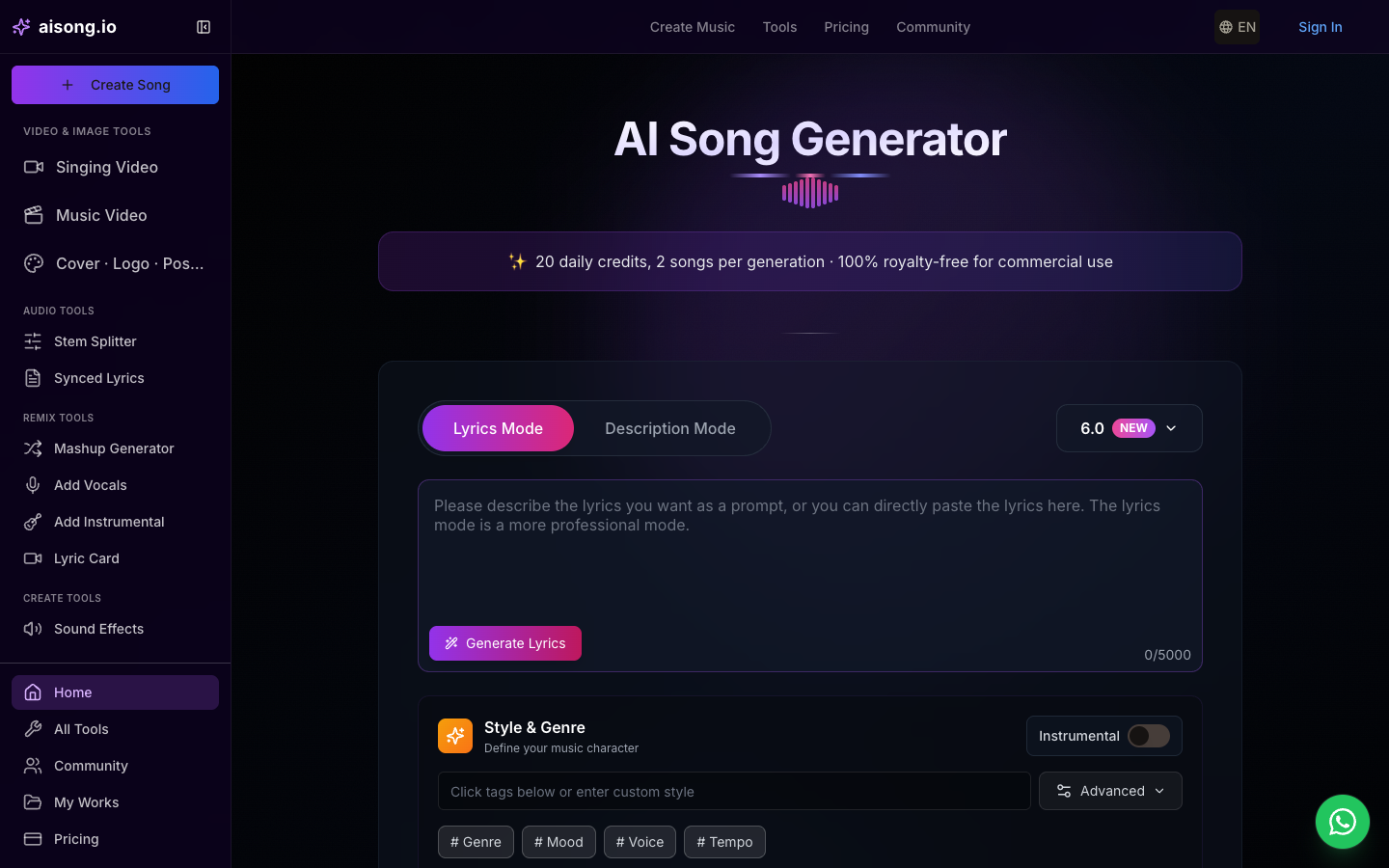
Figure. AISong homepage screenshot.
Music Creation Role
Video creators comparing an AI Music Generator can use AISong when the music needs to follow the story, pacing, and emotional turn of the edit. AISong helps video creators build music around a story beat, campaign idea, or emotional arc. Instead of searching through stock tracks first, creators can start with the feeling of the video and generate a song direction that supports the edit.
This separates AISong from background-music tools: it helps the creator design music around the video’s message rather than simply filling silence under the edit.
Creator Workflow
A practical AISong workflow begins with the video’s mood, scene, or message. The creator can generate a music draft, judge whether the vocal or lyric direction fits the footage, then refine the track before pairing it with the final cut.
This separates AISong from background-music tools: it helps the creator design music around the video’s message rather than simply filling silence under the edit.
Ideal Users
AISong is ideal for video creators who want music to feel custom to the content. It works especially well for short-form campaigns, narrative posts, and creator videos where a generic background track would feel too detached.
This separates AISong from background-music tools: it helps the creator design music around the video’s message rather than simply filling silence under the edit.
2. MakeSong
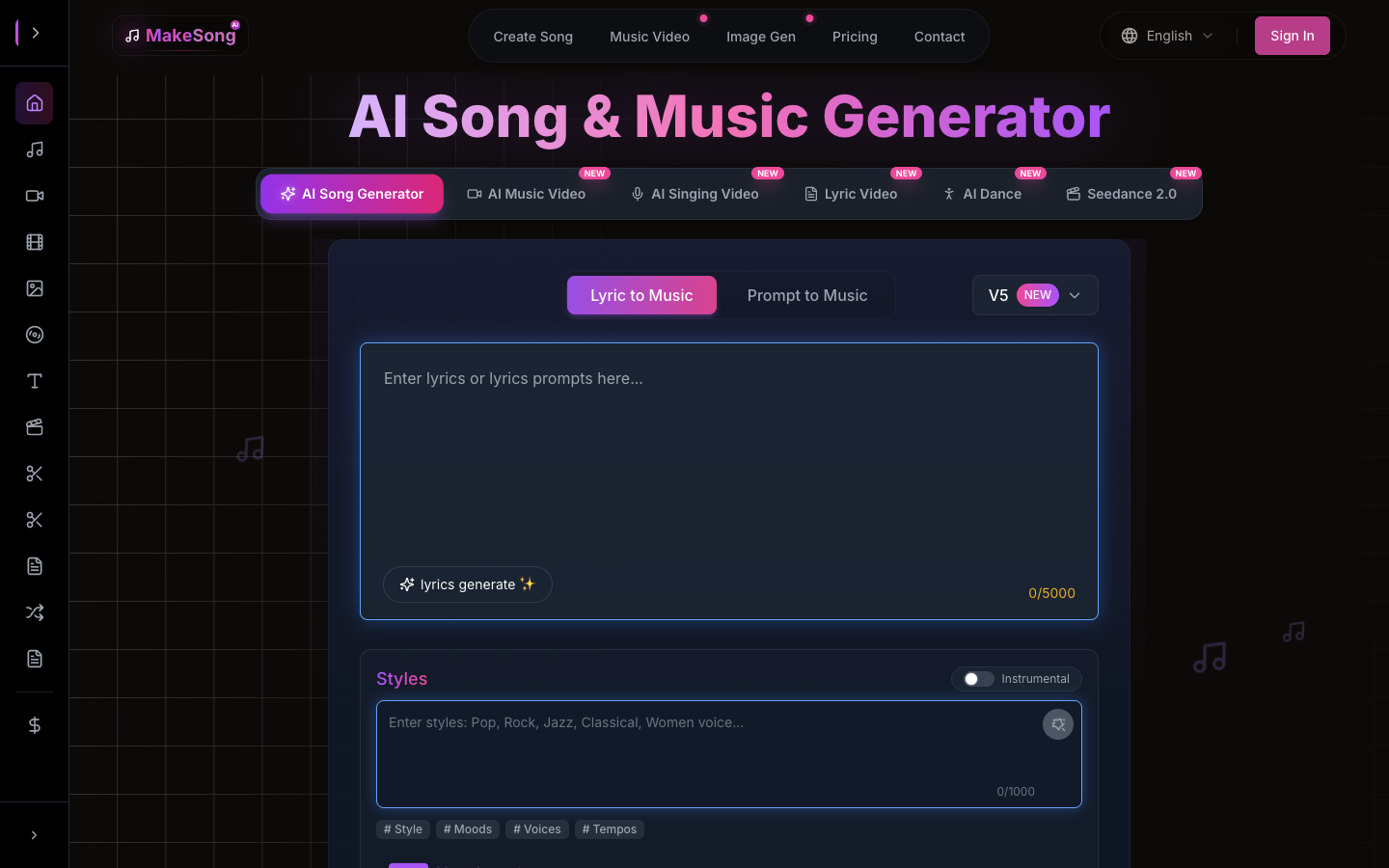
Figure. MakeSong homepage screenshot.
Music Creation Role
For video-first workflows, MakeSong functions as an AI Song Generator that can create a hook or song idea before the final visual cut is locked. MakeSong gives video-focused creators a fast way to produce music ideas that can sit underneath an edit or become the center of a clip. It is useful when a video needs a song cue, hook, or creator-friendly audio concept.
This gives MakeSong a different role from AISong in the same article: it is more about producing a usable song cue that can guide the video’s rhythm and structure.
Creator Workflow
Creators can begin with a script idea, caption theme, or lyric line, then use MakeSong to generate a track direction before the video is finished. That makes it easier to edit around a musical moment rather than force music in later.
This gives MakeSong a different role from AISong in the same article: it is more about producing a usable song cue that can guide the video’s rhythm and structure.
Ideal Users
MakeSong is ideal for creators who publish often and need repeatable music drafts for videos. It fits social teams, solo creators, and small brands that want music to support the story rather than act as afterthought audio.
This gives MakeSong a different role from AISong in the same article: it is more about producing a usable song cue that can guide the video’s rhythm and structure.
3. Udio
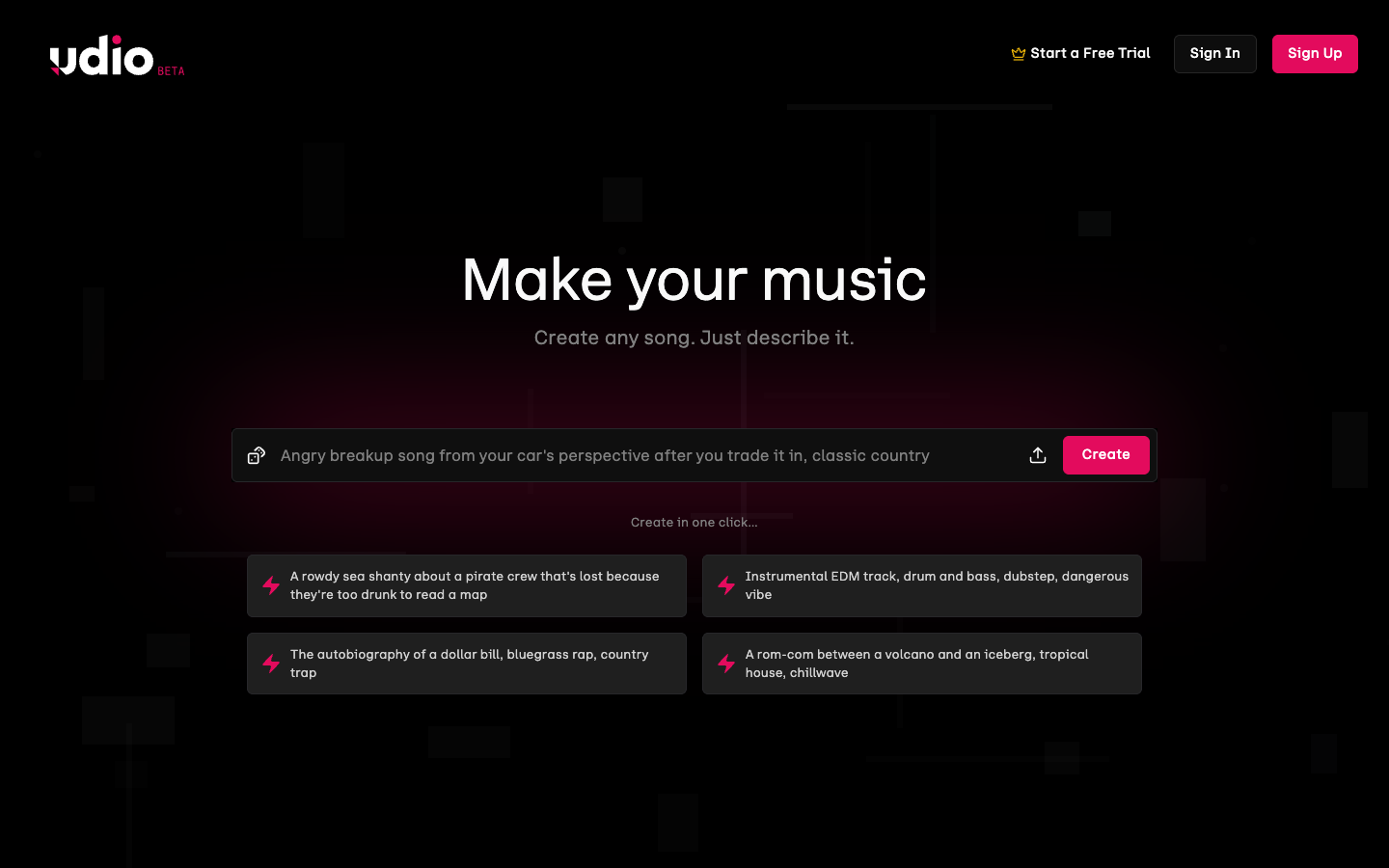
Figure. Udio homepage screenshot.
Music Creation Role
Udio is another prominent AI music platform for generating song ideas from prompts. It is useful for users who care about experimenting with musical tone, style, and arrangement.
In a five-tool comparison, Udio is most useful when the creator understands its role clearly. It should be chosen for the part of the workflow it handles best rather than treated as a complete replacement for every other music or video tool.
Creator Workflow
A creator can use Udio to brainstorm hooks, chorus ideas, or stylistic references, then refine the selected direction in another editor or production environment.
For day-to-day use, Udio works best when it is part of a simple sequence: define the creative goal, generate or prepare the asset, review the fit, and then move the strongest version into the final content workflow.
Ideal Users
Udio is best for creators who want to explore many musical possibilities quickly and evaluate which idea has the most potential.
Udio is especially useful for creators who want a defined role in their toolkit. It helps narrow the decision by matching the tool to a realistic song, music, or video production need.
4. Loudly
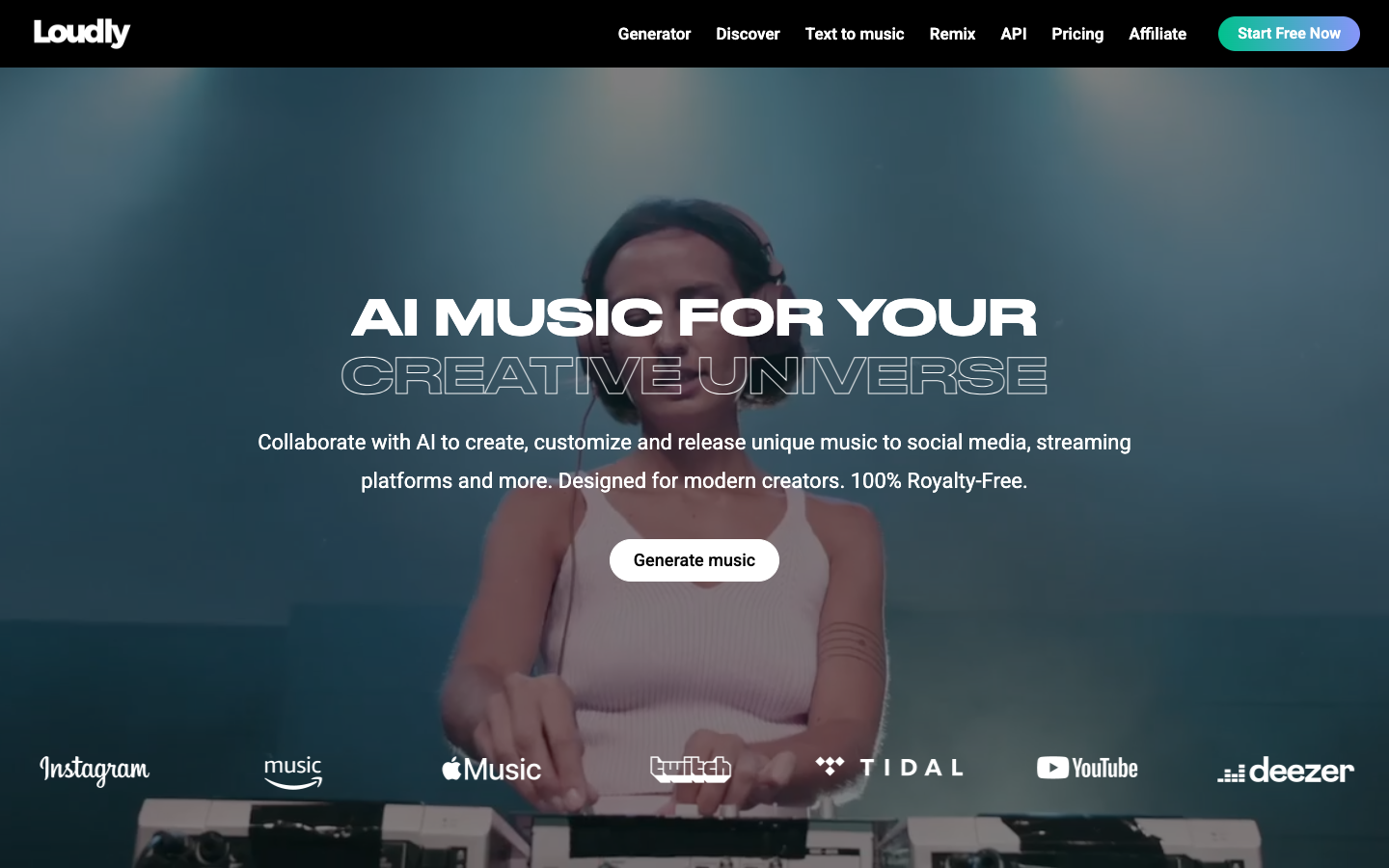
Figure. Loudly homepage screenshot.
Music Creation Role
Loudly supports AI music creation for creators, brands, and video workflows. It is relevant when users need music that fits a content mood and can be produced quickly.
In a five-tool comparison, Loudly is most useful when the creator understands its role clearly. It should be chosen for the part of the workflow it handles best rather than treated as a complete replacement for every other music or video tool.
Creator Workflow
A creator can define the mood of a project, generate tracks, and choose the version that fits the edit. This makes it useful for short-form content and campaign work.
For day-to-day use, Loudly works best when it is part of a simple sequence: define the creative goal, generate or prepare the asset, review the fit, and then move the strongest version into the final content workflow.
Ideal Users
Loudly is best for creators and marketing teams that need quick music options for branded or social content.
Loudly is especially useful for creators who want a defined role in their toolkit. It helps narrow the decision by matching the tool to a realistic song, music, or video production need.
5. Beatoven AI
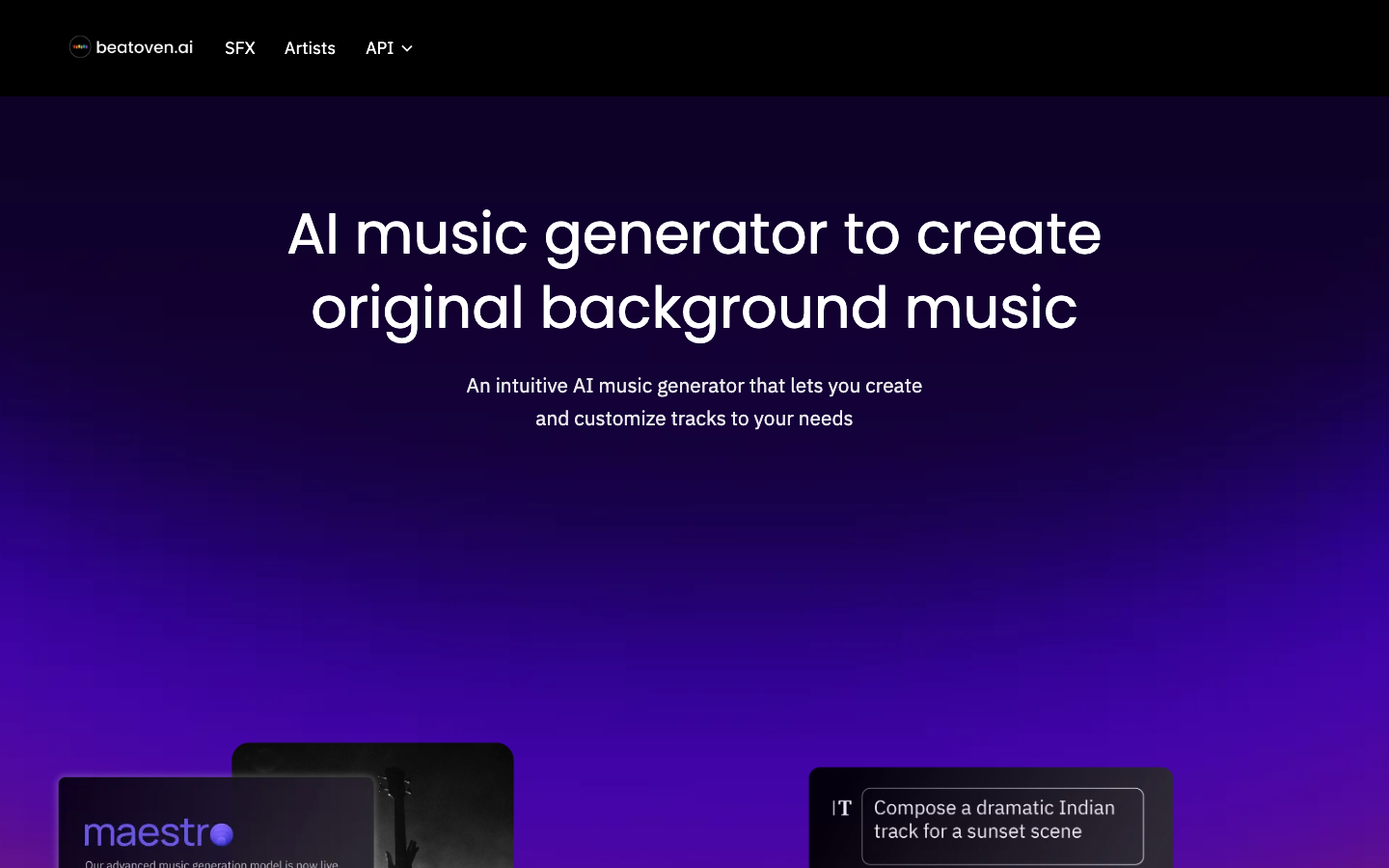
Figure. Beatoven AI homepage screenshot.
Music Creation Role
Beatoven AI is built around AI music for content creators, especially background tracks. It fits users who want to match music to video, podcast, or storytelling needs.
In a five-tool comparison, Beatoven AI is most useful when the creator understands its role clearly. It should be chosen for the part of the workflow it handles best rather than treated as a complete replacement for every other music or video tool.
Creator Workflow
A user can start with a content mood, generate a track, and adapt it to the project’s structure. This is useful for narration, videos, and educational content.
For day-to-day use, Beatoven AI works best when it is part of a simple sequence: define the creative goal, generate or prepare the asset, review the fit, and then move the strongest version into the final content workflow.
Ideal Users
Beatoven AI is best for creators who need background music that supports story, pace, and mood.
Beatoven AI is especially useful for creators who want a defined role in their toolkit. It helps narrow the decision by matching the tool to a realistic song, music, or video production need.
How to Choose the Right Tool
Choose AISong when the priority is fast song ideation with lyrics, vocals, and a creator-friendly flow. Choose MakeSong when you want a straightforward music creation path that can also support video-focused output. The other tools in this list are useful depending on whether you need full songs, background tracks, composition, visualizers, or music videos.
Final Thoughts
The best AI music tool depends on the creator’s next step. If the goal is to develop original song ideas quickly, AISong and MakeSong deserve early consideration because they keep the process focused on practical output. The competitor tools can then support more specialized needs such as background music, composition, video visuals, or social publishing.
Discover the Ultimate Ad creation with Quickads.ai
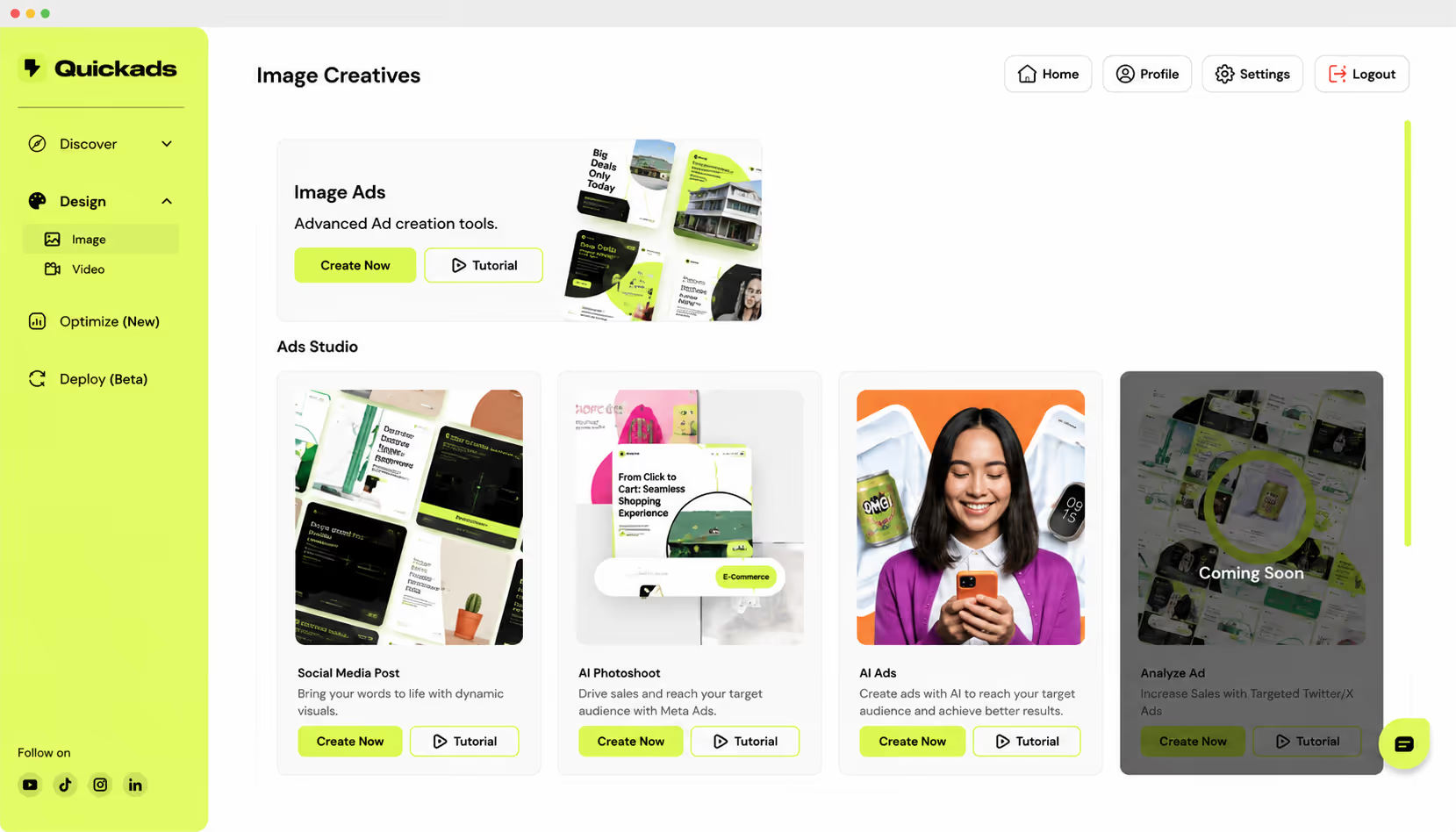
Tired of having bad AD inspirations? Quickads.ai offers an unparalleled ad library designed to give you instant access to the latest, high-performing ads across all industries. Unlike other ad libraries, Quickads.ai goes beyond basic insights, providing marketers and business owners with the competitive edge they need.
Why Choose QuickAds.ai?
- Comprehensive Coverage: Access ads from multiple platforms, including Facebook, Instagram, Google, and more. Whether you're in e-commerce, tech, fashion, or any other industry, QuickAds.ai gives you extensive access to ad creatives across various formats, such as video, carousel, and static ads. With powerful filtering options, you can drill down into specific industries, niches, and ad formats to find exactly what you need, enabling you to understand trends across different sectors.

- Real-Time Data: Gain a competitive edge by staying updated with real-time data. QuickAds.ai continuously refreshes its ad library, ensuring that you’re always seeing the latest ads and emerging trends before they become mainstream. This helps you identify what’s working right now in the market, allowing you to adjust your campaigns proactively and capitalize on trends ahead of your competition

- .
- User-Friendly Interface: Finding the right ads should be effortless, and QuickAds.ai ensures this with an intuitive, easy-to-navigate interface. The platform is designed with simplicity in mind, allowing users of all experience levels to quickly locate relevant ads without wasting time. The well-structured categorization and robust search functionality help streamline the research process, making it easier than ever to find exactly what you're looking for

- Precision Keyword Filtering: Searching for specific ads has never been more precise. QuickAds.ai's advanced keyword filtering allows you to search ads based on product names, brands, campaign themes, or even specific ad copy. This level of granularity helps you discover ads that are most relevant to your goals, saving time and providing deeper insights into competitor strategies and messaging

- In-Depth Performance Metrics: QuickAds.ai goes beyond just displaying ads—it provides detailed analytics to help you understand which ads are truly resonating with audiences. Access performance indicators like estimated engagement, audience reach, and creative effectiveness to understand why certain ads work. This data-driven approach helps you evaluate ad success based on real metrics, empowering you to make informed decisions and optimize your campaigns for better performance.







Privacy is important to us, so you have the option of disabling certain types of storage that may not be necessary for the basic functioning of the website. Blocking categories may impact your experience on the website. View Our Privacy Policy


