Your Google Shopping feed, with every garment on a model.
Google builds every Shopping listing from a row of product data, and shows the photo on that row. For clothing, Google recommends the garment worn.
Tell us what you sell. We'll come back with a photoshoot plan for your catalog.
Free. No card. We reply within one working day.
A Google Shopping feed is the product data you send to Google Merchant Center, one row per product. Google turns the rows into Shopping ads and free listings, and the main image on each row is the one shoppers see. For clothing, Google recommends showing the garment worn by a person, and each size and color gets its own row.
- Every size and color of a garment is a separate row, and the rows share one item group ID.
- Each row needs a main image that shows the whole product, with no promotional text, watermark or border on it.
- Images made with generative AI must carry metadata that says so, such as the IPTC DigitalSourceType tag.
- QuickAds makes on-model and mannequin images from one photo per garment. Adding them to the feed rows is a feed step.
Last updated · QuickAds Editorial Team
How does a Google Shopping feed work? You send the rows, and Google builds the listings.
Merchant Center reads your product data one row at a time. For clothing, a garment in three sizes and two colors is six rows, and each one needs an image link.
One per product, sent as a text file, an XML file or through the Merchant API. Each carries a title, a price, a link and a main image.
The sizes and colors of one garment share an item group ID, and each row carries its own color, size, gender and age group.
One main image is required. Up to 10 more and up to five lifestyle images are optional, each a link to a file Google can crawl.
The main image appears in Shopping ads and free listings, and Google may crop it to bring the product forward.
Variants share one item group ID and carry their own color, size, gender and age group. Source Up to 10 additional images per product. Source Up to five lifestyle images, which can appear in free listings. Source
What should a clothing image in the feed show? The garment worn, whole and in its own colorway.
Google recommends images of clothing worn by people, and requires the whole product in view with nothing printed over it. On the default setting, each garment shoot asks for the same: the whole garment in frame, top to hem, and no added text, watermark or logo.
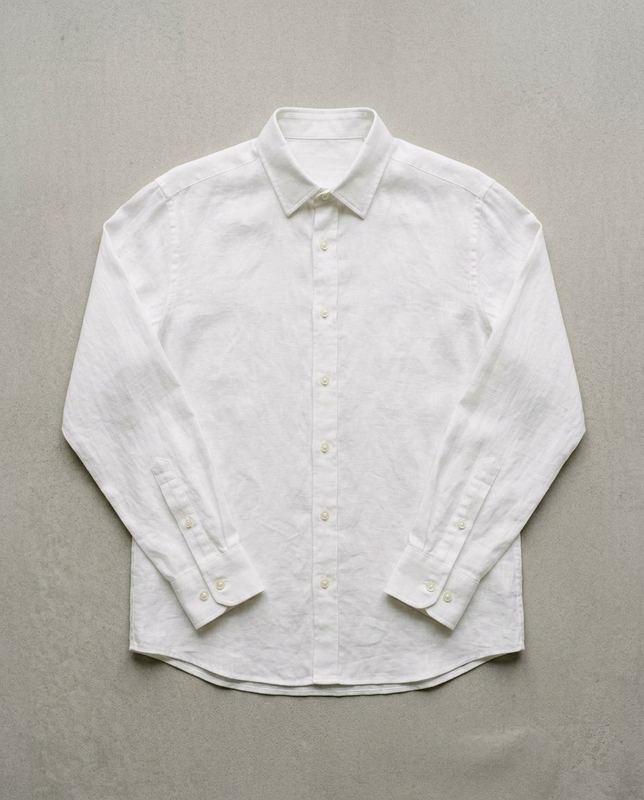 Generated stand-in
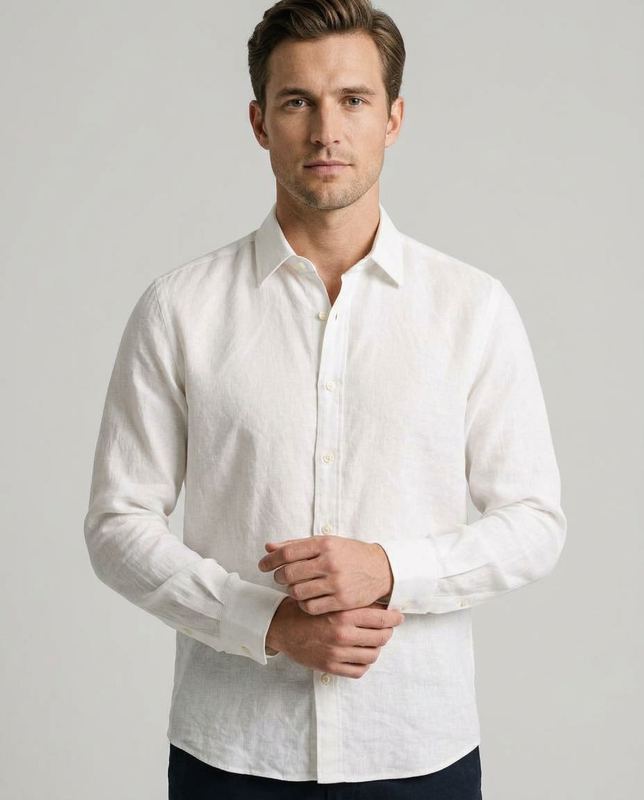 Generated
Check the collar, the cuffs and the button placket against the flat lay. On the model the collar is worn open, and the hands cover the cuffs.
An illustration: a generated stand-in flat lay, and an on-model frame made from it with a general image model, outside our pipeline. No client file.
You run it
Send one photo per garment, such as a flat lay, or a sheet or Drive folder of up to 60 garments per shoot. Each comes back on a model you pick or on one of four mannequin forms, at 1K, 2K or 4K on the default setting.
We run it
Our team runs the shoots from the photos you already have and keeps one model and one set across the range. Each batch arrives in 5 to 7 days, at 100+ creatives a week.
Where the files go
The images download one at a time or as a zip, to host and link from each row. Adding them to the rows is feed work, covered in product feed optimization, and our Enriched Catalog product can take it on.
What goes wrong with clothing images in a feed? Six problems and the fix for each.
Some of these get a product disapproved, and Merchant Center says so in its Diagnostics section. The others break no rule and still show a shopper the wrong thing.
| Problem | What Google says | The fix |
|---|---|---|
| A flat photo as the main image | Google recommends clothing worn by people, with the model's head and feet in frame in a full-body shot | Fix it with an on-model main image, and keep the flat lay as an extra image |
| Text on the image | Google disapproves images with promotional text, a watermark, a logo overlay or a border | Fix it by keeping the image clean and putting the words in the title |
| One photo on every colorway | Google recommends a unique image for each variant, in its own color, pattern and material | Fix it with one photo per colorway, since sizes of one color can share an image |
| A generated image without its AI tag | Google requires every image made with generative AI to carry metadata that says so, and not to remove it | Fix it by adding the tag to any generated file that lacks it, and keeping it through every edit and export |
| A new image that shows late | Google recrawls a new image URL typically within three days, and a changed file at the same URL can take up to six weeks | Fix it by uploading the replacement under a new URL |
| An image that is too small | Google requires at least 500 by 500 pixels for every product from January 31, 2027, and recommends about 1,500 by 1,500 | Fix it by sending the largest original you have, never a scaled-up thumbnail |
Every rule in the table is from Google Merchant Center's image link guidelines, read on September 24, 2026. Source
What people ask about a Google Shopping feed.
What is a Google Shopping feed?
A Google Shopping feed is the product data you send to Google Merchant Center, with one row for each product and for each size and color of it. Every row carries details such as the title, the price, the link and a main image. Google builds your Shopping ads and free listings from those rows, and the main image on each row appears in both.
How to set up a Google Shopping feed?
Open a Google Merchant Center account and add your products as a data source: a text file such as a CSV, an XML file or the Merchant API. Give every product a main image, and group the sizes and colors of each garment under one item group ID. Merchant Center then lists any product it disapproves in its Diagnostics section, so you can fix the row and send it again.
What are the requirements for the Google Shopping feed?
Each clothing product needs a main image that shows the whole product, with no promotional text, watermark, logo overlay or border, and from January 31, 2027 it has to be at least 500 by 500 pixels. Images made with generative AI must carry metadata that marks them as generated. Variants of one garment share an item group ID and carry their own color, size, gender and age group.
How many images can a Google Shopping listing have?
One main image in image_link, which is required, plus up to 10 additional images in additional_image_link. Google also takes up to five lifestyle images in lifestyle_image_link, and those can appear in free listings. For clothing, the extra images suit other angles, the flat lay, a mannequin form or the garment worn in a second setting.
Can AI images be used in a Google Shopping feed?
Yes, when they show the actual product and carry metadata that marks them as AI-generated, such as the IPTC DigitalSourceType tag. A generic illustration in place of the product gets disapproved, so a generated image has to carry the real garment's color, print and details. QuickAds files don't reliably carry that tag yet, so add it before upload, and check every image, since the keep-or-retry score is advice.
Should clothing in a Google Shopping feed be shown on a model?
Google recommends images of clothing worn by people and, in a full-body image, keeping the model's head and feet in frame. QuickAds puts each garment on a model you pick, or on a mannequin form, from one photo of it: up to 60 garments per shoot on the software, or 100+ creatives a week when our team runs it. Adding the images to the feed rows is a separate feed step.
One photo per garment, on a model for every row in the feed.
QuickAds is a performance creative company that runs the whole chain: creative intelligence, creative strategy, creative production, influencer marketing and campaign management. Ecommerce fashion photography is the link that puts every garment on a model or a mannequin, for the product page, the feed and the ads.