Thank you! Your submission has been received! We'll evaluate your application and shortly get back to you with the confirmation!
Oops! Something went wrong while submitting the form.
· Reviewed by
· Last updated
October 11, 2026
The short answer
Retail media advertising is buying ads from retailers, on their websites, apps and partner channels, targeted with their shopper data. Amazon Ads, Walmart Connect, Instacart and Target Roundel are among the largest US networks. Targeting comes from the retailer; the creative usually comes from the brand, and it is often the weakest part of the campaign.
Key takeaways
Retail media is the retailer's data, sold as ads. Onsite search and display, offsite social and streaming TV.
Two networks take most of the growth. Amazon and Walmart capture about 89% of new US spend in 2026 (eMarketer).
Every network has its own specs and policies. One asset does not travel unchanged.
Creative is the lever you control. Targeting is shared with your competitors; the ad is yours.
Offsite needs real creative. Social and streaming placements need thumb-stopping ads, not packshots.
Retail media is where the trade budget went. Instead of paying for end caps and circulars, CPG brands pay retailers for sponsored listings, display and video, on site and across the web, targeted with the retailer's own purchase data.
eMarketer forecasts US retail media spend of $69.33 billion in 2026, with Amazon and Walmart taking $9.42 billion of the $10.53 billion in new spend. The targeting has never been better. The creative going into it is often a resized packshot. This guide covers how retail media networks work, what each format needs and how to build creative for it.
The direct answer
Every channel has a lane. None is the lane a normal DTC brand gets.
Match the format to what each platform will clear, in the right order, and paid works. Skip the order and the account gets flagged before the first learning phase finishes.
Meta
Narrow, real, certification-gated
Topical CBD runs with LegitScript certification and written approval. GLP-1 telehealth runs when it manages weight instead of curing it. Both need clean audience naming.
TikTok
Organic-first, paid is the exception
Paid CBD is closed to self-serve. Paid GLP-1 needs a TikTok sales relationship most brands do not have. Organic at scale and Spark Ads carry the channel.
Programmatic
Widest lane, least glamorous
CTV, native, audio and retail media run on publisher relationships and contextual targeting. This is usually where the real volume ends up.
Channel status matrix
Read this before a single ad gets built.
Status changes by product form (topical vs ingestible, branded drug vs telehealth program). Policy moves fast; confirm current terms before launch.
Product / claim type
Meta
TikTok (paid)
Google / YouTube
Programmatic / CTV
Retail media
Topical CBD (balm, salve, cosmetic)
Restricted
Restricted
Restricted
Allowed
Allowed
Ingestible CBD (oil, gummy, capsule)
Not available
Not available
Not available
Restricted
Restricted
GLP-1 telehealth program (compounded, non-branded)
Restricted
Not available
Restricted
Allowed
Restricted
Branded GLP-1 pharma (named drug, on-label)
Not available
Not available
Not available
Restricted
Not available
Dietary supplements (structure/function claims)
Allowed
Restricted
Allowed
Allowed
Allowed
Allowed = normal ad review. Restricted = certification, age gate or a narrower claim set. Not available = no standard self-serve path.
Straight talk
Three beliefs to drop before you brief anything.
The myth
If Meta approved my page, my ads will run fine too.
What is real
Page approval and ad approval are separate reviews. CBD and GLP-1 copy is read by policy teams looking for health claims and personal-attribute targeting, whatever your organic page has posted for months.
The myth
TikTok is where our audience is, so budget goes there first.
What is real
Your audience being on TikTok and TikTok letting you pay to reach them are two different facts. Build organic and creators there first. Paid follows the channels that accept the ad.
The myth
Programmatic is a last resort for brands banned everywhere else.
What is real
For CBD and weight management, programmatic is frequently where the real spend lives. It is less visible in a Meta Ad Library search, which is why most guides underrate it.
The sequencing
Not a menu. An order.
Skipping steps is how brands end up with a banned Meta account and no fallback channel already built.
Step 01
Lock claims and certification
LegitScript for CBD, a treat-vs-cure claims library for GLP-1, structure/function lines for supplements. This unlocks every paid channel after it.
Step 02
Seed owned and organic
Email, SMS, site content and TikTok organic build proof and the creator bench at zero platform ad-policy risk.
Step 03
Scale demand on programmatic
CTV, native and audio carry the volume once certification is in place. Usually the largest media line.
Step 04
Open the narrow Meta lane
Certified, claims-checked creative for real incremental reach, with the naming and targeting discipline the policy demands.
Step 05
Amplify TikTok with Spark Ads
Boost what already proved itself organically rather than briefing cold paid concepts the platform is unlikely to approve.
Step 06
Close the loop on retail media
Meet the demand you created at the point of purchase.
Go deeper
The category guides.
Each guide takes one category through platform rules, claims, creators and the creative lane.
Yes, inside a narrow lane. Topical CBD and weight-management programs can have eligible routes when certification, claims, imagery and landing pages meet current platform requirements.
Should regulated brands move their budget to TikTok instead?
Not as the default paid channel. Organic and creator content can be more useful first, with paid amplification only where the category and content are eligible.
Why does programmatic matter?
Programmatic opens display, native, CTV and audio inventory across publishers and exchanges, making it an important scaling lane for categories with tighter social-platform rules.
What is the right launch order?
Lock claims and certification, seed owned and organic, scale programmatic, open the permitted Meta lane, amplify proven TikTok content where eligible, then close the loop on retail media.
Do the same rules apply to creator content?
Yes. Creator claims still need disclosure, substantiation and a compliant brief, and boosted content must also fit the platform category rules.
Smart creatives and campaign planning for sensitive categories, from $2,000 a month.CBD · Supplements · GLP-1 · Med spa · Telehealth
Plus the association: point VideoObject.about at the product entity, or Product.subjectOf at the video, with matching @id values.
How agentic shopping works
From shopping request to shortlist
An illustrative journey. Not every shopping agent follows these steps, and not all support autonomous payment.
“Rain jacket for a Seattle trip next Thursday, under two hundred dollars, medium, nothing neon.”
At a glance
Classic SEO and LLM SEO are different games
Classic SEO
LLM SEO
Unit of competition
A URL ranked for a keyword
A passage quoted inside an answer
Query shape
Two to four words
A full sentence carrying budget, constraints and context
Result set
Ten results the reader chooses between
One answer naming three to five sources
Volatility
Positions hold for weeks
The same prompt can return different brands within the hour
Winning asset
The page
The paragraph that still makes sense cut out of the page
Measurement
A rank tracker
A fixed prompt panel you rerun and score
In this guide
How retail media networks work
Three beliefs to drop before the next brief
Why creative decides retail media results
Creative by network, at a glance
How QuickAds builds retail media creative
Watch it work, read the data
Meet the expert behind this guide
How retail media networks work
A retail media network sells ad placements on the retailer's own properties and on outside channels, targeted with what shoppers actually bought there. Brands pay for impressions or clicks and see attributed sales in the retailer's reporting.
Onsite
Sponsored products and brands in search results, display on category and product pages, and video on the retailer's site and app.
Offsite
The retailer's audiences reached on social, display, streaming TV and audio through partners, with sales measured back at the retailer.
In store
Screens and audio in physical stores, increasingly sold through the same network as digital placements.
Three beliefs to drop before the next brief
Myth: Better targeting will fix weak results.
What is real: Your competitors buy the same audiences on the same network. When targeting is shared, the ad is the difference the shopper sees.
Myth: The packshot is the ad.
What is real: On a phone, sponsored placements show at thumbnail size. Brand, variant, benefit and price have to read in one glance.
Myth: Offsite works like onsite.
What is real: Offsite ads run in social feeds and streaming TV next to every other brand. A packshot on white rarely holds attention there.
Why creative decides retail media results
Every brand in your category can buy the same audiences on the same network. The difference shoppers see is the ad.
Thumbnail first
Most onsite placements render small on a phone. The product, the benefit and the price have to read in one glance.
Spec sprawl
Each network has its own sizes, safe zones, copy limits and creative policies, and they change. What runs as sponsored brand video on one network is a custom display unit on another.
Offsite is a social ad
When a retailer's audience is reached on social or streaming TV, your asset competes with every other ad in the feed.
Fatigue comes fast
Always-on campaigns with three assets wear out. Shoppers who see the same tile every visit stop seeing it.
Creative by network, at a glance
Amazon Ads
Sponsored brands and video, brand Stores, display through Amazon DSP and Prime Video ads. Clear product video and Store consistency matter most.
Walmart Connect
Sponsored products and brands, onsite display and offsite through partners. Value messaging and pack clarity carry.
Instacart
Sponsored products, display and shoppable video inside the grocery basket. Occasion and recipe framing help.
Target Roundel and grocery networks
Onsite and offsite placements with retailer-specific brand standards and approval steps.
Specs and policies change often; confirm current requirements with each network before production.
How QuickAds builds retail media creative
01 One concept, every network
We build a master concept, then cut it to each network's specs, placements and policies, onsite and offsite.
02 Variety at SKU level
Catalog enrichment turns product feeds into lifestyle cards and short videos for every SKU, including the long tail nobody shoots. See catalog ads.
03 Retailer and market QA
Every asset is checked frame by frame against your brand kit, safe zones and network policies before it ships.
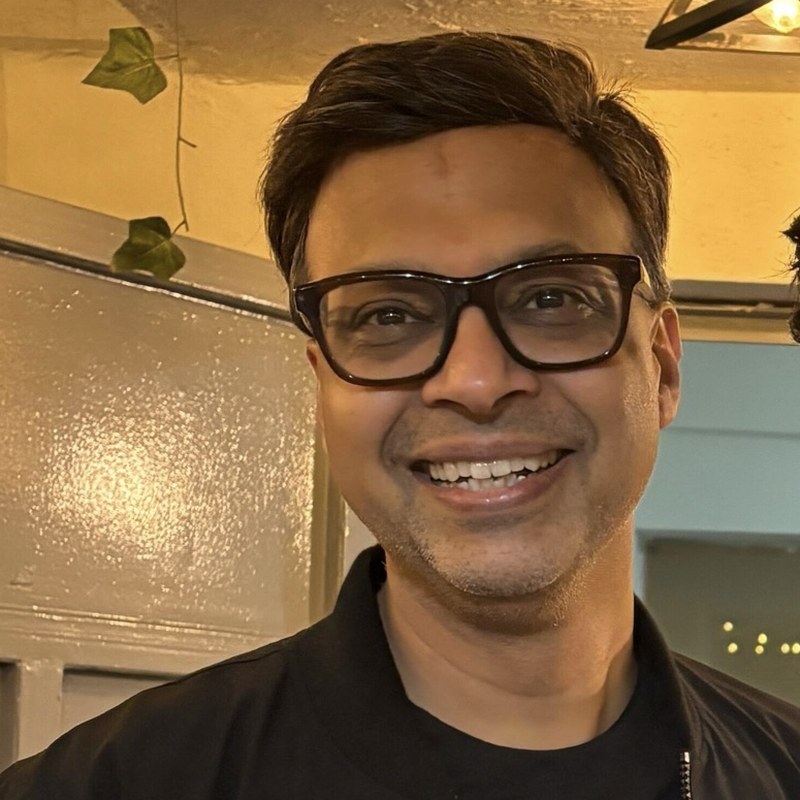
Nitin runs QuickAds, the creative intelligence and production company behind this guide: 70+ people across India, Singapore, Canada and the US, and more than $200M of ad spend managed. Before QuickAds he was early at two companies that went on to become unicorns. These guides come out of the calls he has with FMCG and retail teams every week.
Eight checks drawn from this guide. Tick what is already true for your catalog.
0 of 8Tick the checks that apply
Frequently asked questions
What is retail media advertising?
Retail media advertising is advertising sold by retailers, placed on their own websites and apps and on outside channels, and targeted with their customers' purchase data. For CPG brands it has largely replaced traditional trade marketing as the way to influence the shelf, because the retailer can show which ads led to sales.
What is a retail media network?
A retail media network is a retailer's advertising business. It packages the retailer's shopper data, website and app inventory, offsite partnerships and sometimes in-store screens into ad products brands can buy. Amazon Ads and Walmart Connect are the largest in the US, and most large grocers, pharmacies and marketplaces now run one.
How do retail media networks work?
Brands buy placements through the network's self-serve platform or managed team. Ads are targeted with the retailer's first-party shopper data and run onsite, offsite or in store. The network reports impressions, clicks and attributed sales from its own transactions, which is why retail media is described as closed-loop.
What creative do you need for retail media?
At minimum: strong product images, sponsored brand headlines and logos, display banners in each network's sizes and a short product video. Offsite and streaming placements need full social or video creative. Each network has its own specs and creative policies, so most brands need a version of each asset per retailer.
How much do brands spend on retail media?
eMarketer forecasts US retail media ad spend of $69.33 billion in 2026, up from $58.79 billion in 2025, with Amazon and Walmart taking most of the growth. Brand budgets vary widely. A useful rule is to reserve part of every retail media budget for creative built for the network, not resized from TV.
{"@context":"https://schema.org","@graph":[{"@type":"Organization","@id":"https://www.quickads.ai/#organization","name":"QuickAds","url":"https://www.quickads.ai/"},{"@type":"WebPage","@id":"https://www.quickads.ai/topic-pages/retail-media-advertising#webpage","url":"https://www.quickads.ai/topic-pages/retail-media-advertising","name":"Retail Media Advertising: Creative That Wins the Shelf","description":"What retail media advertising is, how retail media networks work, and why the creative decides results on Amazon, Walmart Connect, Instacart and more.","dateModified":"2026-10-11","publisher":{"@id":"https://www.quickads.ai/#organization"}},{"@type":"Article","headline":"Retail media advertising sells you the click. Not the ad.","description":"What retail media advertising is, how retail media networks work, and why the creative decides results on Amazon, Walmart Connect, Instacart and more.","datePublished":"2026-10-11","dateModified":"2026-10-11","author":{"@type":"Organization","name":"QuickAds Editorial Team"},"publisher":{"@id":"https://www.quickads.ai/#organization"},"mainEntityOfPage":{"@id":"https://www.quickads.ai/topic-pages/retail-media-advertising#webpage"}},{"@type":"BreadcrumbList","itemListElement":[{"@type":"ListItem","position":1,"name":"Home","item":"https://www.quickads.ai/"},{"@type":"ListItem","position":2,"name":"Guides","item":"https://www.quickads.ai/guides"},{"@type":"ListItem","position":3,"name":"Retail media advertising","item":"https://www.quickads.ai/topic-pages/retail-media-advertising"}]},{"@type":"FAQPage","mainEntity":[{"@type":"Question","name":"What is retail media advertising?","acceptedAnswer":{"@type":"Answer","text":"Retail media advertising is advertising sold by retailers, placed on their own websites and apps and on outside channels, and targeted with their customers' purchase data. For CPG brands it has largely replaced traditional trade marketing as the way to influence the shelf, because the retailer can show which ads led to sales."}},{"@type":"Question","name":"What is a retail media network?","acceptedAnswer":{"@type":"Answer","text":"A retail media network is a retailer's advertising business. It packages the retailer's shopper data, website and app inventory, offsite partnerships and sometimes in-store screens into ad products brands can buy. Amazon Ads and Walmart Connect are the largest in the US, and most large grocers, pharmacies and marketplaces now run one."}},{"@type":"Question","name":"How do retail media networks work?","acceptedAnswer":{"@type":"Answer","text":"Brands buy placements through the network's self-serve platform or managed team. Ads are targeted with the retailer's first-party shopper data and run onsite, offsite or in store. The network reports impressions, clicks and attributed sales from its own transactions, which is why retail media is described as closed-loop."}},{"@type":"Question","name":"What creative do you need for retail media?","acceptedAnswer":{"@type":"Answer","text":"At minimum: strong product images, sponsored brand headlines and logos, display banners in each network's sizes and a short product video. Offsite and streaming placements need full social or video creative. Each network has its own specs and creative policies, so most brands need a version of each asset per retailer."}},{"@type":"Question","name":"How much do brands spend on retail media?","acceptedAnswer":{"@type":"Answer","text":"eMarketer forecasts US retail media ad spend of $69.33 billion in 2026, up from $58.79 billion in 2025, with Amazon and Walmart taking most of the growth. Brand budgets vary widely. A useful rule is to reserve part of every retail media budget for creative built for the network, not resized from TV."}}]}]}