Try Quickads free
For growth and creative leads

Beyond the pilot: what it actually takes to reach practice

Stop juggling five different AI subscriptions. Build one shared workflow instead.

  • A repeatable 5-step rollout sequence you can start this week
  • A guardrails template you copy and paste in one click
  • A 2-minute readiness check that benchmarks where your team stands
Benchmark Your Team's AI Score

No signup required to check your score.

17 min read · By Quickads · Updated July 2026

Where AI pilots stall
01Five people, five different ways of working
Someone drafts headlines with it. Someone else runs storyboards. None of it ever becomes how the team works, and month one looks fine right up until month four. Read this chapter
02The pilot worked and nothing happened next
The model was never the bottleneck. Nobody decided what happens after the test succeeds, so a good result stays a demo instead of turning into production. Read this chapter
03On brand lives in one person's judgment
Everyone knows there are rules. Nobody can point to the page they are written on, so every borderline output becomes a Slack thread and a wait. Read this chapter
04AI bolted onto every step, earning its keep on none
Running the whole workflow through a model looks like adoption. The teams that get real time back know exactly which steps deserve it and which ones never did. Read this chapter
01

Ask five people how they use AI. You will get five answers.

That is not failure this early. It is the normal shape of month one. The problem shows up later, when none of those five ways of working ever becomes one way of working.

Most creative teams are not short on AI experimentation. Someone is using it to draft headlines. Someone else is running storyboards through it. Someone is quietly handling a whole workflow with a tool nobody else on the team has ever opened. Individually, all of that looks like progress.

Collectively, it is a liability. There is no shared workflow, so quality depends on who happened to get assigned the brief. There is no visibility, so a genuinely good discovery stays with one person instead of lifting the whole team. And there is no one whose job it is to notice, because trying AI became everyone's job and rolling it out became no one's.

This is not a side issue for creative work specifically. Creative development is already the single most common use of AI among marketers who have adopted it, well ahead of anything else it gets used for, according to Gartner. If your team does not have a real rollout, you do not have a side project running loose. You have your main output running loose.

From the Quickads library

Most creative stagnation happens before a single asset gets made, when a team is staring at a blank page. Quickads sits on one of the widest views of ad creative anywhere: a 30M+ ad library, trusted by 30,000+ brands. That is not a footnote. It means the workflow you design in this playbook does not have to start from a blank page. It can start from what is already proven to work.

The tell: if you cannot name who owns your AI rollout, nobody does. It is happening in private, not in the workflow.

02

Why pilots stall before they matter

It is tempting to blame the tools. The real bottleneck is almost never the model. It is that nobody designed what happens after the pilot works.

A pilot succeeding is the easy part. Almost anything looks good run once, by one motivated person, on their best example. What actually determines whether AI changes how a team works is what happens in week three, when the person who ran the pilot gets pulled onto something else, and nobody else knows the workflow well enough to keep it running.

It does not help that the landscape moves fast enough to stall anyone. The number of AI marketing tools on the market has more than tripled in two years, and each one claims to be the one your team needs. Choosing is not the hard part. Sustaining the choice is.

89%
of AI agent pilots never reach production.
Gartner, 2026
91%
of marketing leaders say getting real value from AI takes too long.
Gartner
74%
of companies struggle to scale the AI value they have already proven.
BCG
03

A sequence that actually holds

None of this needs a reorg or a new department. It needs five plain moves, done in order, and kept up.

  1. Name one owner

    Not a committee, not "the team." One person whose job includes making the rollout actually happen, with enough time on their calendar to do it.

  2. Pick one real workflow

    Not a moonshot. A task your team already does every week: first drafts, resizes, a first pass at variations. Small enough to finish, real enough to matter.

  3. Write the guardrails down

    A single shared page: what is approved, what needs review, what never ships without a human. A living doc beats a policy nobody reads.

  4. Share what works, on purpose

    A standing slot, weekly or every other week, where wins get shown and copied. A good discovery that stays with one person does not count.

  5. Expand on a schedule

    Add the next workflow on a set date, not whenever someone gets around to it. Momentum needs a calendar, not enthusiasm.

04

What the guardrails page actually says

Step three of the sequence is "write the guardrails down." Here is what that page actually looks like, filled in, so you are not starting from a blank doc either.

This is not a legal policy and it is not forty pages. It is one page, owned by the same person who owns the rollout, revisited on the same monthly cadence as the habits in chapter eight. Mid-size and enterprise teams tend to worry this needs a compliance sign-off before it can exist. It does not. It needs a first draft, in public, that gets better each month.

Approved for AI, no review needed

First drafts, resizes, variations, a first pass at copy. Anything reversible and low risk.

Needs a human review before it ships

Anything that goes external, uses a real person's likeness, or touches a regulated claim.

Never ships without a human, full stop

The core idea, pricing and legal claims, and anything built on a real customer's story.

Data and IP rules

No customer data goes into a public model. Only licensed or owned assets train anything custom.

Who to ask

One named owner, plus a fallback, listed by name. Not a title, not a distribution list.

Copied. Paste it into Notion or Docs and edit freely.

How a locked brand base carries some of this automatically

The first row, "approved for AI, no review needed," gets easier to trust once your colors, fonts, and voice are locked into a brand base rather than left to whoever is prompting. It will not enforce the legal and IP rows below it. Those still need a human, on purpose, every time.

Where it actually fits

Not every step needs AI. Some genuinely do

The point is not to run everything through AI. It is knowing exactly which parts of the workflow it is actually earning its keep in.

  • Research and ideation. Generating a wide first pass of angles, hooks, and references before anyone opens a design file.
  • First drafts and variations. Turning one approved concept into the ten versions you will actually test.
  • Resizing and localizing. The purely mechanical work of making one asset fit twelve formats and eight markets.
  • A first QA pass. Catching obvious errors, off-brand colors, and compliance issues before a human reviews anything.
  • Reporting the pattern. Rolling up what performed across a hundred variations into the one insight a strategist actually needs.
05

The pattern behind teams that pull it off

The difference is not budget or a better model. It is three decisions made early and kept.

Where it gets stuckThe old wayThe fast way (with Quickads)
Choosing what to tryWhatever is trending, decided by committee, takes a quarter to greenlightOne real, recurring task, decided by one owner, live within a week
Getting the team on itEveryone left to figure out their own approach, aloneA shared brand base plus a standing session, from week one
Keeping it aliveMomentum fades once the initial push is overA standing habit for surfacing wins and expanding on schedule
06

From shadow AI to one shared system

Shadow AI is not a security team's problem to deal with later. It is what happens by default when nobody builds the alternative.

Every unofficial subscription and private workflow is a rational response to having no sanctioned one. The fix is not a ban. It is giving people a system good enough that going around it stops being the easier option.

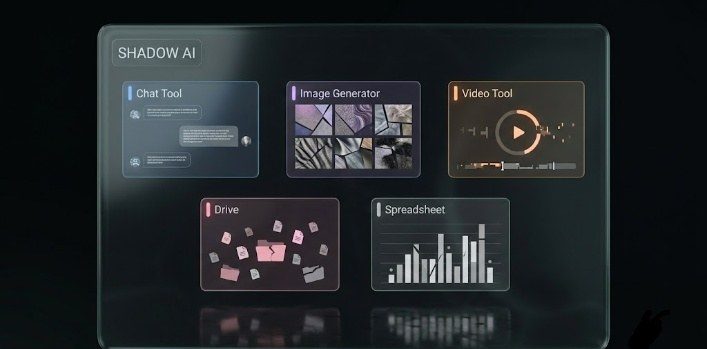
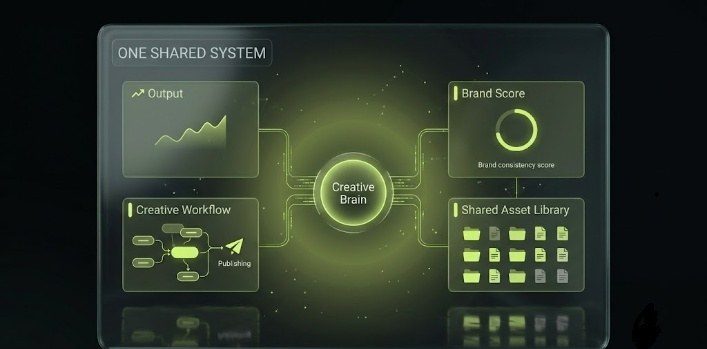
Currently showing: Shadow AI

Five disconnected AI tools shown as separate glass dashboard panels: a chat tool, an image generator, a video tool, cloud drive, and a spreadsheet, each inconsistent with the others.
One unified Quickads dashboard: output, creative workflow, brand score, and shared asset library, all connected through one central system.

Shadow AI is shown first. Drag right to see one shared system replace it.

One more worry worth naming directly, since it is usually the real objection: teams resist a shared system because they assume it replaces the tools they already trust. It should not, and it is not meant to. The point of one shared workflow is not another silo sitting next to your asset library, your ad accounts, and your review process. It is a source that feeds them: output lands wherever your team already works, review still happens wherever it already happens, and nothing in your existing stack has to be ripped out to start.

SHADOW AI

What it looks like by default

  • Individual subscriptions nobody tracks or approves
  • Work scattered across tools, tabs, and chat threads
  • Brand consistency down to whoever is prompting that day
  • No one to ask when something goes wrong
ONE SHARED SYSTEM

What it looks like on purpose

  • One workflow the whole team can point to
  • Work and results live in a single place
  • A brand base built into every generation
  • A named owner who can actually answer for it
What it looks like in practice

The sequence, walked through end to end

Illustrative composite, not a specific customer

This is a composite of how the five-step sequence plays out, not a single named company. Swap in a real customer story here the moment you have one to share.

Week one

A 40-person creative team at a mid-size retail brand has three people quietly using three different tools. The head of creative names herself the owner and picks one workflow: first-draft product photography for the weekly email send.

Week two

The guardrails page goes up. One page: approved for AI, needs review, never ships without a human, one named owner. It is rough, and it is public, which matters more than it being polished.

Week four

Draft-to-review time on the email send drops from most of a day to well under an hour. Nobody announces a win. The email team just stops asking a designer to start from scratch every week.

Week eight

Two more workflows go live on schedule: paid social variations and catalog resizing. Wins get shown every other Friday, so the rest of the team starts asking to be next instead of waiting to be told.

No re-org, no new department. One person went first, in the open, with a system simple enough for everyone else to actually follow.
07

How close are you to practice?

A 2-minute gut check. Tap one answer in each row below and watch the score update live, no email required.

0out of 100
Answer to begin
Pick one option in each question.
1. Where does AI actually get used on your team today?
Nowhere formalA few people, on their ownOne shared, defined workflow
2. Who owns getting it rolled out?
Nobody in particularOne enthusiast, informallyA named owner
3. Do you have any written guardrails?
NoneA rough, shared docClear guidelines, kept current
4. When something works, does it spread?
Rarely, it stays with one personSometimes, informallyYes, on purpose
Your focus areas

    A self-reflection prompt, not a validated score. The weighting is deliberately simple.

    Inside Quickads

    Where Quickads plugs into the sequence

    There is a real difference between prompting and generating, and it is the difference between a clever individual habit and a system the whole team can run.

    Raw prompting means every result depends on whoever typed the prompt that day, and a good one rarely survives being handed to someone else. An asset generator built on a locked brand base works the other way around: the brand, the voice, and the rules get defined once, and every generation after starts from that same place instead of the average of the internet.

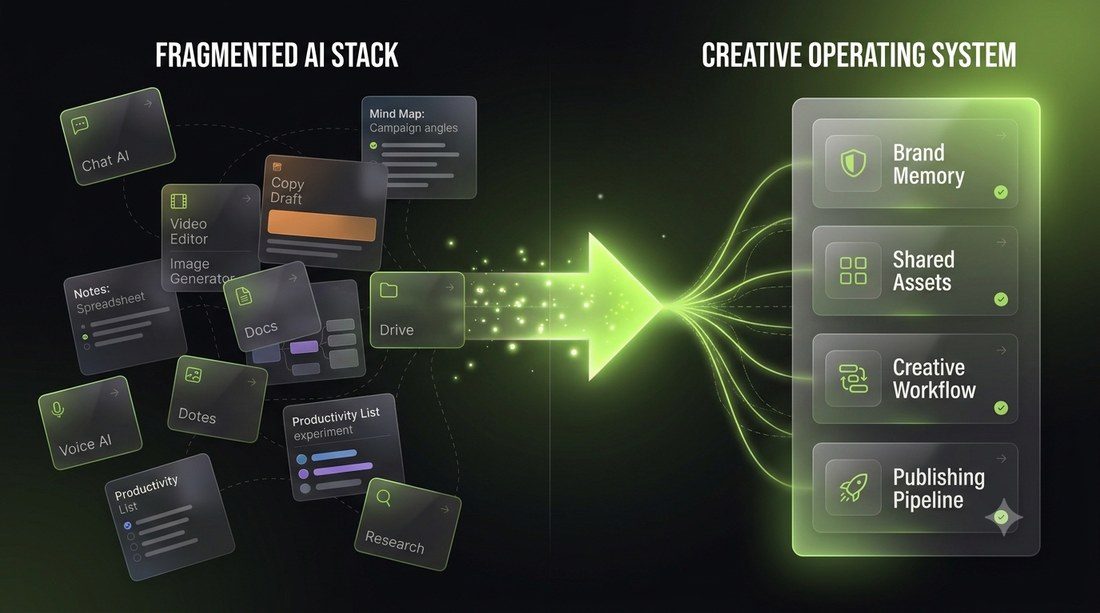
    A fragmented AI stack of disconnected chat, video, image, and productivity tools converging into one creative operating system: brand memory, shared assets, creative workflow, and a publishing pipeline.

    Quickads gives step two of the sequence, picking one real workflow, something to actually run on from day one.

    No asset library yet? The sequence does not assume you have one. A newer or smaller team can start from a single product link or a short brief, the same on-ramp Quickads itself starts from, and build the brand base as it goes. A larger team with years of guidelines, logos, and product photography feeds that library in as the starting point instead. Either way, step two is the same: one real workflow, running on whatever material you actually have today.

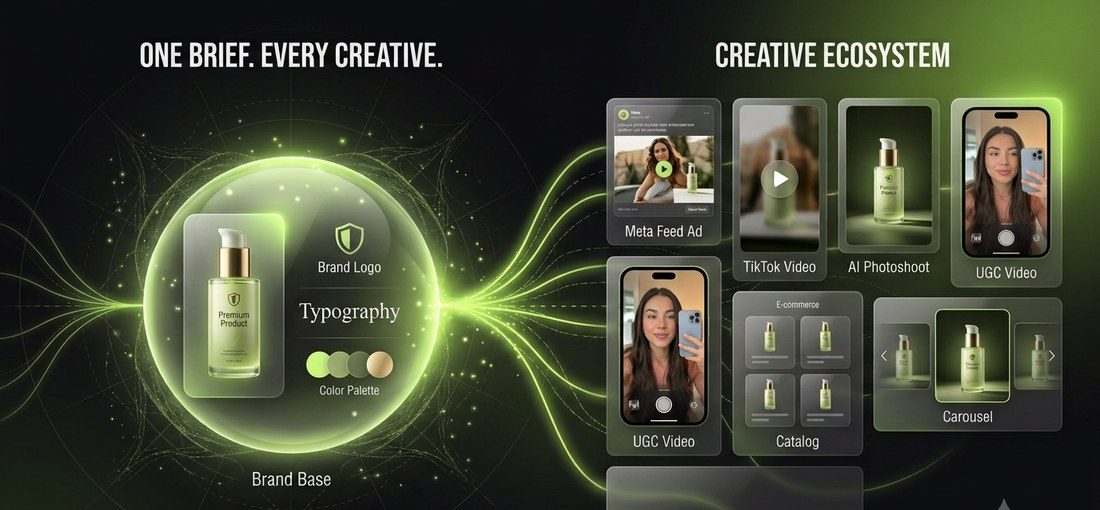
    One brand base, built from a single product, radiating out into a full creative ecosystem: Meta feed ads, TikTok video, AI photoshoots, UGC video, catalog, and carousel formats.

    One brand base and one brief branch into all five formats below, the same way every time.

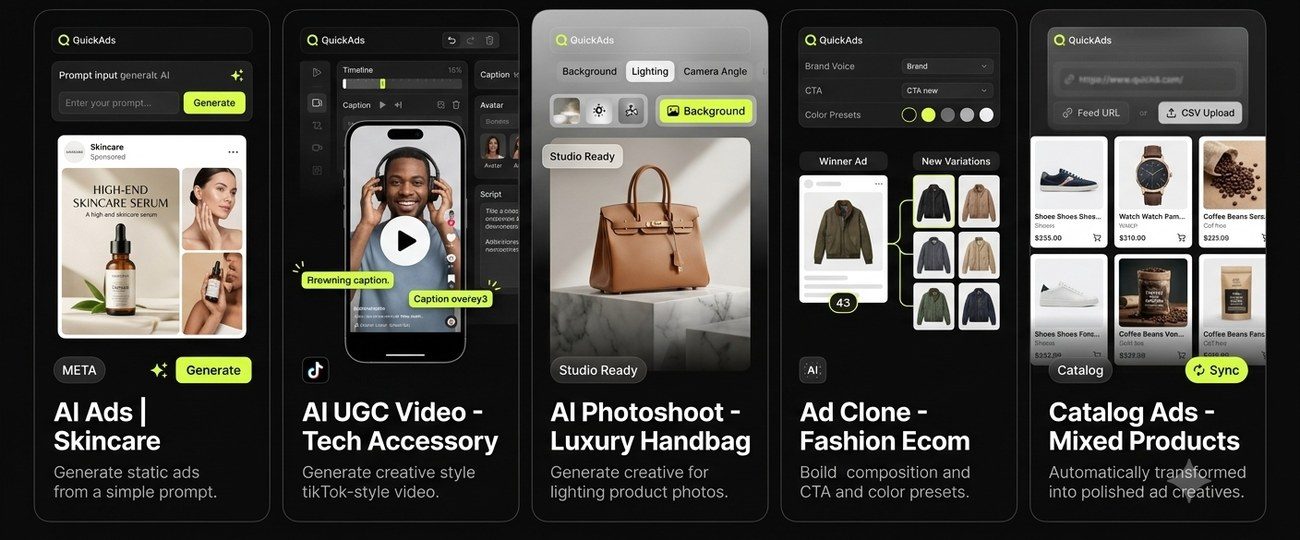
    Five Quickads formats shown as product panels: AI ads for skincare, AI UGC video for a tech accessory, an AI photoshoot for a luxury handbag, ad clone for fashion ecommerce, and catalog ads for mixed products.

    Four stages, one system

    Creative stageThe fragmented wayThe Quickads way
    Finding a starting pointManually screenshotting competitor ads into a mood boardPulling proven hooks and patterns straight from the 30M+ library
    Producing the varietySeparate contracts for UGC creators and separate studio days for photoshootsAI UGC video and AI photoshoots generated in the same place
    Scaling and localizingDesigners resizing and swapping copy across a dozen formats by handOne approved asset generated across every format and market
    Keeping a winner aliveStarting from scratch once the original creative fatiguesAd clone and variations extend it instead of replacing it

    When something wins, the sequence does not start over. Ad clone takes a proven layout, including one your team noticed working for someone else, and rebuilds it with your own product and brand. The variation suite then breaks that single concept into new hooks to test, so a winner keeps paying off instead of fatiguing into the next blank page.

    08

    The habits that keep a rollout alive

    A rollout does not fail in month one. It fails in month four, quietly, when the plan stops getting revisited.

    • Revisit the guardrails monthly. Not because they were wrong, because the tools and the team both keep changing.
    • Keep one owner accountable. Even as the workflow grows, someone specific still answers for how it is going.
    • Show the boring wins, not just the impressive ones. A small, repeatable time-save spreads faster than one flashy demo.
    • Protect time to actually learn the tools. An hour a week beats a one-off training everyone forgets by Friday.
    • Retire what is not working. Sunsetting a workflow that never took hold matters as much as starting the ones that do.
    09

    Where these numbers come from

    The third-party figures in this guide are directional benchmarks from published 2026 research, named inline so you can check them yourself: Gartner's CMO Spend Survey and agentic AI analysis, and BCG's research on scaling AI value. Figures we attribute to Quickads come from our own platform. Together they describe where the industry is heading, not a guarantee for your team. Validate against your own data before you rely on them.

    Real
    30,000+
    brands build and test their creative with Quickads.
    Quickads
    Real
    30M+
    ad library that Quickads draws on to help you find what works.
    Quickads
    FAQ

    The questions we actually get

    Where should a creative team actually start with AI?

    With one real, recurring task, not a flashy moonshot. Pick something your team already does every week, such as first drafts or resizes, small enough to finish in a week and ordinary enough that a win is repeatable. A modest pilot that gets adopted beats an impressive one that stays a demo.

    Who should own the AI rollout?

    One named person, not a committee and not the team in general. It can sit in marketing, creative, or operations, but it needs to be someone's actual job, with time on their calendar, not something bolted onto an already full role.

    How long does a proper AI rollout take?

    The first real workflow can be live within a couple of weeks. What takes longer, usually a couple of quarters, is the habit of expanding it on a schedule and keeping the guardrails current as the team and the tools both change. Treat it as ongoing, not a project with a finish line.

    What if the team is scared or resistant?

    Resistance is usually a rational response to a rollout with no plan, not to AI itself. Naming an owner, writing the guardrails down, and starting with a task people already find tedious does more to lower fear than reassurance does. People trust a system they can see more than a promise they are asked to take on faith.

    Do we need a dedicated AI lead role?

    Not necessarily a new hire. Most teams fold it into an existing role as a defined responsibility with protected time. What matters is that it is unambiguous who owns it, not what the title says.

    You do not need a bigger pilot. You need a system.

    Quickads gives your team one shared, on-brand workflow for the parts of the job that should already be fast, so the rollout has something real to run on from day one.

    Ready to move past pilot?

    Join 30,000+ brands. Setup takes 2 minutes.

    Build Your Brand Base Free