Try Quickads free
For growth and creative leads

The Creative Velocity Guide

Getting marketing and creative on the same team

Stop throwing briefs over a wall. Generate on-brand variations at scale and get marketing and creative running on the same loop for higher CTR.

Updated February 202612 min readBy Quickads
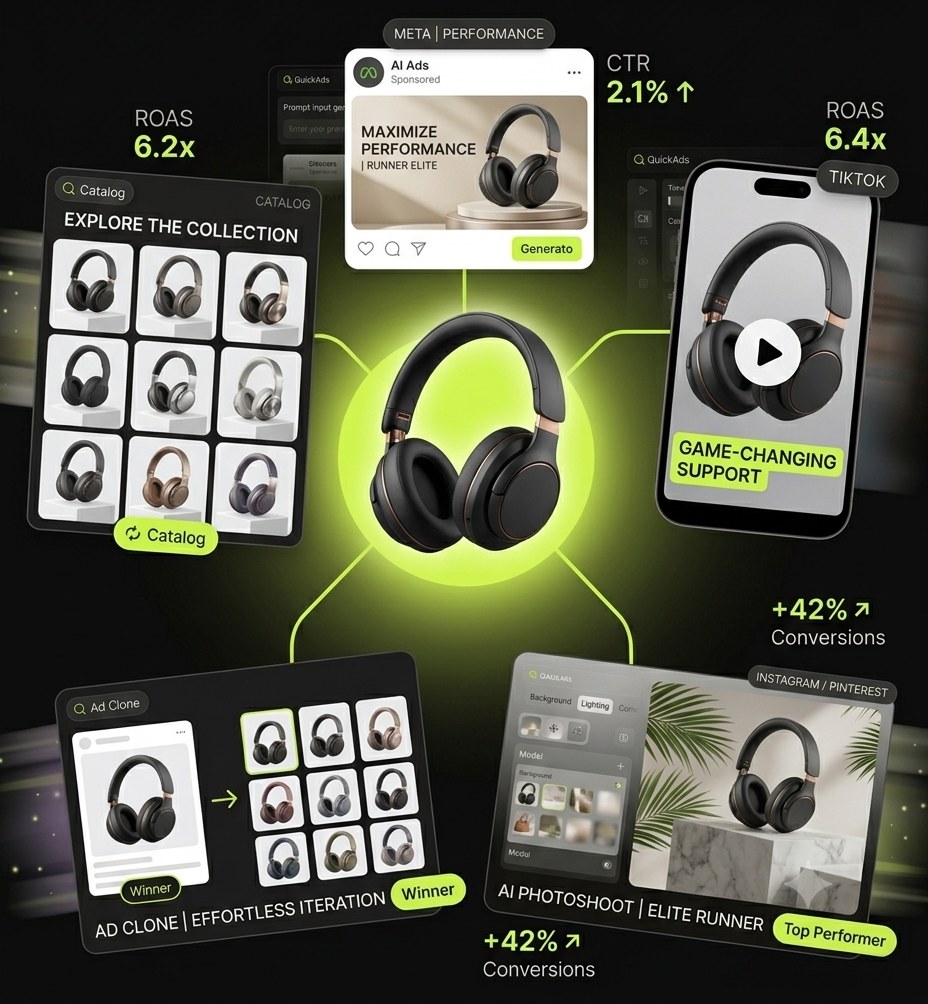
One product turned into winning ads across Meta, TikTok, catalog and photoshoot formats, with performance metrics
01
Chapter 01 / The friction

Making ads was never the hard part

The hard part is everything around the ad. The brief. The back and forth. The point where marketing and creative quietly stop speaking the same language.

Performance channels are hungry. Media buyers want more variants, faster. Creative gets a quick Slack message, ships the work, and often never hears which ones actually did well. Two teams, same company, completely different picture of what's going on.

Making more variations, faster, is the easy part now. The speed that actually adds up comes when marketing and creative work off the same brief, the same numbers, and the same idea of a win. When that clicks, everything downstream gets easier.

This guide walks through how teams actually close that gap, so all that speed pays off, instead of turning creative into a faster factory nobody is steering.

Marketing and creative working at separate desks split by a glowing divide, with a rushed creatives-by-Friday note
The teams pulling ahead didn't just make more ads. They got marketing and creative working off the same goals, the same numbers, and the same loop, so all that volume turned into winners.
02
Chapter 02 / The bottleneck

All gas, no steering

AI made the making part fast, and that's where most teams get caught out. Speed on its own isn't velocity. Velocity has a direction. Marketing floors it and asks for more variants, creative ships them, and nobody stops to check that all that output is pointed at the same goal. You end up moving fast in the wrong direction, results stall, and everyone blames the tools. The tools were never the problem. The steering was.

It's almost never a tooling problem. It's a lot of speed with nobody steering.

Alignment
73%
of scaling bottlenecks come from teams chasing different numbers, not tools
Rework
more rounds of revisions when the brief has no shared goal attached to it
Burnout
1 in 4
creatives feel burned out making volume with no sense of what's working
Chapter 03 / The loop

Five steps, run as a loop

Not a handoff. A loop that both teams live in, where every result feeds the next round of ideas. This is the shape the fast teams keep coming back to.

01

Spot the friction

Figure out where things actually break. Which briefs stall, and where the results never make it back to the people doing the work.

02

Generate

Spin up on-brand variations fast from one locked brand setup, instead of starting every ad from a blank page.

03

Test

Put a lot of ideas in front of real people cheaply. Let the numbers you agreed on up front decide what gets budget.

04

Share results

Send what happened back to the people who made the work, so the next round starts from real data, not opinion.

05

Scale

Refresh the winners before they get tired, and run the same loop across every channel and market.

One product, many angles

One brand base. Every format.

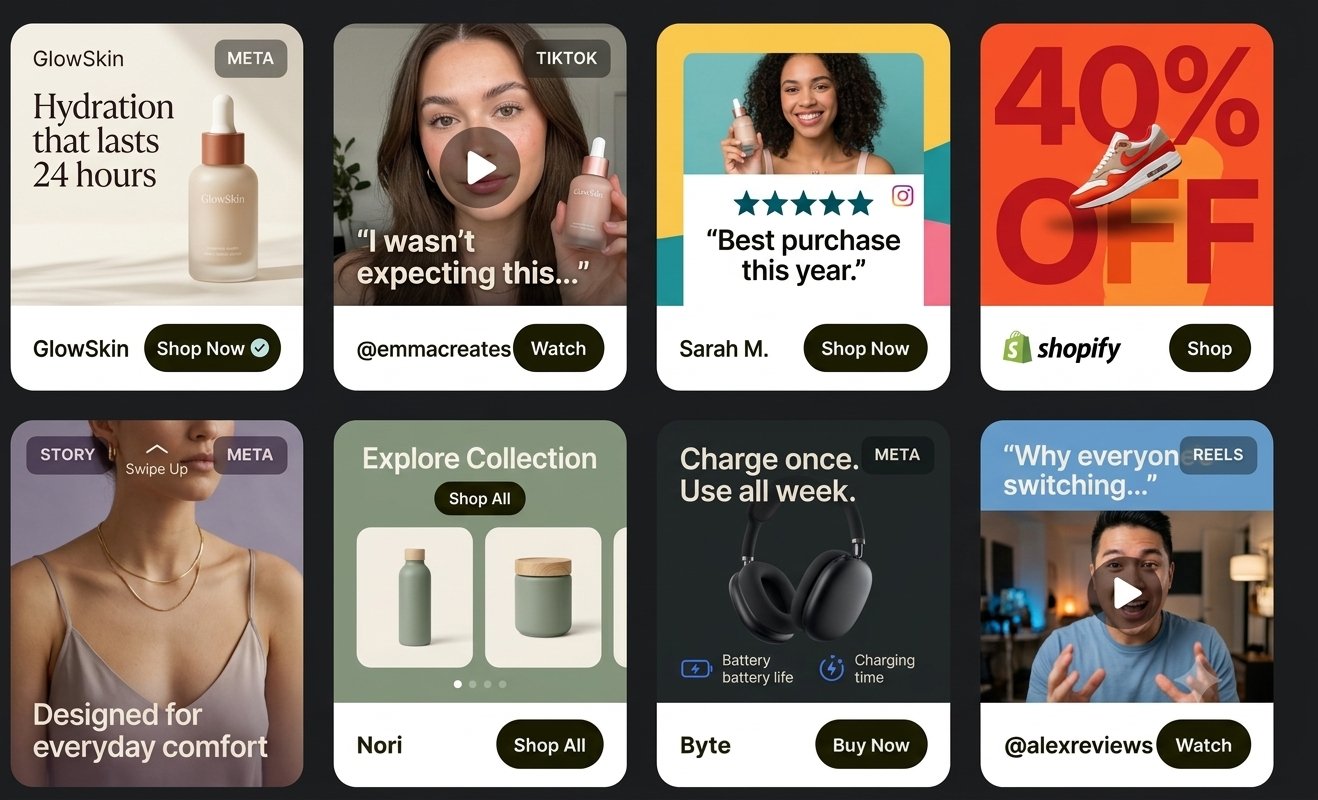
Same product, run through the loop: static, UGC, testimonial, sale, catalog. All on brand, all from one setup, all ready to test.

Example Quickads creatives for one brand across static, UGC, testimonial, sale and catalog formats
04
Chapter 04 / What fast teams do

What the fast teams do differently

The difference between teams that scale and teams that stall usually isn't budget or tools. It's how they work. Here's what changes when marketing and creative run off one system, based on patterns we see across brands using Quickads.

Where it gets stuckThe old wayThe fast way (with Quickads)
BriefingVague Slack messages and endless revisionsOne locked brand setup everyone builds from
TestingOne or two hand-made variants a monthA batch of formats, tested at once
Seeing resultsNumbers stay with the marketersResults go back to the people who made them
Once the data flows, patterns show up

When both teams can see results, a few things start to stand out. These are rough benchmarks, not promises, and worth testing against your own audience.

Which hooks tend to win

01
Problem and fix
100
02
Bold claim
88
03
Real customer
81
04
Product demo
74
05
Founder story
66
06
Discount-led
52

Reach vs. cost per winner

$20 $25 $30 $35 $40 $45 22% 26% 30% 34% 38% 42% EFFICIENT SCALE REACH AT A PREMIUM LOW-COST TESTERS RECONSIDER AI UGC video Ad Clone AI Ads · static Catalog Ads AI Photoshoot Cost per winning ad → (further left is more efficient) Reach · thumb-stop rate →

How far an ad reaches versus what it costs to find a winner. Bubble size is average CTR. See the numbers below.

Chapter 05 / Legacy vs. velocity

From assembly line to system

Same product, two ways of working. On one side, a slow handoff nobody can see into. On the other, a shared system that turns one brand setup into tested, multi-format creative.

Legacy
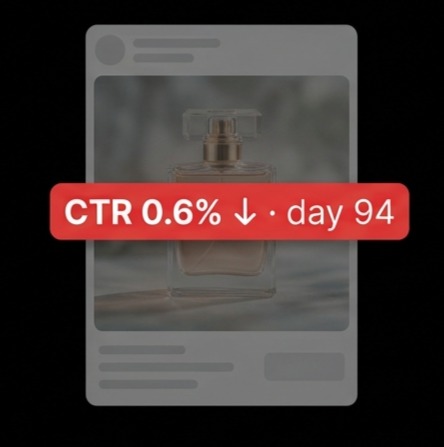
A generic legacy ad with a declining click-through rate
One generic ad, briefed slowly, cut off from the results, running until it wears out.
High-velocity
On-brand ads for one product across Meta, TikTok and a catalog feed
On brand, in every format, and tested. Both teams see the same results and scale the winners together.
From teams using it

What it looks like when it clicks

Udemy logo
What stood out was the speed and precision. The team understood our tone and our learner audience, and built creatives that actually convert across Meta, Google, and influencer channels. In a crowded edtech market, that makes a measurable difference.
Ramji SundararajanPresident, Udemy
3.5×
Increase in ad conversion rate
68%
Reduction in creative turnaround
2.8×
Growth in influencer campaign reach

C. Krishniah Chetty and Co. logo
Quickads helped us turn 150 years of craftsmanship into creative that performs on Meta and Google. What took our team weeks of shoots, edits, and approvals now ships in days, on-brand and built for every format. We finally have a creative engine that moves at the speed of performance marketing, without losing the soul of the brand.
Vidya NatarajDirector, C. Krishniah Chetty & Co.
Faster creative production
190%
Increase in client retainer renewals
2.3×
Higher campaign engagement
06
Chapter 06 / Score your team

How fast is your team, really?

One quick score for how fast and how aligned your creative operation is. It looks at how much you test, whether both teams share the same goals, how quickly you ship, and how often you refresh. Answer four questions and see where you land.

64
out of 100 · Building
Lagging
Building
Compounding
04070100
Fresh ideas tested per week
Do both teams share the same goals?
Time from brief to live
How often you refresh
Inside Quickads

Five ways to feed the loop

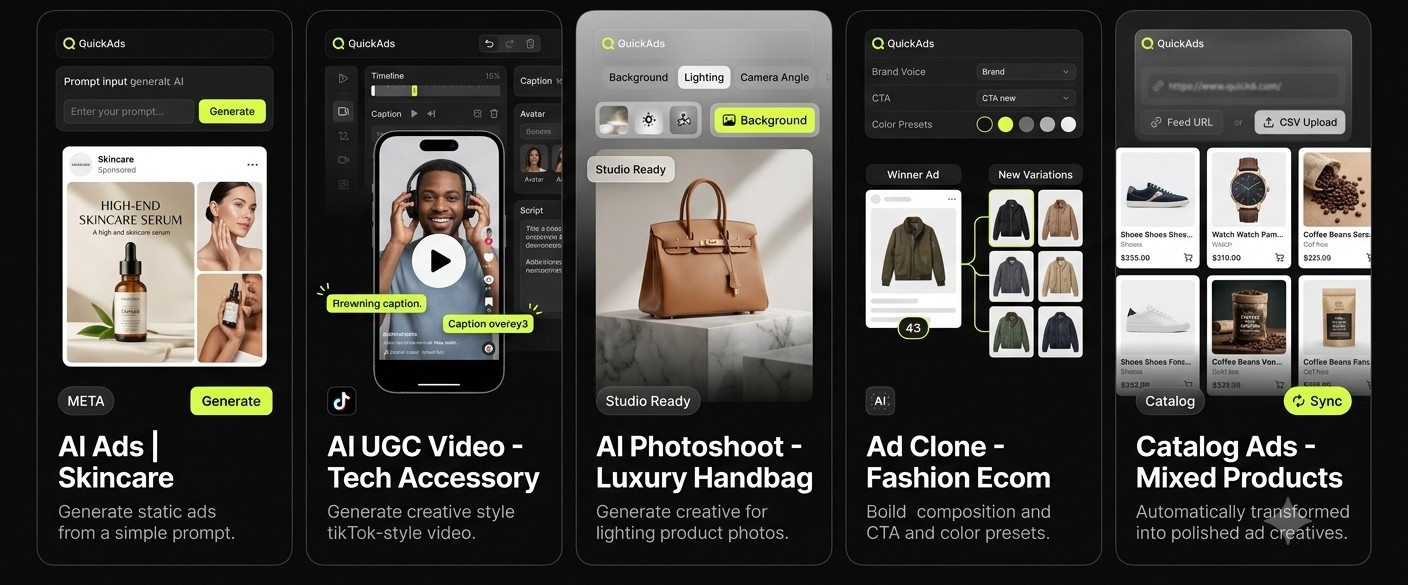
AI ads, UGC video, product photoshoots, ad clones, and catalog feeds. Different jobs, one brand setup, all pointed at the same goal.

Five Quickads formats shown in the product: AI ads for skincare, AI UGC video, AI photoshoot for a handbag, ad clone for fashion, and catalog ads for mixed products
07
Chapter 07 / The habits

The habits that make it work

The loop only works if it runs on repeat, as one shared system instead of a chain of handoffs. Six habits the best teams stick to.

01

Lock your brand once

Set your logo, colors, fonts, and product shots once, and have every team build from that. On brand becomes the default, not a fight.

02

Test ideas, not one-offs

For each angle, make a spread across formats and test the idea, instead of one execution you happened to fall for.

03

Win the first three seconds

The opening decides most of it. Prove the hook on a small budget before you pour money into production.

04

Spend behind what works

Put the budget on the few ads beating your control. Cut the rest quickly, and try not to get sentimental about them.

05

Send results back to creative

Show designers what actually performed. Once they can see it, the next brief basically writes itself.

06

Refresh before it gets stale

Watch for rising frequency and dropping CTR. Ship fresh versions before the dip, then start the loop again.

Chapter 08 / The numbers

Where these numbers come from

This guide draws on what we see across the brands that use Quickads to run high-volume creative: how they brief, test, and share results, and what that does to performance.

The specific figures shown in this guide are directional benchmarks, not guarantees. Treat them as a starting point and test them against your own audience and platform data before you rely on them.

30,000+
brands building creative with Quickads
30M+
ads in the Quickads reference library
FAQ

The questions we actually get

Real ones, from growth and creative leads. Straight answers, no pitch.

How do you get marketing and creative on the same page?
Start with one thing everyone agrees on: what a win looks like. Pick the metric that matters before the brief goes out, have both teams build from the same brand setup, and make sure results get shared back to the people who made the work. Alignment is something you build into the workflow, not something you fix in a meeting.
Why do briefs fall apart once you're running performance ads?
Old-school briefs assume you're making a few careful ads. Performance marketing wants a steady stream of tests instead. Pile that volume onto a vague brief and a manual process, and it falls apart. The fix isn't more revision rounds. It's generating from a locked brand setup so the basics are handled every time.
What's a "creative operating model" in plain terms?
It's just how your team turns an idea into a tested ad: how you brief, make, test, and share what worked. Most teams have one by accident. The good ones make it deliberate and shared, so marketing and creative are running the same play instead of throwing work over a wall.
How do you actually measure creative velocity?
Look at how fast you go from idea to a tested result, how much you test, whether both teams share the same goals, and how often you refresh. The score earlier in this guide is a quick way to put a number on it.
Does AI replace the creative team?
No. It takes the grunt work off their plate so they can do the part that matters: deciding what to make, judging what's working, and scaling it. You still need people with taste. They just stop spending the day resizing the same ad.

You've got the speed. Add the steering

Making variations fast is the easy part. Point marketing and creative at one goal, and Quickads' 30M+ ad library keeps the winners coming.